We are normalizing a world where the powerful pay for a map while everyone else is given a pin and told to trust it.
Across high-stakes domains, we agree that closure is corrosive. In journalism, one voice is propaganda, so we demand multiple sources and visible corrections. In science, premature consensus kills discovery, because progress is found in the outliers. In courts, rigid formulas produce injustice, so due process requires context, cross-examination, and the right to appeal.
These fields have taught us that a single, authoritative answer erases dissent, hides weak signals, and lets responsibility vanish through a trapdoor labeled “procedure.”
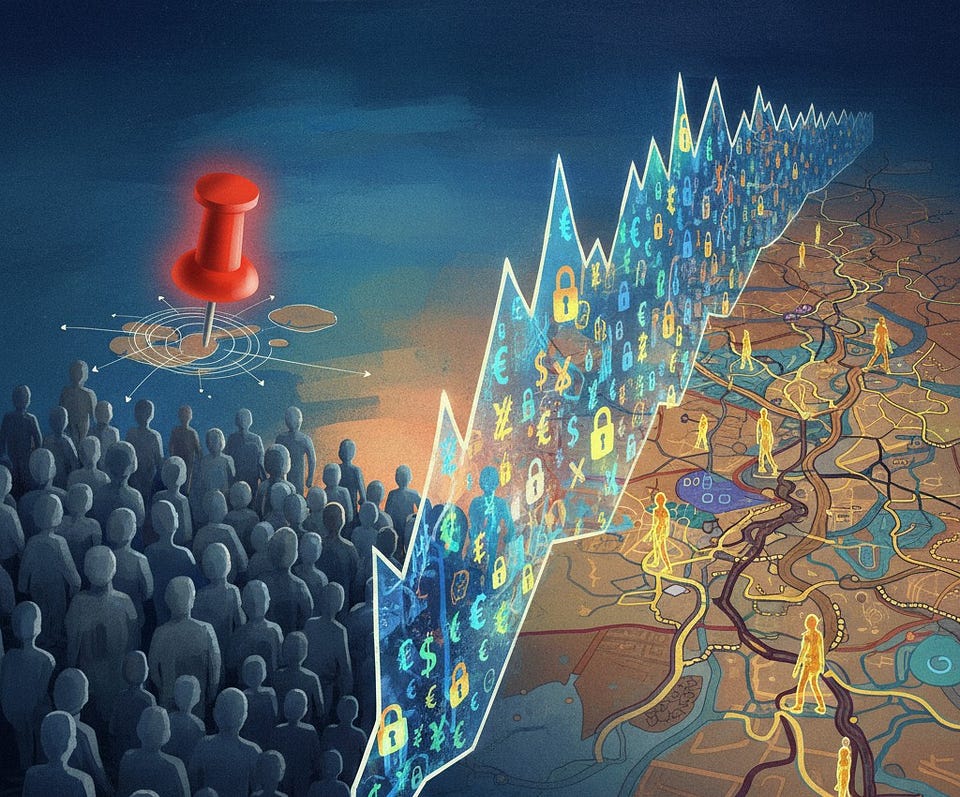
But in the new arenas of automated decision-making, this principle is inverted. The same dangerous move—collapsing complexity into a single answer—is now marketed as wisdom.
- In Search: Google’s AI Overviews flatten the web into one neat paragraph, and the sources under it mostly go unvisited. In Pew’s tracking of 900 adults in March 2025, people shown a summary clicked through to a search result in 8% of visits, against 15% for people who weren’t, and clicked a link inside the summary in 1%.1
- In Healthcare: Guideline engines produce one bedside recommendation, ignoring that the patient in front of you—if they are pregnant, disabled, or multimorbid—may never have been in the evidence base.
- In Hiring: Automated filters reward familiar pedigrees and speech patterns, coding non-standard excellence as “risk.” Amazon’s experimental resume ranker, trained on ten years of applications that came mostly from men, penalized the word “women’s” and favored verbs like “executed” and “captured” that turned up more on male engineers’ resumes, before Amazon gave up on it.2
If singular smoothness is unacceptable for a reporter or a judge, why do we accept it from a machine, where the harms are the same and the stakes are higher?
How Plausibility Becomes Inevitability
What begins as one option among many hardens into “best practice” through two reinforcing forces:
- Plausibility: Familiar, tidy answers are treated as mature and reasonable. Once something feels right, we stop asking who it excludes.
- Smoothness: Institutions prize what scales without friction. Dissent, exceptions, and appeals create friction, so they are engineered away.
Plausibility breeds smoothness. Smoothness hardens into resignation, the shrug that “this is just how things are.”
The “Anti-Human Premium”
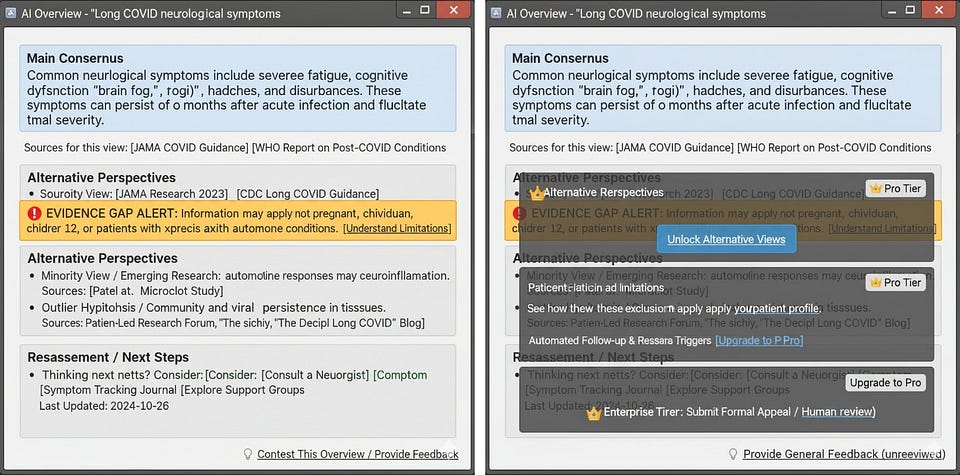
The next step in this enclosure is to monetize the solution, treating dissent, provenance, and refusal as paid features.
- Basic Tier: One clean answer. No citations. No appeal.
- Pro Tier: Limited sources and footnotes.
- Enterprise Tier: Dissent logs, provenance graphs, and the right to a human review.
This isn’t a business model; it’s extortion by subscription.
Imagine if libraries charged extra to see the index, or courts sold the right to file an appeal.
We are normalizing a world where the powerful pay for a map while everyone else is given a pin and told to trust it.
What product culture calls innovation is often just deletion, repackaged as convenience.
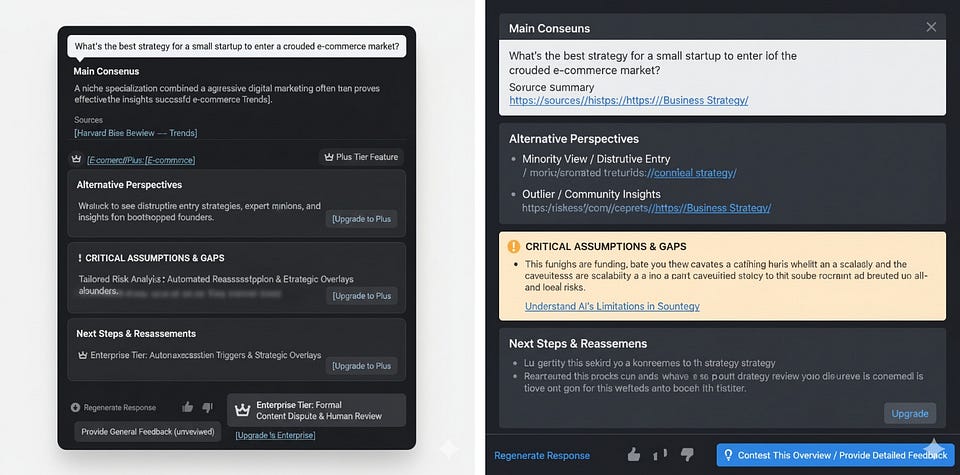
Each of the mock-ups draws the tier list as a pair of screens. One carries the sources, the dissenting views, a warning about who the evidence leaves out, and a way to contest the answer; the other is the same answer with each of those behind an upgrade. Both pairs were drawn for the argument, and neither shows a product on sale.
No answer engine sells its tiers in those words yet. Google’s AI Overviews put their citations on the free page, and Pew found 88% of the summaries it captured cited three or more sources.1 Human help is already tiered elsewhere. In February 2023 Meta began testing Meta Verified, a Facebook and Instagram subscription at $11.99 a month on the web, whose features included “access to a real person for common account issues.”3 That’s account support rather than an appeal, and it promises no reversal; what the subscription sells is a person to talk to. Until an answer engine puts its sources, its dissent or its human review behind an upgrade, the tier list above is a forecast, and the pricing page is where to watch for it.
The Alternative Is Rough (in a Good Way)
The opposite of a smooth, singular “best” is not “worst.” It’s rough: standards built with visible seams to preserve dissent, admit exclusions, and keep refusal survivable.
- Reasons, or it didn’t happen: No verdict arrives without its sources and logic.
- Dissent is in the frame: Majority, minority, and outlier views are displayed side-by-side.
- Exclusions are exposed: The system declares who the evidence left out, tied to the case at hand.
- Refusal is protected: A one-click “doesn’t apply here” routes to a human with the authority to reverse the decision.
- The pause is valued: Time for a second opinion is built into the process before a decision locks in.
We already track smoothness with metrics like uptime and latency.
I suggest we also measure openness with an Open-Possibility Index of four numbers:
- Dissent rate: the share of answers that show a minority view beside the majority one.
- Weak-signal velocity: how long a credible outlier finding takes to reach the answer.
- Tail-group safety: error rates reported separately for the groups the evidence left out.
- Appeal time: the median wait from “doesn’t apply here” to a human decision, and how often that decision overturns the machine.
A buyer can write all four into a contract, and then a system that fails to keep possibilities open is out of compliance. Each number should read the same on every tier.
“Best Answers” are Anti-democratic
We reject single answers in journalism, science, and courts because consensus without conflict is a lie. It protects incumbents: what looks inevitable is often engineered, and what sounds plausible is often rehearsed. The same must hold for the algorithms that govern our lives.
Keep dissent visible and refusal possible, leave time for appeal, and when a machine calls its answer “best,” make it prove it.
Notes
Athena Chapekis and Anna Lieb, “Google users are less likely to click on links when an AI summary appears in the results,” Pew Research Center, July 22, 2025, from the browsing data of 900 U.S. adults. Users “very rarely clicked on the sources cited.” Pew Research Center
Jeffrey Dastin, “Amazon scraps secret AI recruiting tool that showed bias against women,” Reuters, October 10, 2018. It also “downgraded graduates of two all-women’s colleges,” and recruiters looked at its rankings but “never relied solely on” them, according to people familiar with the project. Euronews (Reuters)