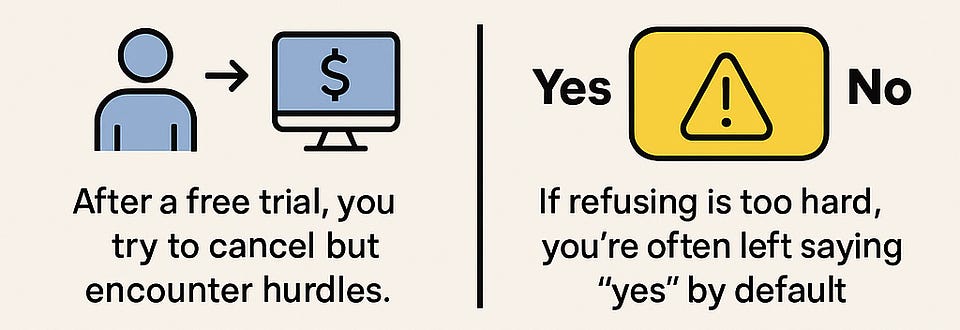
You sign up for a free trial thinking, This’ll be easy to cancel if I don’t like it. Then the trial ends, you try to opt out, and you’re suddenly on hold with a “special department,” forced to explain yourself to a script-reading agent. By the time you hang up, you’re drained, and you might still be charged. You said “no” in theory, but the cancellation process made it punishing in practice.
Refusability comes down to one question: can you walk away, really walk away, without being punished financially, socially, or psychologically? If saying no is a practical nightmare, a “yes” is closer to a coerced default than an exercise of free will.
Among hidden traps like subscription fees, job lock-ins, and punitive public policies, refusability might be the strongest way to build trust and relationships that last.
A system that gives you a clean, consequence-light exit is saying,
We trust you to decide if this is worth your time.
Ethically, that trust counts for a lot. If you’re forced to stay by penalties, fear of losing health coverage, or threats of blacklisting, you’re less a participant than a captive.
Philosophers from Kant to Simone Weil have tied real consent to freedom from coercion. Refusability matters because it protects the dignity of choice.
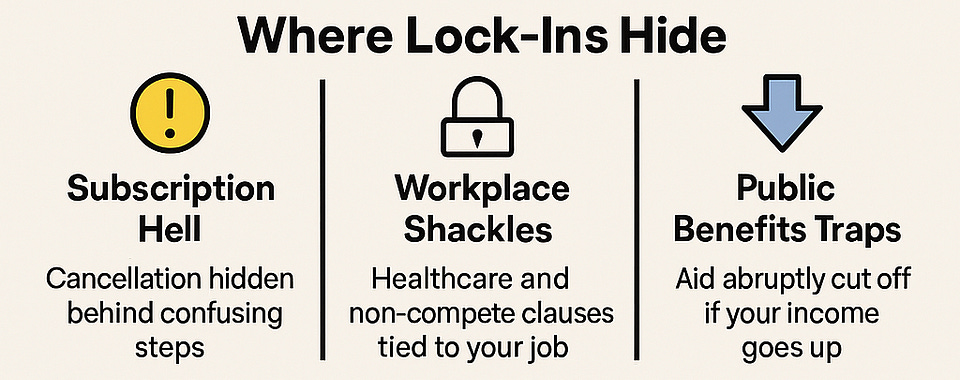
Where Lock-Ins Hide
- Subscription Hell. Whether it’s a streaming platform, a gym membership, or a “premium service,” some companies bury the cancel button behind needlessly complicated steps. They don’t want you to leave, so they create friction to wear you down.
- Workplace Shackles. Tying healthcare to employment, or using non-compete clauses, is a surefire way to keep people from quitting. If you face losing coverage or being sued for seeking a new job, that’s not much of a choice.
- Public Benefits Traps. Programs that drop assistance the second you inch above the poverty line back people into corners. The official line is You can always refuse our aid, but try it and you may lose your home or medical care.
Retention That Is Really Lock-In
Many organizations claim success at “retention” when all they have done is make exit too painful. If you’re stuck because leaving is impossible, what looks like loyalty is numb acceptance or quiet desperation.
Meanwhile, leadership can brag about low turnover and ignore the flaws that might otherwise push them to improve.
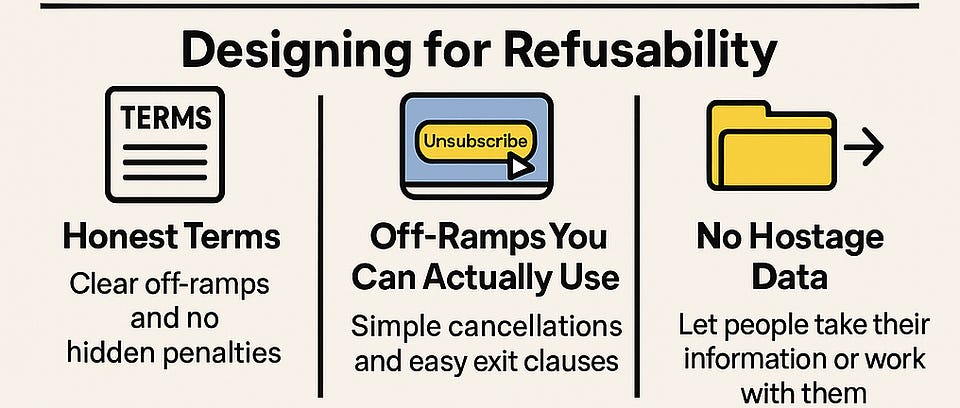
Designing for Refusability
The alternative is a system that respects your right to opt out without wrecking your life. That means:
- Honest Terms: All exit fees, rules, or notice periods stated in plain language, no hidden phone lines or suspicious forms.
- Off-Ramps You Can Actually Use: One-click unsubscribes, “no-fault” resignation clauses, or gradual phase-outs of benefits instead of abrupt cutoffs.
- No Hostage Data: Whether it’s your personal files on a platform or creative work you made at a job, letting you take your data or projects with you respects your autonomy.
- Easy Return: If people do decide to come back, don’t penalize them. Their return is a sign your product or organization may be worth something on its own merits.
Why This Can Be Terrifying (But Worth It)
For institutions used to lock-ins, the idea of “refusability” can trigger panic:
What if half our subscribers bail immediately?
If your offering is any good, many will stay. If some leave, that’s honest feedback that something needs fixing. And the people who remain stay with more confidence, engaged because they want to be rather than held by fear.
Over time, an open door keeps you relevant and fair, because you can’t hide behind illusions or forced loyalty. It’s a vulnerable position: you have to keep earning trust.
What a Freely Chosen “Yes” Is Worth
A real exit separates compliance from commitment. For a subscription, that might look like users who are actually satisfied. In a workplace, it could be employees who stay because they believe in the mission rather than because they’re petrified of losing benefits. In a social program, it might mean recipients aren’t kept dependent by the terror of losing everything.
Letting people leave without chaos forces an institution to stand on the strength of what it offers. In captive markets, this is an ethical demand rather than a commercial guarantee: monopolies and lock-in architectures profit from captivity precisely because it spares them the need to earn consent. Refusability is the design principle that stops an institution from counting people who cannot leave as loyal.
Make it easier for people to say “no,” and their “yes” stops being a default.