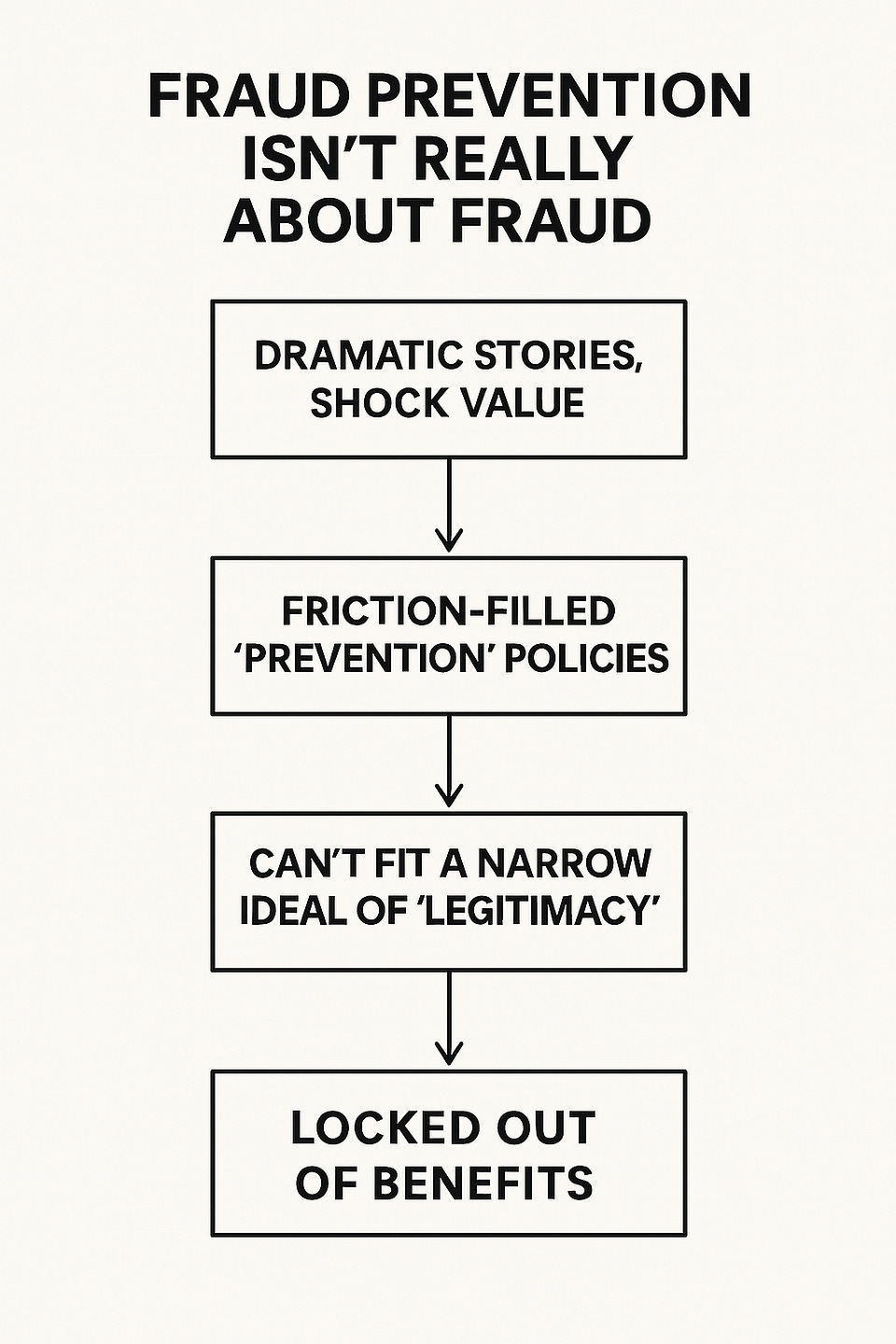
Since Donald Trump’s reelection in 2024, headlines have been ablaze with talk of “massive fraud.” His newest creation, the Department of Government Efficiency (DOGE) under Elon Musk, claims it can save billions by doing things like rooting out “zombie recipients” in Social Security and erasing fake debts from defense budgets.
Many of these “egregious” cases turn out to be mundane data glitches: a missing digit that turns a real person into a statistical phantom, a typo that freezes a valid beneficiary’s payments while the record is re-checked.
DOGE pretends it’s modernizing these outdated systems. Instead it uses such examples to cast everyday citizens as would-be scammers.
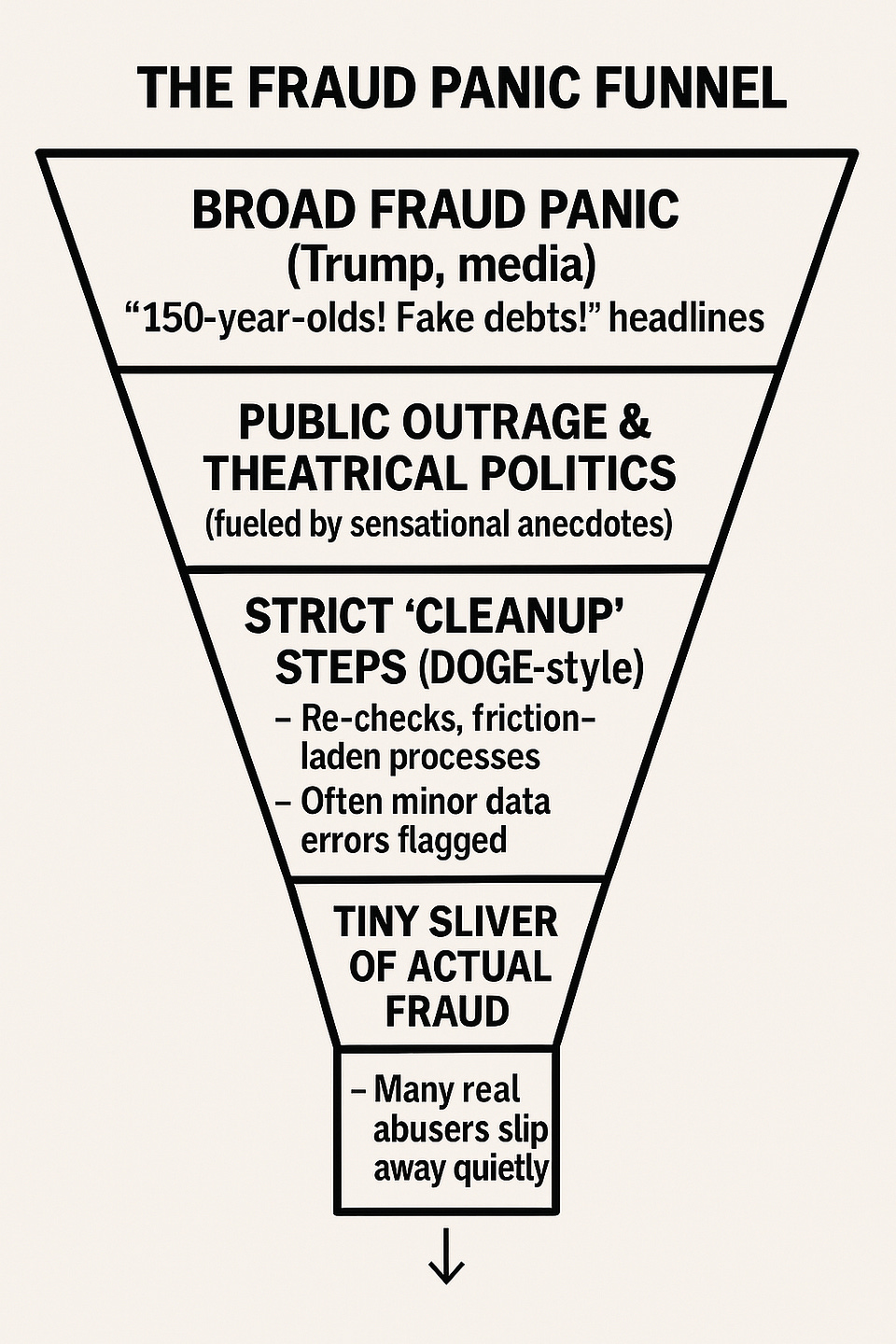
Moral panics around “fraud” typically rely on outlandish anecdotes. A supposed “150-year-old” beneficiary, for instance, becomes front-page material, spurring calls for a swift “cleanup.” In practice, agencies respond by tightening rules and re-checks.
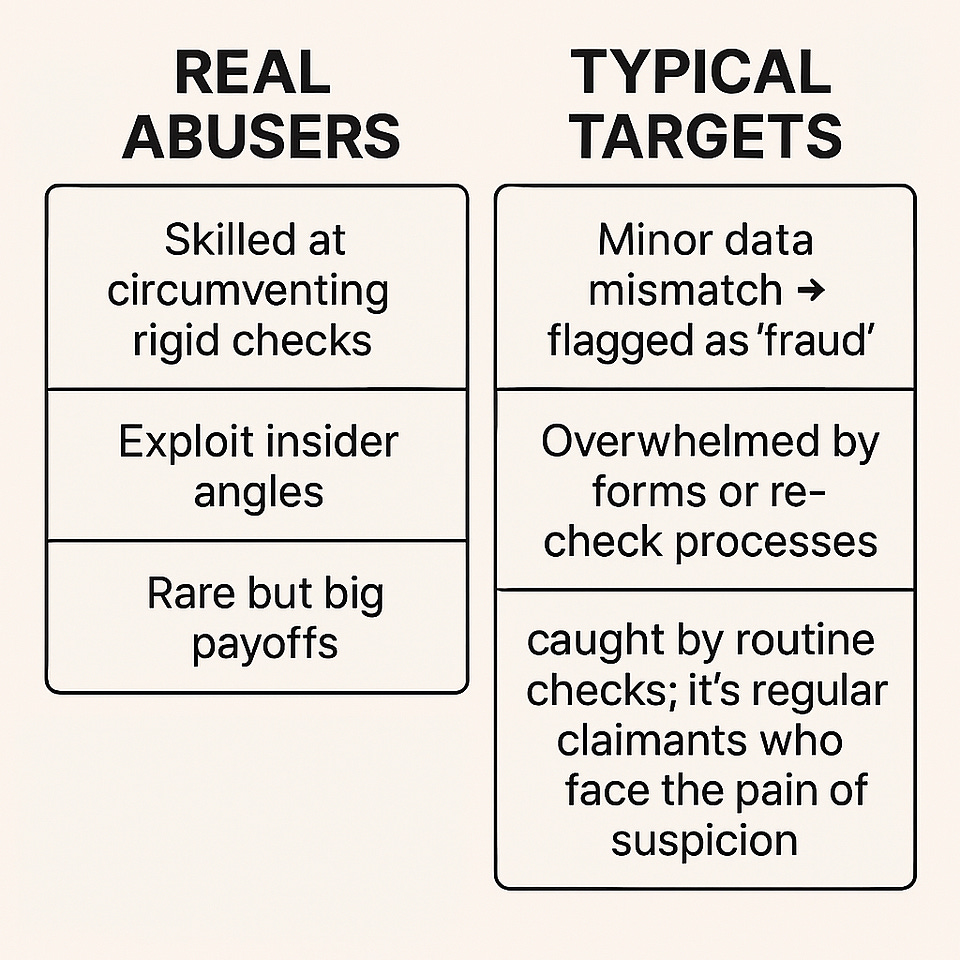
Meanwhile, the cunning abusers who exploit inside knowledge or large-scale contract loopholes often dodge these blunt efforts.
Popular culture has told this story before:
- Brazil (1985): A small bureaucratic error balloons into chaos.
- Don’t Look Up (2021): Politicians fixate on spectacle while ignoring a real crisis.
- Dirty Money (2018 & 2020): Large-scale corruption thrives behind illusions; small anomalies get hammered.
- Operation Varsity Blues (2021): Real cheaters bypass official channels; normal participants drown in complex forms.
Fraud is a fiction with teeth
David Graeber once noted that debt is as much a moral construct as a financial one. In a similar way, “fraud” is about social control as much as it’s about factual deceit. Small-scale deceptions in traditional societies might be worked out through public negotiation or communal shaming. Modern bureaucracies weaponize the word “fraud” to cut people off from the resources they live on.
The friction-laden approach rarely catches cunning exploiters but does trip up:
- Seniors risk losing benefits over an overlooked re-verification letter or a date entry mismatch.
- Families with changing addresses find themselves permanently on the suspicion list.
- Migrant workers or those in gig employment, whose personal data rarely fits neat templates, appear “noncompliant” through no deliberate fault.
Friction does the denying
Instead of issuing one outright denial, these systems often wear people down with incremental hurdles. You might miss a re-verification deadline, overlook a newly requested document, or get lost in a maze of confusing forms.
Each mistake widens the distance between you and your benefits, until these small missteps add up to a total shutdown. The shutdown leaves people cut off for reasons that have nothing to do with intentional fraud.
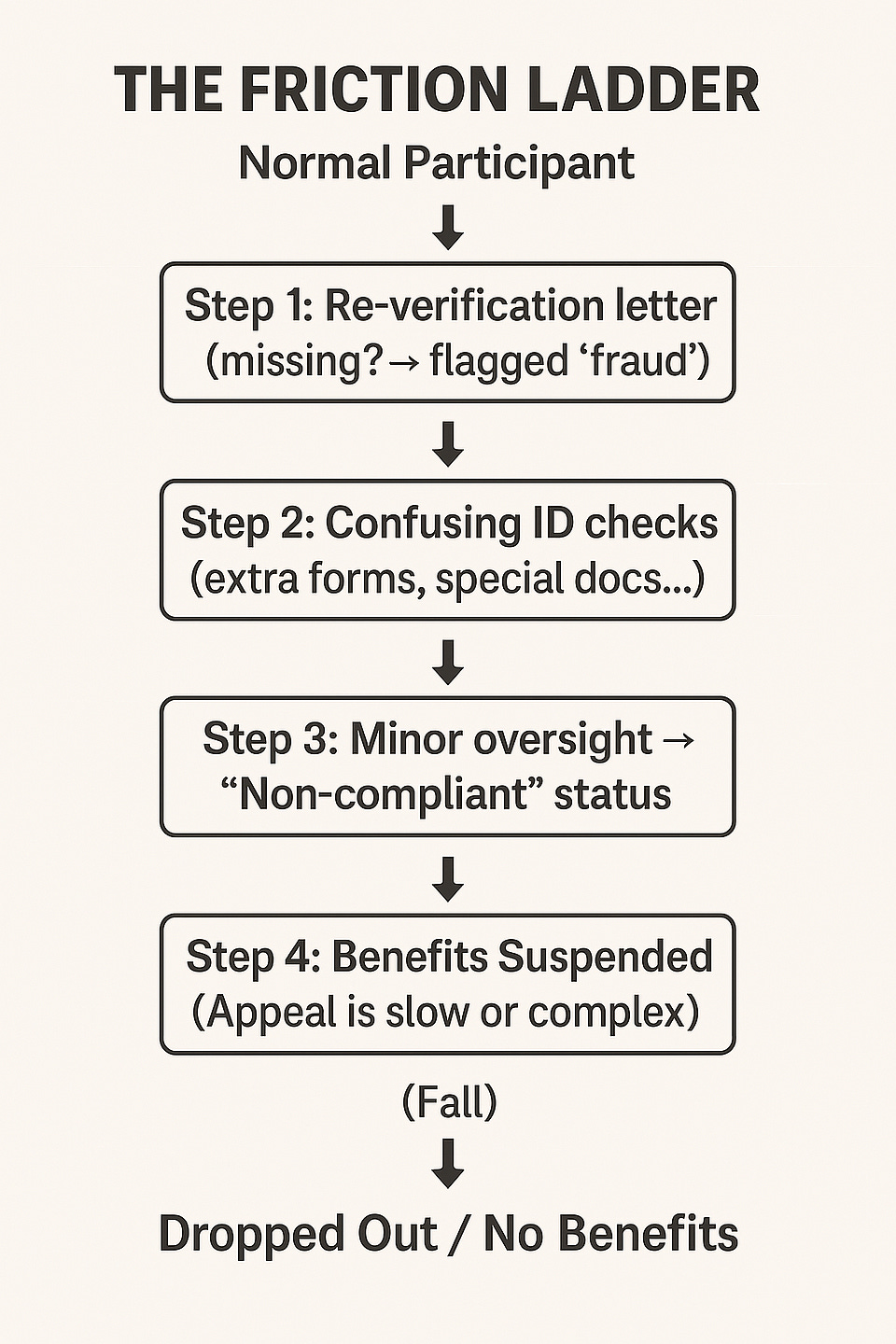
A single data mismatch can trigger an ever-expanding chain of suspicion. One alert flags your record for further scrutiny, spawning new sets of forms, shorter timelines, and bigger penalties. If you slip up again at any point, your benefits freeze. While you can technically appeal, the process can be so convoluted that many people simply give up.
Sensational fraud stories pull attention from far larger abuses, in corporate or defense budgets for instance, which go largely unexamined. By criminalizing every discrepancy, we undermine public trust and penalize honest mistakes.
A fairer approach would admit life’s messiness:
- addresses change
- family structures vary
- incomes fluctuate
- documents get lost
A proportional system would stop punishing every deviation and put its effort into actual wrongdoing, while keeping a working safety net for the people who need it.
Until we recognize this gap, “fraud prevention” will continue to be a cover for slashing budgets, excluding the vulnerable, and letting the real abusers stay safely behind the scenes.