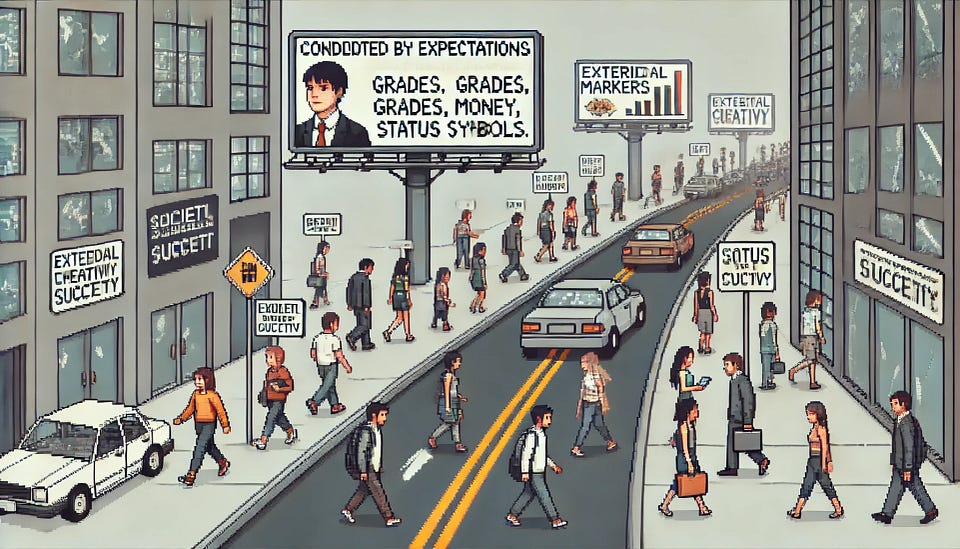
We are entrenched in an expectations-based culture—a system where our personal and professionalidentities are dictated by external markers of success, appearance, and behavior. These expectations create a narrow path forindividuals to follow, often limiting creativity, personal growth, and freedom.
From education to corporate structures, andeven in our social interactions, we are conditioned to conform to this rigid framework. These pressures aren’t justcultural—they are deeply embedded in the economic, psychological, and social systems that surround us,creating barriers to true fulfillment and well-being.
Expectations-Based Culture and Personal Evolution
ErvingGoffman’s social role theory provides insight into how individuals perform roles that meet societal expectations,creating a limited range of behaviors that are deemed acceptable. From childhood, individuals are conditioned to achieve externallyvalidated forms of success—high grades, prestigious careers, and material wealth. Schools and universities often focus onmeasurable outcomes like test scores and diplomas, reducing education to a pathway for economic productivity rather than a platformfor self-discovery or critical thinking (Goffman, 1959). This conditioning continues into professional life, where individuals areexpected to follow a predefined career trajectory.
In this context, Pierre Bourdieu’s theory of culturalcapital highlights how individuals are encouraged to accumulate social and cultural assets that align with societalstandards (Bourdieu, 1986). These forms of capital, such as education, wealth, and social networks, are seen as investments thatpromise success, but only if individuals conform to expectations. Those who deviate—whether by pursuing unconventional careers,rejecting materialism, or prioritizing personal well-being—are often marginalized or dismissed as failures.
However, thisframing misses the transformative potential of questioning these roles. By stepping outside these constraints, individuals can beginto chart new paths that challenge the economic, social, and even political status quo. While Goffman’s roletheory explains how we are often complicit in playing expected roles, it also opens the door to subversiveactions—where playing the "wrong" role could expose the artificiality of the entire framework.
Economic Investments andthe Myth of Progress
Society invests heavily in maintaining this expectations-based culture, particularly through economicstructures like education and corporate environments. Human capital theory, as outlined by Becker (1964), frameseducation and professional development as investments in future economic returns. This view reduces individuals to financial assetswhose worth is measured by their productivity, salary, and job title. Universities, once seen as places for intellectual and personalgrowth, now operate as gateways to financial success. Students are encouraged to view their education as a transaction, where the
goal is not personal fulfillment but securing a high-paying job to justify their investment.
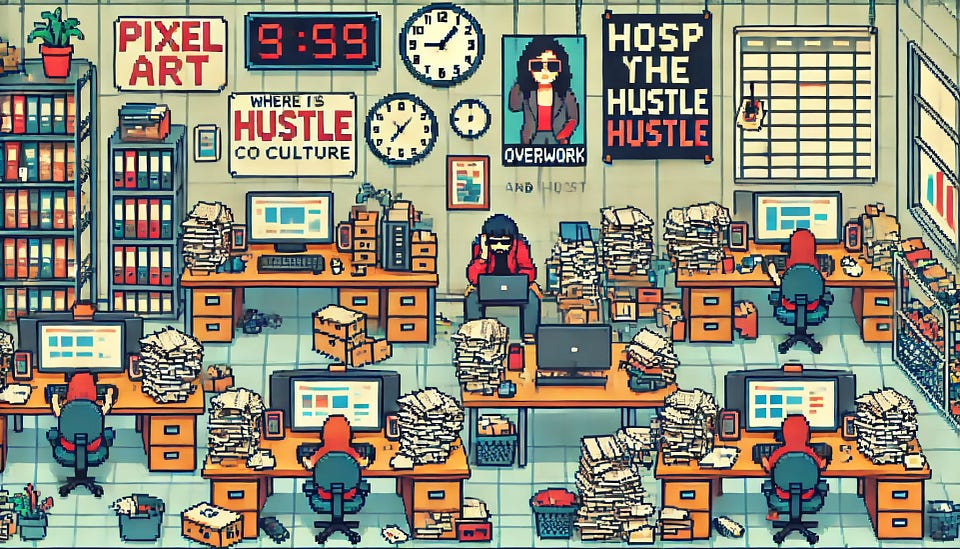
Corporate environments are similarly structured around thislogic. Companies invest in employees with the expectation that they will conform to corporate goals and objectives, prioritizingprofits over personal well-being. The rise of hustle culture—the glorification of overwork andburnout—only exacerbates these pressures. Employees are expected to constantly prove their value by working longer hours,achieving promotions, and maintaining loyalty to the company. Deviating from this path, whether by pursuing passion projects ortaking time off for mental health, is often seen as a failure to meet expectations.
The student debt crisis isa clear indicator of how this transactional view of education is failing. With tuition costs rising and job markets becoming morecompetitive, the return on investment promised by higher education is increasingly elusive. Many individuals are left burdened bydebt, stuck in jobs that do not align with their passions, but necessary to pay off their loans. This creates a cycle ofdissatisfaction, where individuals are trapped in careers they did not choose for themselves, but rather to meet societal andfinancial expectations.
What is often overlooked in this analysis is the largereconomic system that sustains this cycle—capitalism’s obsession with perpetual growth and productivity.The idea that individuals should continuously work harder, achieve more, and push beyond their limits serves the broader interests ofa capitalist economy that thrives on extracting maximum value from each individual. Challenging expectations-based culture thereforerequires questioning capitalism’s very framework. If personal worth could be untethered from economic productivity, entireindustries would need to rethink how they measure success and create value.
Social Capital and Gender Norms: The Invisible Cages
Beyond economic investments, society also invests in individuals through social capital—the networks,relationships, and status that provide access to opportunities and social standing. This concept, rooted in Bourdieu’ssocial capital theory, suggests that social connections are assets that must be cultivated and maintained to gain status andpower (Bourdieu, 1986). However, these networks are often tightly controlled by societal expectations, particularly around gender.
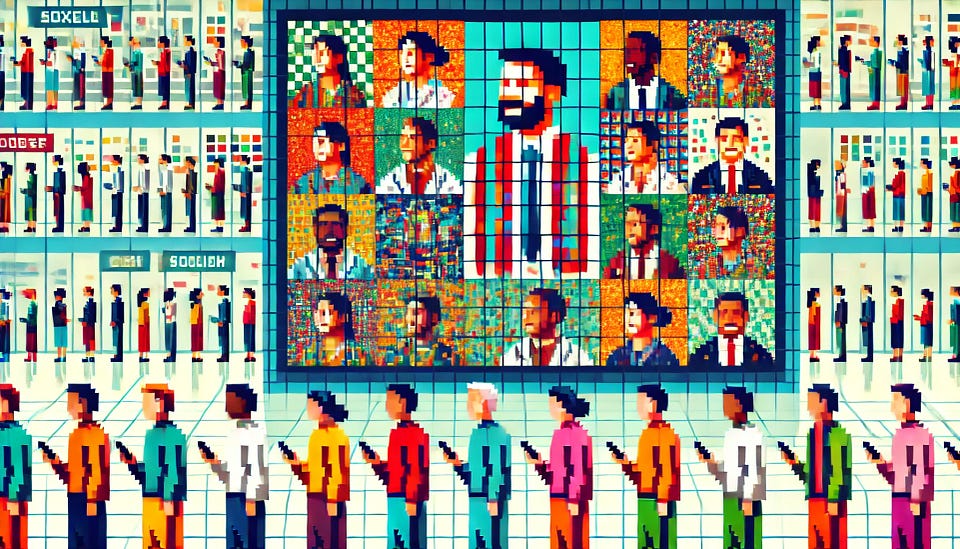
Judith Butler’s theory of gender performativity explains how societal expectations around gender roleslimit personal expression and behavior (Butler, 1990). Women, for instance, are expected to conform to traditional roles of beauty,nurturing, and compliance, while men are pressured to pursue dominance, emotional stoicism, and professional success. Social mediaand advertising amplify these pressures, creating a constant comparison culture where individuals are judged by how well they meetthese externally imposed ideals. Nonconforming individuals—whether women prioritizing careers over family, men expressingvulnerability, or nonbinary individuals rejecting gender norms altogether—face social penalties, exclusion, or marginalization.
This reinforcement of gender norms also perpetuates harmful power dynamics, particularly around sexualviolence and rape culture. The expectations around masculinity—where men are taught to dominate and women areobjectified—fuel entitlement and toxic behaviors. This culture normalizes harmful actions, reinforcing power imbalances thatallow sexual violence to go unchecked. In this sense, expectations-based culture doesn’t just limit personal freedom; itactively harms individuals by upholding dangerous norms around gender and power.
It’s also crucial to acknowledge that gendernorms intersect with other systems of oppression, like race and class. Women of color, LGBTQ+ individuals, and those fromlower socioeconomic backgrounds face compounded expectations that further marginalize them. For example, Black womenare often expected to meet both traditional gender roles and racialized stereotypes around strength and resilience, leaving littleroom for vulnerability or self-care. These intersections deepen the challenges of escaping the invisible cages that expectations-based culture creates.
Psychological Consequences: Anxiety, Perfectionism, and Burnout
The psychological toll of livingwithin an expectations-based culture is significant. Social comparison theory (Festinger, 1954) explains how
individuals constantly measure themselves against others, leading to anxiety, perfectionism, and chronic dissatisfaction. Socialmedia platforms have only intensified these pressures, creating a 24/7 culture of comparison where individuals are bombarded withcurated images of success, beauty, and happiness. This culture of perfectionism leads to mental health crises,particularly around body image, performance anxiety, and fear of failure.
Burnout, recognized bythe World Health Organization as a medical condition, is another consequence of this culture (Schaufeli et al., 2009). People areworking longer hours, sacrificing personal relationships, and pushing themselves to the brink, all in the pursuit of success thatoften feels hollow once achieved. The relentless pressure to meet societal expectations—whether in terms of career, appearance,or social standing—leaves little room for vulnerability, imperfection, or self-compassion. Individuals are conditioned tobelieve that their worth is tied to their ability to perform and succeed, leading to cycles of overwork, exhaustion, anddissatisfaction.
But we must also question the individualistic framing ofthese crises. The expectation that mental health is a personal responsibility—that individuals alone shouldcope with the pressures of burnout, perfectionism, or anxiety—obscures the systemic nature of these issues. The workplaceenvironments, educational institutions, and social norms that perpetuate unrealistic expectations are rarely held accountable. Totruly address the mental health epidemic, we must not only provide support for individuals but also dismantle the systems that createthese pressures in the first place.
Power Structures and Control: Who Benefits
The power structures withinsociety—whether political, corporate, or cultural—benefit from maintaining expectations-based culture. MichelFoucault’s concept of disciplinary power (1977) explains how societal institutions, from schools to workplaces, imposenorms that ensure conformity and predictability. These structures thrive on control, using expectations to discipline individuals andkeep them in line. Similarly, Antonio Gramsci’s theory of cultural hegemony (1971) reveals how dominant groupsmaintain power by controlling cultural narratives and making certain behaviors and values appear natural or inevitable.
Thesepower dynamics are also reflected in the perpetuation of rape culture, where societal expectations around gender andpower normalize harmful behaviors like objectification and entitlement. The expectations-based system rewards conformity to thesenorms, making it difficult to challenge or dismantle them without facing backlash or exclusion. Those who deviate—whether byresisting traditional gender roles, challenging capitalist values, or advocating for systemic change—are often marginalized orpunished, to the point where incelism has emerged.
Resistance, however, is not impossible. By criticallyengaging with these systems of control and using tools like counter-hegemony (Gramsci, 1971), marginalized groupscan challenge and subvert dominant narratives. Collective action, such as labor movements, feminist organizing, or anti-capitalistresistance, can disrupt the structures that rely on conformity and obedience. It’s through these counter-hegemonic efforts thata more liberating future can be imagined.
Toward a Post-Expectations Society
To move beyond anexpectations-based culture requires a radical reimagining of how we define success, value, and power. In a post-expectationssociety, individuals would be free to pursue intrinsic motivations, personal fulfillment, and community well-being withoutthe pressure to conform to external standards. Educational systems would prioritize creativity, emotional intelligence, and criticalthinking over standardized testing and career readiness. Workplaces would foster collaboration, innovation, and well-being ratherthan demanding overwork and burnout.
In this post-expectations society, the emphasis on intrinsic value wouldchallenge industries and systems that profit from external validation and societal pressures. Higher education would
become a place for intellectual exploration, encouraging students to pursue knowledge for its own sake rather than as a means to aneconomic end. The curriculum would shift to emphasize critical thinking, ethical decision-making, and emotionalintelligence—qualities that enrich both individual lives and collective society. Similarly, the corporate world would need torethink its focus on productivity metrics, prioritizing workers' well-being and creative potential over sheer output.
The workplace of the future in this post-expectations world would prioritize psychological safety, flexible work structures, and holistic personal development. Work would notbe a zero-sum game of climbing a corporate ladder but rather a cooperative endeavor where personal fulfillment and team success areequally important. This shift could create a more equitable distribution of power, where marginalizedvoices—those often excluded from the corridors of power in today's corporate hierarchies—are empowered to lead andinnovate.
The industries that thrive on status and comparison—luxury fashion, cosmetic surgery, andeven social media—would either have to adapt or disappear. The commodification of beauty, for instance, wouldface a cultural backlash as people begin to reject narrow beauty ideals in favor of self-expression and authenticity. Socialmedia platforms, which currently fuel much of the expectations-based culture through curated images of success and status,would need to evolve into spaces that promote connection, empathy, and collective growth, rather than fostering comparison and envy.
Reimagining Power and Value
Moving toward a post-expectations society is not just about individual well-being but also aboutchallenging systemic structures of power. Michel Foucault’s concept of biopower (1976) canbe applied here—societal norms dictate the ways in which bodies, time, and labor are controlled, often to the benefit ofcapitalist, patriarchal, and white supremacist systems. A post-expectations culture would involve dismantling these forms ofbiopower, reimagining how individuals relate to their own bodies, labor, and relationships with others.
For example, thecare economy—often undervalued and underpaid because it does not fit within traditional capitalist measuresof productivity—would be elevated. Jobs like teaching, nursing, and caregiving, which emphasize emotional labor and communalwell-being, would be recognized as essential components of a thriving society. By shifting how we value work, we can create a morejust and equitable economy that rewards the contributions that sustain our communities, not just those that generate profit.
Furthermore, in this reimagined society, communityand solidarity would take precedence over individual competition. Economic systems would be decentralized, with a focus oncooperatives, worker-owned businesses, and other models that emphasize collective ownership andshared responsibility. Antonio Gramsci’s theory of cultural hegemony would be reversed, with marginalizedcommunities gaining the cultural and political power to challenge dominant capitalist structures. This shift would be accompanied bythe dismantling of systems that rely on racial, gender, and class hierarchies, leading to a society in whichequity and collective empowerment are the core principles.
Psychological Liberation and Mental Health in aPost-Expectations Society
A post-expectations society would also have profound implications for mentalhealth. The relentless pressure to conform to societal ideals, the constant comparison with others, and the fear of failureare major drivers of anxiety, depression, and burnout today. By rejecting these pressures, individuals wouldexperience psychological liberation. No longer would they feel the need to prove their worth through external measures; instead,
they would be free to define success on their own terms, fostering a culture of self-acceptance, compassion, andauthenticity.
In this new paradigm, mental healthresources would be more accessible and integrated into everyday life. Instead of viewing mental health as an individualissue, we would understand it as a collective responsibility, recognizing the ways in which societal structures contribute topsychological distress. This could lead to a more compassionate society that actively supports emotional well-being, both throughcommunity care systems and through a work-life balance that prioritizes mental and physicalhealth.
The Role of Technology in a Post-Expectations Society
The role of technology in this transformation cannot be ignored. In today’s world,algorithms and AI systems are designed to perpetuate engagement-driven behavior, reinforcing expectations-basedculture by pushing content that feeds into comparison, competition, and anxiety. However, a shift in cultural values wouldnecessitate a radical transformation in how technology is developed and deployed.
Rather than creating technologies thatmanipulate users into deeper participation in consumer capitalism, AI could be used to foster humanflourishing. For example, AI could help individuals understand their emotional states better and provide insights thatpromote self-reflection and growth rather than reinforcing insecurities. Social platforms could be restructured topromote authentic connections and community support rather than amplifying statussymbols and performative behavior.
At the same time, ethical AI governancewould become crucial. Instead of prioritizing data-driven profits, a post-expectations society would demand that technology bedesigned to serve humanity’s collective well-being, ensuring that advancements in AI, automation, and machinelearning contribute to social equity rather than exacerbating inequalities.
Resistance and Potential Backlash
Ofcourse, the transition to a post-expectations society would not be easy. Entrenched systems of power—whethercapitalist, patriarchal, or racialized—are deeply invested in maintaining the status quo. Corporations and governments benefitfrom an economy that thrives on consumerism, productivity, and status, and would likely resist any significantcultural shift that threatens their profit models.
Moreover, individual resistance to this change could arisefrom those who have internalized these societal values. People who have built their identities around external markers of successmight struggle to redefine their self-worth in a world where these measures are no longer relevant. The transition from anexpectations-based culture to one grounded in intrinsic values would require not just structural changes but alsodeep personal transformations.
The Radical Imagination: What Comes Next
Ultimately, moving toward a post-expectations society requires a radical reimagining of what it means tolive well. It involves redefining power, success, and value in ways that prioritize human dignity, creativity, andwell-being over material wealth and status. This vision asks us to embrace a more holistic view of human potential,one that recognizes the complexity and diversity of individual desires, needs, and aspirations.
To create such a society, wemust cultivate a culture of collective liberation, where everyone—regardless of gender, race, class, orability—is free to pursue their own version of a fulfilling life. This involves not just rejecting societalexpectations but actively working to dismantle the systems that uphold them. It requires us to imagine newways of organizing our economies, workplaces, schools, and social lives—ways that value authenticity over conformity,collaboration over competition, and well-being over productivity.