American lawmakers and businesses have long followed what I call an “ergonomic ideal”: getting as much as possible out of a system while hiding the strain or moving it onto someone else.
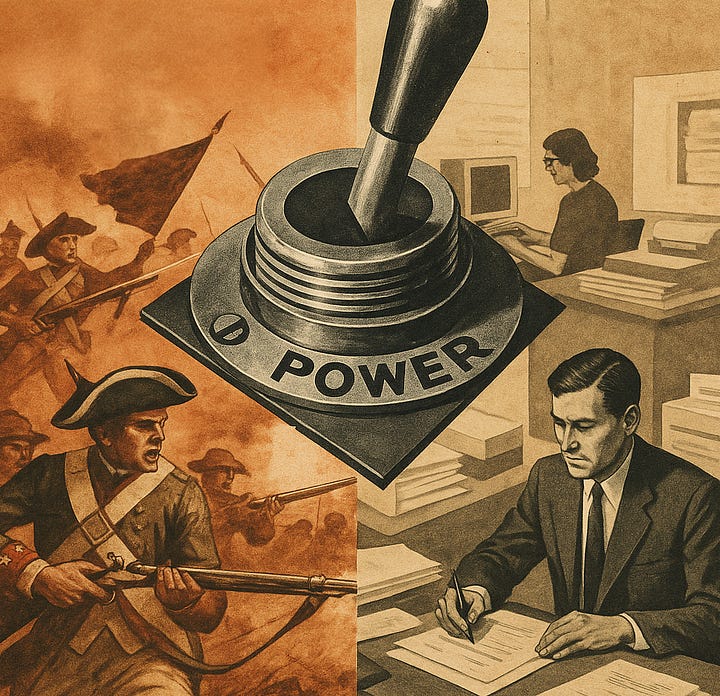
Removal once depended on muskets, supply lines and garrisoned forts. Since then, extraction and cost-shifting have moved more and more into paperwork, court-mandated defaults and lines of code.
But every administrative shortcut, from the 1830 Indian Removal Act’s euphemism of an “exchange of lands” to the pre-checked data-harvest boxes of our era, leaves a bill. It comes due late, through resistance, catastrophe or a new law, and the people the shortcut displaced pay it first.
Turning removal and bondage into paperwork
In 1830, Congress turned settler-colonial violence into routine administration. Under the Indian Removal Act, the president could offer tribes land west of the Mississippi in “exchange” for their homelands. Treaties and surveys, backed by troops, expelled tens of thousands of Cherokee, Creek and other nations onto the Trail of Tears.
The Act dressed removal as an exchange.
Seminole guerrillas in the Everglades, Sauk warriors along the Mississippi, and covert peace delegations repeatedly punctured that façade. Ambushes forced Washington to fund fresh militias and clandestine logistics, proof that ink alone can’t erase stolen sovereignty.
This pattern of administrative violence and insurgent pushback underpins my essay “Who Gets to Tell the Story?”.
By the 1790s, the logic of chattel slavery went through its own calculus-shifting optimization. Before Eli Whitney’s cotton gin, buying an enslaved field hand cost roughly the price of a modest home; escape, disease or revolt always threatened that investment.
A legal “innovation” and a technical one changed the game. The Three-Fifths Compromise grafted congressional representation onto each person in bondage at zero extra cost. The gin separated cotton fiber mechanically and multiplied a worker’s daily output of cleaned cotton about fifty-fold, which shortened the time a purchase took to pay off.
Emancipation seemed to shatter this code. Then Southern legislatures recast vagrancy or “breach of labor contract” as felonies and funneled Black men and women into the convict leasing system at pennies per head.
Convict leasing outlasted Reconstruction by half a century: Alabama, the last state to use it, ended it only in 1928.
I explore these “waste metrics” of human lives in “When Your Illness Has No Billing Code.”
Factories and redlining hid the cost in the books
As industrial capitalism accelerated, Frederick Taylor’s time-and-motion studies and Henry Ford’s moving assembly line broke skilled labor down into machine-like gestures. The Model T’s assembly time fell from twelve hours to ninety-three minutes—but only by filing crushed limbs, blinding dust and sealed fire exits under “industrial overhead.”
The garment trade had already shown what that overhead cost: in 1911, 146 workers died in the Triangle Shirtwaist Factory fire.
The Uprising of the 20,000 strike of 1909–10 had won better pay and shorter hours but hadn’t addressed safety. Only after the fire did New York’s Factory Investigating Commission force the very companies that optimized for speed to pay for safety, with new fire codes and factory inspections.
In “Institutions Prefer Crises to Early Warnings”, I show how catastrophe becomes the only reliable mechanism to re-embed friction into a system designed to erase it.
Under the New Deal, the federal Home Owners’ Loan Corporation (HOLC) drew “Residential Security” maps that tinted Black neighborhoods red. A single crayon stroke automated mortgage denial while white suburbs thrived. This was the birth of modern redlining, a process that turned racialized risk into a line-item calculation.
Yet rent strikes in Chicago, community credit unions in Detroit and waves of Fair Housing Act litigation dragged banks into courtrooms and brought punitive fines. Those legal battles forced lenders to publish and justify the racial calculus they’d long concealed, rewriting the ledger of urban development.
I unpack these dynamics in “Actuarial Medicine & Hidden Exclusion.”
The same shortcut in pollution, code and offsets
Industry’s shortcut to environmental compliance followed the same blueprint. It benignly relabeled toxic dioxin an “industrial by-product,” and oil spills became “operational incidents,” putting off cleanup costs until Love Canal blockades or Exxon Valdez class-action lawsuits made pollution a headline liability.
Regulators then hiked insurance premiums, investors sued directors, and legislators wrote remediation bonds into law. That showed that prevention, if priced correctly, always beats scandal.
Digital platforms repeat two of these patterns in code, defaults and black-box scoring. A quiz app’s permission screen once let a data firm harvest up to 87 million Facebook profiles, most of them belonging to friends who were never asked; ride-hail platforms use five-star ratings as invisible firing levers.
Cambridge Analytica exploded into public view in March 2018, just before the EU’s GDPR, adopted in 2016, took effect. The regulation bans pre-ticked consent boxes, and its fines have since run to billions of euros.
For ride-hail drivers, wildcat strikes, municipal regulations and the rise of platform cooperatives have forced platforms to open up their rating criteria and to guarantee pay floors and formal appeal processes. They’re patches of friction re-woven back into code.
My guide “Accept All / Reject All” outlines these micro-resistance tactics in the interface layer.
Even the climate crisis hasn’t escaped this ergonomic gambit. Under-verified carbon offsets once let utilities “erase” millions of tons of CO₂ for less than the cost of a scrubber retrofit.
Only after blockades in Cancer Alley, Indigenous Amazon protests and exposés of fraudulent forestry credits did regulators tighten accreditation, raise per-ton liabilities and roll out real-time emissions monitoring. That finally made direct decarbonization more cost-effective than “pay-to-pollute.”
In “Emergence Is an Excuse”, I argue that exposing these thresholds can turn exploited loopholes into levers for systemic repair.
Designing the same levers to protect people
The same design levers repeat across this history. Thresholds determine who (or which lives) count. Defaults automate compliance and consent. Narratives recast violence and harm as accidents. Black boxes hide the human authorship behind policies and code.
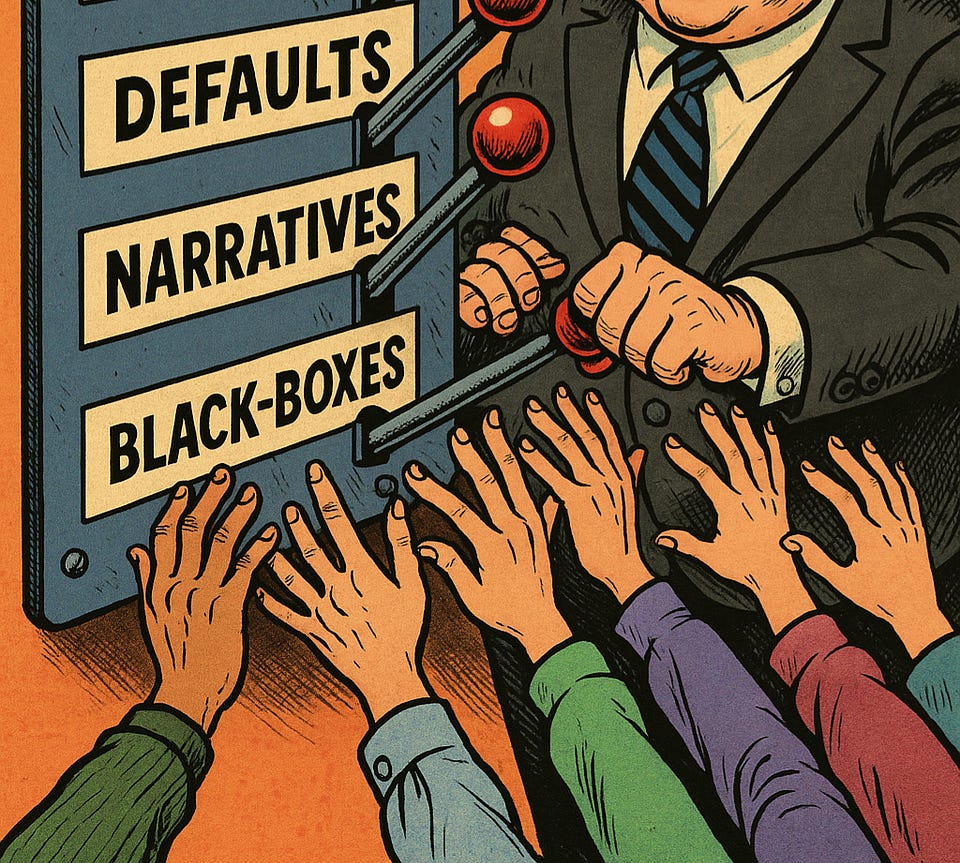
Those levers can be designed to protect people instead.
- By publishing every eligibility threshold alongside budgets,
- by making privacy, essential services, and the right to dissent opt-out rather than opt-in,
- by mandating remediation bonds and waiting periods for mass layoffs, and
- by embedding transparent appeals into every contract and algorithm,
we can rebuild governance and markets on an ergonomic ideal of dignity rather than domination.
Under those rules, refusing a harmful decision would take a standard appeal instead of a protest. The cheapest course for an agency or company would also be the one that takes care of people.