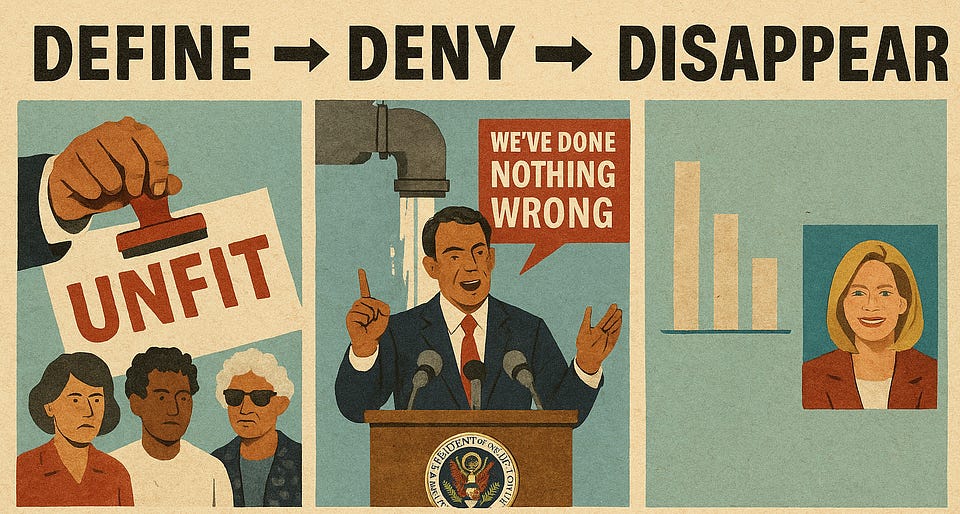
I used to think power was all about coercion, about who can push hardest and who can demand obedience. Over time, though, I’ve realized that much of it works through definition, through who gets to name what happened.
When a corporation poisons a river and calls the cleanup “routine maintenance,” or when a government purges voter rolls and labels it “routine verification,” they’re not just dodging blame. They’re asking us to rewrite our own memories.
Narrative control isn’t a sideshow; it’s the foundation. In Institutions Prefer Crises to Early Warnings, I traced how critique gets delayed, absorbed, and erased, so that only crisis ever feels real.
When tech platforms funnel extremist content under the banner of “neutral algorithms,” they spread the same arguments for domination that manifestos once carried, to far more people.
When the only words on offer are the institution’s, we start to doubt our own perceptions and, ultimately, to police our own resistance.
This isn’t new. Edward Said’s Orientalism showed how colonial powers depicted entire peoples as irrational or childlike, casting conquest as benevolence. Today’s data infrastructures replay that script at algorithmic speed. Recommendation engines promise “personalization” even as they funnel us toward outrage; surveillance tools hide behind the label “security measures” while denying any distortion of truth. We’ve moved from inked dispatches to policy memos to lines of code, but the logic remains the same:
define the other → deny the harm → justify the control
At the same time, government offices make their decisions hard to trace back to anyone. Impersonal forms, automated rejections, and euphemistic jargon shift blame onto “the process.”
A welfare applicant stripped of benefits over a minor paperwork lapse receives a polite notice of “ineligibility”, a judgment of unworthiness put in softer words. In boardrooms, environmental collapse slides into annual reports as “externalities,” and mass layoffs morph into “strategic realignments”.
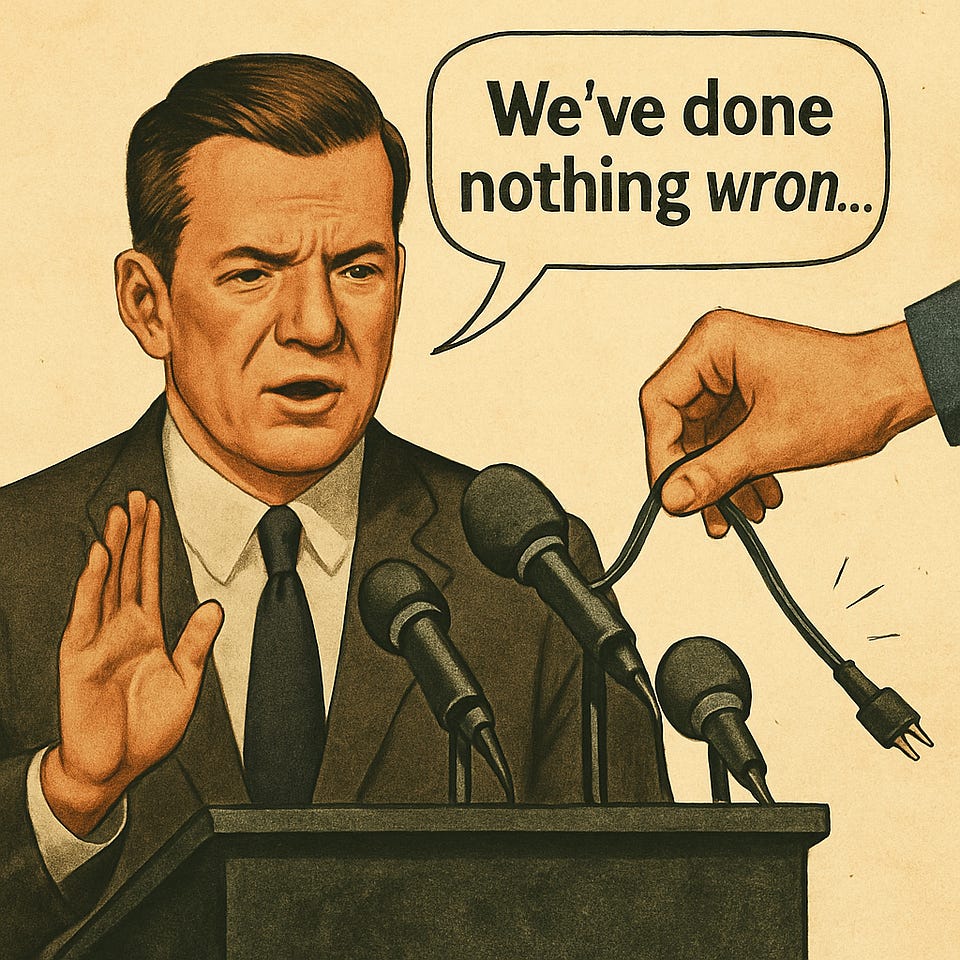
Companies and agencies pick these words to blunt collective outrage and head off demands for redress. I also documented this pattern in Actuarial Medicine & Hidden Exclusion.
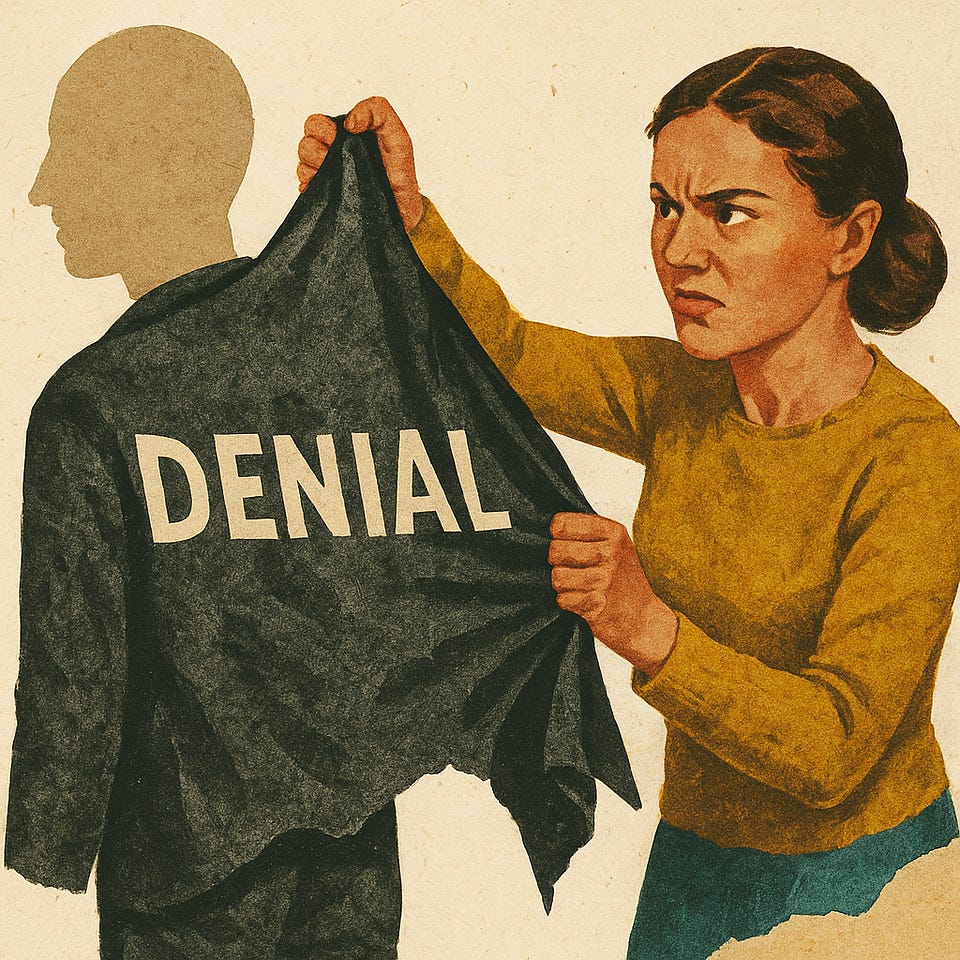
That denial comes at a human cost. When workers are told that grueling hours amount to “professional development,” they internalize burnout as personal failure. When citizens learn their names vanished from voter rolls through “routine verification,” they begin to doubt whether disenfranchisement happened at all.
This politics of self-doubt fractures solidarity before it even forms, a dynamic I unpacked in Quiet Is Not Peace and Fraud Crackdowns Flag the Wrong People. Once the harm is described as each person’s own problem, people comply, and the protest that might have followed never gets organized.
Institutions often insist, “Our systems are too complex to explain fully,” but that complexity usually conceals deliberate design choices: elastic legal terms like “reasonable suspicion,” appeals that few people can navigate, and opaque underwriting models. What feels like technical rigor is really a waiver most of us never fully read, one that surrenders authority over our own boundaries and makes resistance seem futile. I laid this out in Emergence Is an Excuse.
We tend to underestimate narrative control for a few reasons
- First, its effects arrive as cumulative micro-shifts. Each “voluntary” recall, each “strategic realignment,” each “neutral” fact-check nudges our shared assumptions just enough to slip a new normal into place.
- Once institutions set the epistemic floor by defining “national security,” “due process,” or “market efficiency,” the very terms of debate become skewed, making dissent feel like a category error.
- Narrative power lives in code: recommendation engines and moderation rules teach us what counts as mainstream long before any headline hits our eyes. And finally, frames carry emotional resonance. Calling something “terrorism” instead of “insurgency” triggers fear and shuts down inquiry.
Yet denials break down when people build their own record of what happened. Dissent means reclaiming the authority to name: whistle-blowers leaking internal memos, source auditors decoding hidden algorithms, survivor networks archiving erased histories.
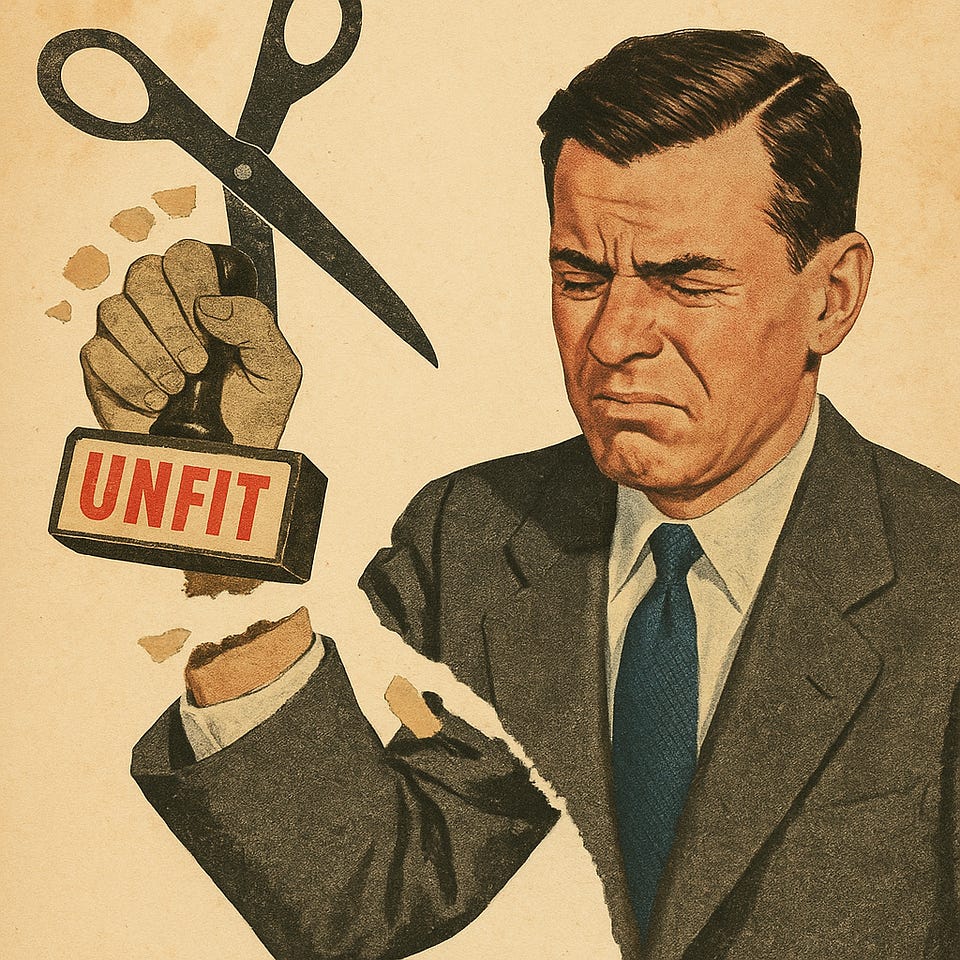
When we call a river poisoning “pollution,” a layoff “firing,” or a rigged recommendation engine “bias,” we reconnect lived experience to public record and strip denial of its cloak.
Refusing to repeat the institutional script isn’t just symbolism; it’s the first act of structural change.
Plain, accurate names give the people who were harmed a way to describe what happened to them, and a record others can check.