It’s easy to mistake silence for peace in a marriage, an office, or a country, and to miss what the silence costs until later.
In our closest relationships, skipping hard conversations spares us friction in the moment and stores up pressure for later. Communication problems are among the most commonly cited reasons for divorce. Grievances left unsaid keep building until a couple can no longer work around them.
At work, glossy post-mortems and staged celebrations fill meeting agendas even as engagement hovers at just twenty-one percent globally. Behind the applause, employees siphon frustration into private chats and late-night emails, only to unleash it later in sudden resignations or whispered accusations that force costly reorganizations.
And when entire societies slip into this pattern, the consequences can be catastrophic. Mohamed Bouazizi’s self-immolation in Tunisia in December 2010 was an act of despair, and it was also a refusal to go on staying quiet. Within weeks, the calm cracked, toppling a regime.
This brittle quiet is calm that lasts only while people keep conceding and holding back concerns, each of which adds to a cost that comes due later.
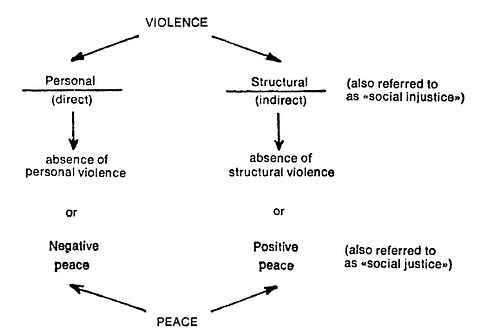
Johan Galtung’s distinction between negative peace (the mere absence of overt violence) and positive peace (equitable structures that address root grievances) helps us see how order can be sustained through coercion instead of justice. Negative peace merely fences in resentments; true resilience requires moving beyond containment.
Feminist scholars remind us that the unpaid labor of care and dissent is itself a political force: when those tasks go unrecognized, the very bonds they’re meant to hold together turn brittle, leaving no recourse but rupture.
Authentic peace, by contrast, treats tension as a reason to talk rather than a sign of failure. It begins when we surface small ruptures (the whispered concerns, the gentle complaints) and treat them as early alarms rather than nuisances to sweep aside. It deepens when we count, share, and reciprocate the emotional work required to speak up and listen, rather than expecting individuals to bear it alone.
And it endures when institutions lock in structures (rotating decision-rights, transparent budgets, protected feedback channels) that turn dissent into design and ensure every voice can register without fear of reprisal.
Settling for perverse stability produces predictable pathologies. Honest critique is branded “troublemaking,” and the label forces people into perpetual self-surveillance and chronic anxiety. Rituals of harmony calcify into echo chambers where real problems go unflagged, and they leave no reservoir of trust when crisis arrives. The longer grievances go unspoken, the bigger the break when they surface, and in a society that break can be violent.
By contrast, a system that rewards early critique builds a reservoir of trust so that disagreements sharpen rather than shatter the whole.
Practically, map the unwritten agreements we’ve tacitly accepted and refuse to subsidize others’ calm with our silence. Naming and distributing emotional labor turns an invisible burden into a shared responsibility, while open-book governance and rotating authority dismantle entrenched hierarchies. Confessing uncertainty as readily as conviction normalizes vulnerability, and repeating hard truths becomes our strongest defense against institutional amnesia.
True peace costs short-term discomfort but returns durable trust, collective agency, and an enduring capacity to adapt.
Being hard to govern, in this sense, means refusing the unspoken deal that trades your concerns for everyone else’s calm.
Speak the truths you’ve parked too long, insist on structures that honor every voice, and let the only stability worth having be one we build together: no concessions, no suppressed voices, no debts unpaid.