You saw something early and said something. Not dramatically—just clearly. A risk no one was tracking. A pattern you’d seen before. A decision that seemed rushed. A group that had been left out.
You weren’t trying to create friction. You were trying to prevent it.
Clarity that arrives before the group is ready gets coded as friction. And friction gets managed, not engaged.
The response wasn’t curiosity or appreciation. It was tension.
Maybe someone thanked you in the moment, then left your comment out of the notes. Maybe the meeting moved on without acknowledgment and you got a couple of validating Slack DMs.
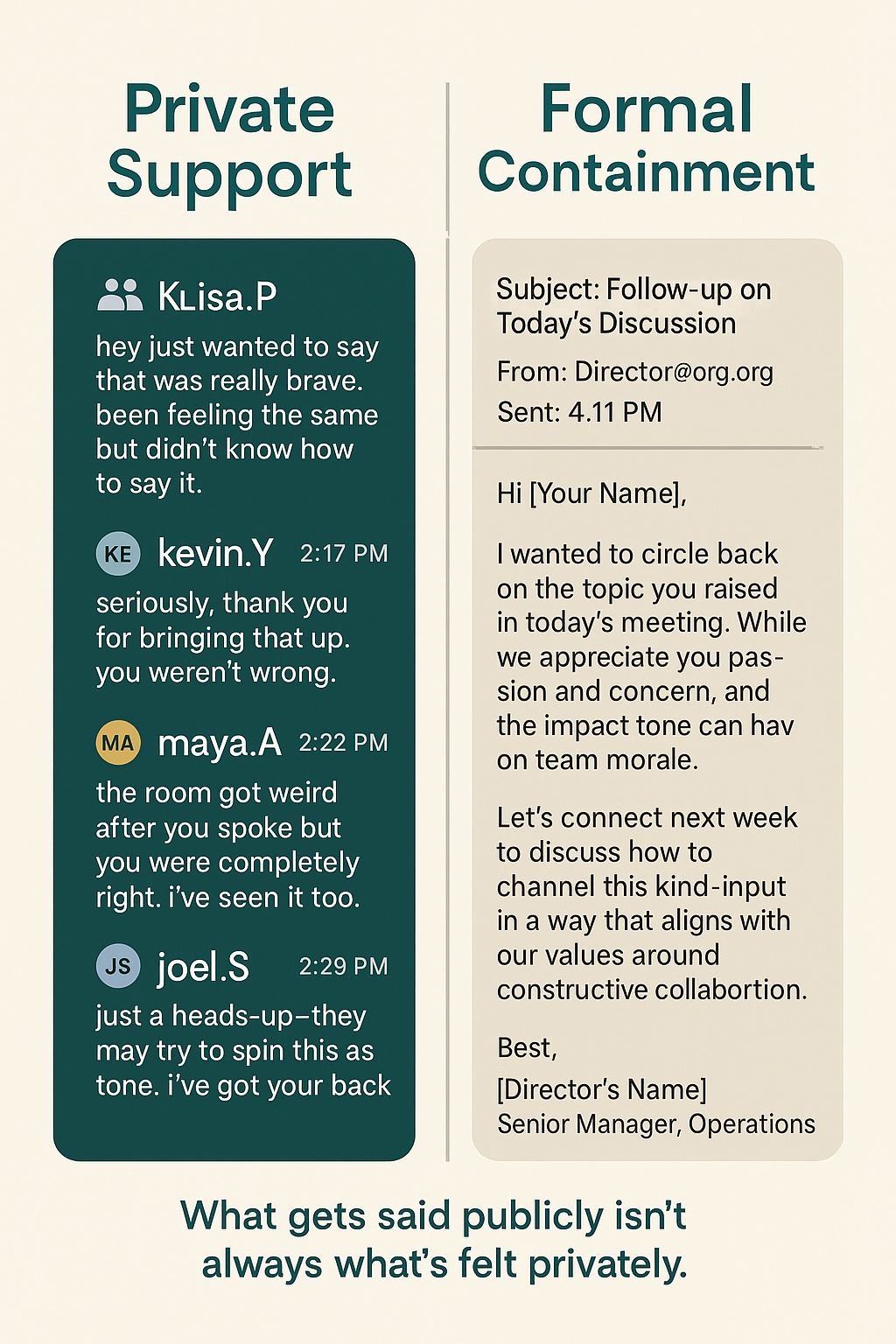
Or maybe you were told—gently or not—that you needed to be “more constructive,” “more strategic,” or that “this isn’t the right forum.” Either way, the message was clear: your timing made people more uncomfortable than the risk itself.
Soon, the focus stopped being the issue you raised and became your presence in the conversation. The substance faded. You didn’t. You weren’t being asked to explain the risk. You were being asked to explain yourself.
I've seen this happen everywhere.
- In product teams, someone identifies a vulnerability in a feature or model and is told to “stay focused on what we can ship.”
- In a hospital, a nurse raises a safety flag and is treated as a drain on morale.
- In a school, a teacher speaks up about bias in evaluation metrics and is reassigned or sidelined.
- In a nonprofit, someone brings up access barriers and gets left off the next invite list.
- In families, a member names a harmful dynamic and is told they’re making things harder than they need to be.
In each case, someone notices something early, names it, and gets repositioned—not as helpful, but as misaligned. Their clarity becomes a problem to work around.
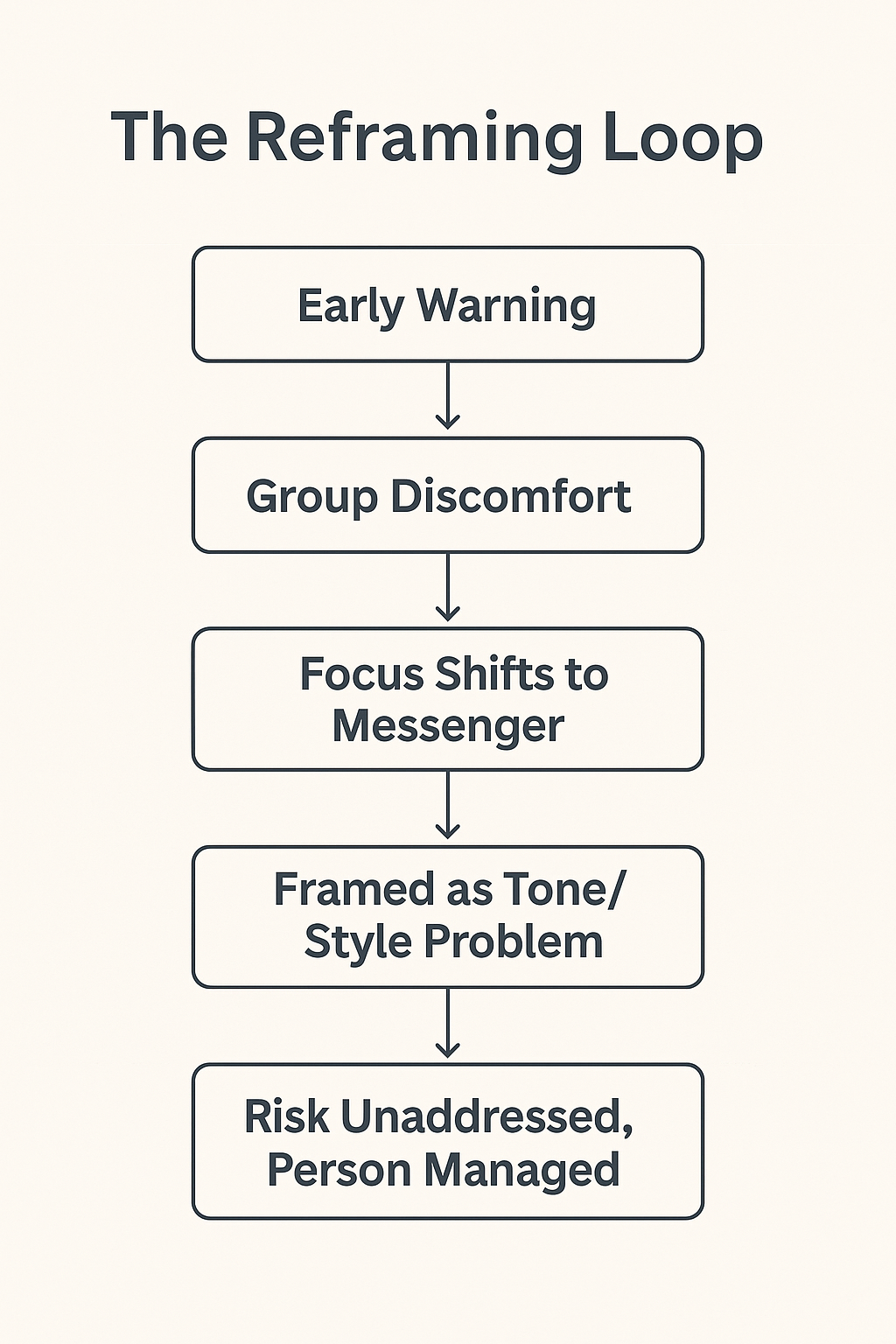
This doesn’t mean the insight was off. It’s usually right—just too early for the system to admit it.
Later, when the consequences surface, someone else might raise it. This time, the concern lands. Not because it’s new, but because it now fits the timeline of what people are prepared to engage with.
By then, the person who saw it first may have left. Or gone quiet. Or been quietly recast as difficult, intense, inflexible, or “not a great culture fit.”
That story doesn’t show up in notes or performance reviews. But it follows you anyway.
Most systems aren’t structured to respond to early insight. Acting early means slowing momentum, admitting something was missed, or changing direction. That’s a cost. And when under pressure, institutions often defer that cost—choosing a larger consequence later over the discomfort of accountability now. In the meantime, the institution absorbs the harm. The person who flagged it absorbs the blame.
This isn’t a communication failure. It’s not about interpersonal style or better packaging. It’s structural.
We could go as far as saying that institutions tend to evaluate feedback based on timing, not validity. They treat early as threatening and late as consensus.
Clarity that arrives before the group is ready gets coded as friction—and friction gets managed, not engaged.
I’ve written about this before.
- In Frictionless for Whom?, I described how systems offload friction onto individuals who quietly absorb risk before it surfaces. That labor disappears until it stops—then the system falters and no one remembers who was holding it up.
- In The Autistic Tendency to Disappear, I wrote about what happens when people walk away—not because they failed, but because the cost of being early, over and over, made presence unsustainable.
- In If You Knew Me Before, I showed how early pattern recognition gets praised until it challenges group comfort—at which point it gets punished. Foresight is welcome until it becomes inconvenient.
- In Is Honesty an Expensive Hobby?, I unpacked how truth-telling is quietly penalized across bureaucracies that equate sincerity with risk. Except here, the penalty is triggered not by what you say—but by when.
- And in The Spectacle of Fraud, I examined how institutions delay or suppress the truth until it can be recast as something they were “already working on.” This is the same trick, just performed internally: your early warning is ignored, then recycled later under new names and safer voices.
If this has happened to you, it doesn’t mean you misread the situation. It doesn’t mean you overstepped. It means you were early in a structure that only knows how to respond late.
You didn’t create the discomfort. You revealed it.
And whether or not anyone acknowledged it, it changed what came next.
Thanks for reading syadvada! Subscribe for free to receive new posts and support my work.