Jainism, one of India’s oldest religions, has made profound contributions to Indian philosophy, ethics, and culture, yet it has often been overshadowed by more dominant religious traditions, particularly Hinduism.
This article explores the historical forces that contributed to the erasure of Jainism and makes clear why recognizing this neglected history matters.
Colonial Classification and the Subsumption of Jainism
The British colonial period played a significant role in the marginalization of Jainism. The colonial administration's efforts to classify Indian religions often oversimplified religious identities. Jainism, with its distinct philosophical principles, was frequently subsumed under the broader Hindu category. This misclassification reinforced misconceptions about Jainism as merely a sect of Hinduism, rather than a separate tradition.
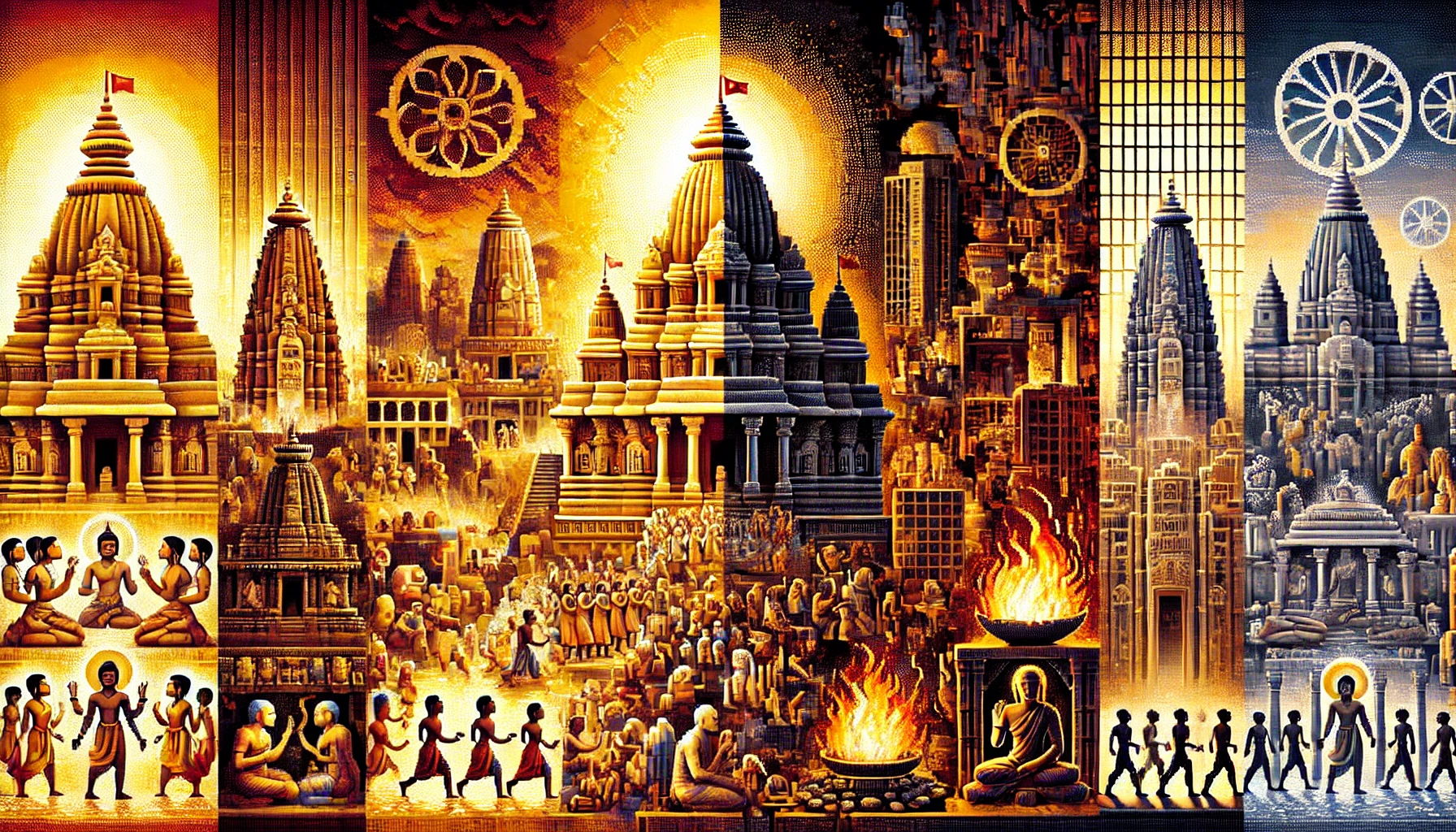
In the British census, Jains were not given a separate category until 1881, making it difficult to accurately assess their population and diminishing their distinct identity. Moreover, legal frameworks during colonial rule tended to favor larger religions, particularly Hinduism, leading to the marginalization of Jain rituals and customs. The British construction of Hinduism as a unified religion, despite its internal diversity, further contributed to the subsumption of Jainism within the Hindu fold.
The Impact of Hindu Nationalism and the Appropriation of Jainism
The rise of Hindu nationalism in the late 19th and early 20th centuries further entrenched the marginalization of Jainism. Hindu nationalist leaders, seeking to build a unified Hindu identity in response to colonial rule and perceived external threats, often portrayed Jainism as a sect of Hinduism rather than a distinct religion. This appropriation served the nationalist agenda of consolidating religious power under the Hindu banner, overshadowing the unique contributions of Jain philosophy and culture.
Jain art and architecture were frequently reinterpreted as part of a broader Hindu tradition, diminishing recognition of Jainism’s distinct heritage. Organizations like the Arya Samaj and the Hindu Mahasabha actively promoted the subsumption of Jainism within Hinduism, reinforcing the erasure of Jainism's unique identity in both religious and cultural contexts.
Political and Social Marginalization in Medieval and Modern India
Throughout history, Jain communities have faced political and social marginalization, particularly in regions where they were not in the majority. During periods of Muslim rule, Jain temples were destroyed or converted, and Jain communities faced persecution. However, it was during the medieval period, under Hindu rulers prioritizing Brahmanical practices, that Jains experienced significant marginalization.
The rise of Bhakti movements and the growing influence of Shaivism and Vaishnavism in regions like Tamil Nadu and Karnataka contributed to the decline of Jain influence. Jain temples were appropriated by Hindu sects, and Jain communities were pressured to conform to dominant religious practices. This erasure was not only physical but also ideological, as Jain philosophical teachings were increasingly overshadowed by more popular Hindu traditions. Later tradition supplied stories of outright violence—the impalement of 8,000 Jains at Madurai is the best known—though that account first appears in an 11th-century Shaivite hagiography, four centuries after the events it describes, and historians from Nilakanta Sastri to Paul Dundas read it as legend rather than record. What is documented is quieter and more thorough: as Shaiva and Vaishnava devotional movements won royal patronage, Jain temples across Tamil Nadu were reconsecrated to Hindu deities, wealthier Jain families assimilated into the ascendant sects, and by the twelfth century most Jain sites in the region had been abandoned, forgotten, or claimed by others. Erasure rarely needs a massacre. Withdrawn patronage and reassigned buildings will do it, and they leave a record the legend does not.
Jain Resistance, Revival, and Preservation of Knowledge
Despite these challenges, Jain communities have actively resisted erasure and worked to preserve their religious and cultural identity. Modern Jain leaders and scholars have reasserted Jainism’s contributions to Indian civilization, challenging historical narratives that have minimized their significance. Efforts to document and promote Jain heritage, establish educational institutions, and engage in social and political advocacy have been crucial in resisting this erasure.
The Jain diaspora has also played a key role in raising awareness of Jainism's distinct identity, contributing to a renewed interest in Jain studies and practices. Organizations such as the International School for Jain Studies (ISJS) and the Jain Heritage Preservation Project have been at the forefront of efforts to preserve and promote Jain knowledge and culture.
However, there remain concerns about the preservation of Jain knowledge and the dwindling number of Jain scholars. Initiatives like the ISJS have emerged to address this issue, promoting Jain scholarship to ensure the survival of Jainism both in practice and in academic circles. The digitization of Jain manuscripts and the establishment of Jain studies programs at universities around the world have also contributed to preserving and disseminating Jain knowledge.
Confronting the Erasure of Jainism
The marginalization of Jainism is a complex issue that requires greater attention and dedicated efforts to correct historical erasure. By examining the colonial, nationalist, and political forces that contributed to this marginalization, we can better understand the challenges faced by the Jain community in preserving their distinct identity.
Acknowledging this neglected history is essential for appreciating the rich diversity of India's religious and cultural heritage. By supporting Jain scholarship, promoting awareness of Jainism’s contributions, and challenging narratives that subsume Jainism under other traditions, we can work toward correcting the historical erasure of this ancient religion.
A concerted effort is needed to ensure that Jainism’s profound philosophical, ethical, and cultural legacy is preserved and celebrated for future generations. This article serves as a call to action for scholars, activists, and community members to engage in the vital work of resisting erasure and building a more accurate and inclusive understanding of Jainism's place in Indian history and society.