Modern systems are designed around a particular kind of person, who is a convenient fiction rather than a statistical average or a real human. The fiction is a user whose life fits cleanly with the assumptions baked into the workflow. This person rarely appears in writing, and their outline decides everything: how fast responses are expected, how rigid a deadline can be, how many steps have to be completed without interruption.
Modern infrastructure imagines this figure as the reasonable person: stable income, predictable availability, continuous attention, consistent documentation, and enough slack in their life to stay perfectly in sync with whatever the system requires.
The problem is not that this person doesn’t exist. The problem is that most actual lives do not, and cannot, conform to the model. And when they don’t, the people living them get recoded as the problem: the unreasonable people the system can’t accommodate.
The ideal user
Every system simplifies to function. But as institutions get more automated and optimized, their user models narrow, and what began as simplification hardens into requirement.
A “reasonable” user can respond within the specified window, complete tasks in one sitting, navigate updated systems without losing their place, gather documents immediately, schedule around limited service hours, and ride out delays without cascading consequences.
Under each of those is the same premise: the user’s life is frictionless enough to comply. The gap opens at that premise.
When someone deviates from the expected pattern, misses a deadline, shows up without a document, responds too slowly, the system performs a familiar attribution error. It fails to see the mismatch as a design constraint and treats the deviation as a personal failure.
The lives most often labeled unreasonable belong to a parent caring for a sick child, a shift worker whose schedule changes weekly, a disabled person with fluctuating energy, an immigrant navigating conflicting documentation requirements, a student juggling work, debt and irregular hours, and a gig worker dependent on volatile earnings and algorithms.
None of those lives is unusual. They only look unreasonable relative to an infrastructure designed to exclude them.
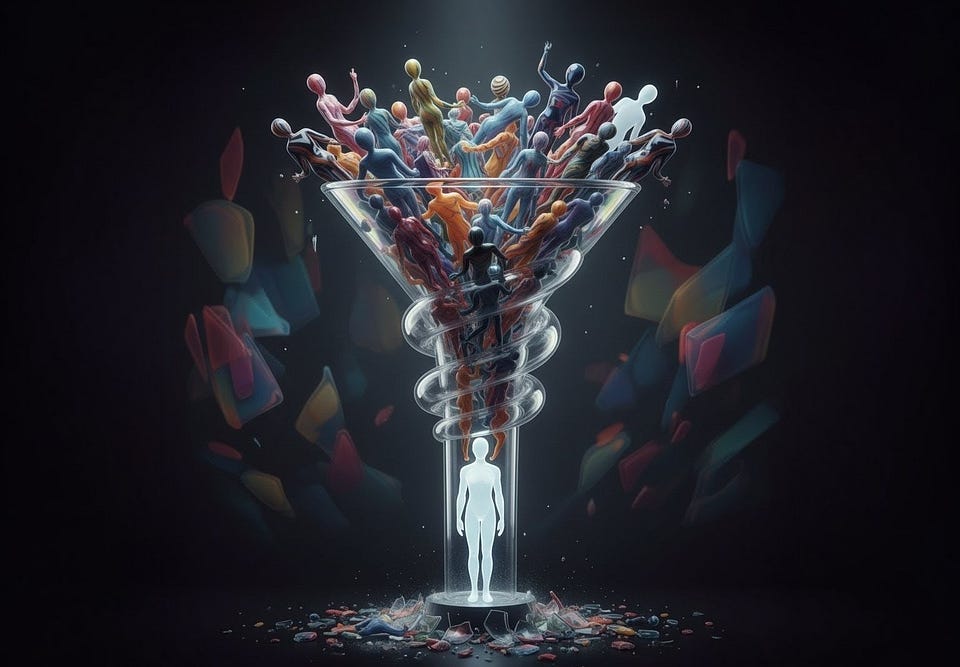
A rigid system in a variable world reads variance as noncompliance.
A missed deadline is interpreted as irresponsibility. A rescheduled appointment reads as noncompliance. A delayed upload reads as negligence. A conflicting obligation reads as excuse-making.
People look like they’re failing; the system’s tolerance has just evaporated. Because the imagined reasonable person is the default user, everyone else gets sorted into an informal category: the unreasonable people who supposedly cannot manage their lives.
The largest recent run of this sorting was Medicaid’s return to annual renewals after the pandemic. More than 25 million people were disenrolled, and 69 percent of them lost coverage for paperwork reasons, such as a renewal form that never came back or came back missing a document. No one had found them ineligible.1 Some of the paperwork failures were the system’s own. In August 2023 federal regulators found that automated renewals in some states were checking whole households instead of individuals. When one adult looked ineligible, the whole family was sent a form, and if nobody answered, everyone lost coverage, including children who still qualified. Thirty states reported the problem, and nearly 500,000 people had their coverage reinstated.2 Each of those terminations had been recorded as a failure to respond.
Where the judgment went
In more flexible eras, mismatches got absorbed by human judgment: clerks who understood context, caseworkers who recognized competing demands.
That judgment was never neutral. The same discretion that made room for one family’s chaos could decide another family didn’t deserve it, and much of the case for automation was a case against that prejudice. Bringing back unaccountable discretion would repeat it. What the workflow lacks is interpretive capacity with a record: judgment that has to say what it weighed, and that someone can review.
As the interpretive layer gets replaced by portals, automated triggers and rigid thresholds, the system’s capacity to recognize legitimate variation disappears.
The burden of coherence moves outward.
What used to be handled with discretion is now handled with denial. There’s nowhere in the workflow to record that a “non-compliant” person is just someone whose life doesn’t match the imagined script.

If a system only works for people whose lives never collide with anything else, the system is the one that is unreasonable.
Unreasonable people are often the ones whose lives show where the model breaks.
Only redesign lasts
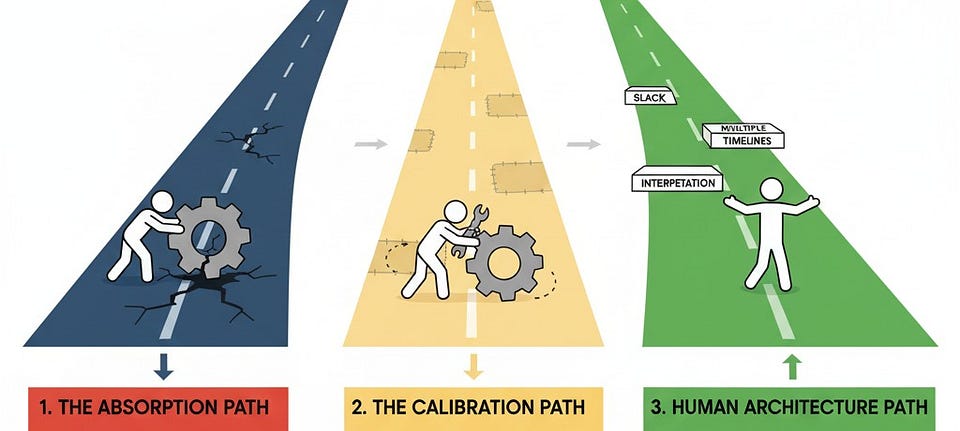
If we continue as we are, individuals bend. People keep absorbing the mismatch, performing heroics to stay compliant. Their compensatory labor gets misread as competence. Their collapse gets misread as personal fault. Unreasonable people are told to try harder.
Broadening the model slightly is helpful and brittle. Add flexibility, widen windows, soften edges, and expect people to shield each other from the worst of it. As long as the incentives reward narrowness, broadened models regress toward the reasonable person’s silhouette. Calibration masks the problem and leaves it in place.
The only durable option is to redesign for real life: build systems that stay stable when people do not. Operational slack instead of minimum viable margins. Interpretive capacity instead of binary thresholds. Multiple timelines instead of one correct pace. Accommodation for interruption, conflict and return. Logic that treats mismatch as diagnostic information about the system.
Accuracy, resilience and fairness actually require all of it.
A system designed for an imaginary person will always malfunction on contact with the world, and it will keep calling the malfunction “unreasonable people.”
Notes
Jennifer Tolbert and Bradley Corallo, “An Examination of Medicaid Renewal Outcomes and Enrollment Changes at the End of the Unwinding,” KFF, September 18, 2024. The 69 percent is a share of disenrollments, not of everyone renewed; some states’ data were still preliminary.
Centers for Medicare & Medicaid Services, “Coverage for Half a Million Children and Families Will Be Reinstated Thanks to HHS’ Swift Action,” September 21, 2023. The agency did not say how many of the people reinstated were children.