Mark Fisher’s concept of capitalist realism has become a standard lens for seeing how capitalism survives (even profits from) economic turmoil, cultural rebellion, and “radical” critique. By showing the system’s almost preternatural resilience, Fisher explains why so many attempts to transform society get reabsorbed.
Yet that same emphasis on adaptability can be, and often is, misread. Meltdown fantasists take crises as the path to liberation, and philanthropic minimalists shrink reform to tiny pilot projects. Doomer cynics insist there’s no point trying, and cultural fatalists see every “rebellion” as predestined for corporate branding.
These misreadings are more than casual error. They’re reinforced by an administrative middle layer—the philanthropic boards, accreditation agencies, and institutional associations that shape our sense of the “feasible.” Together they help sustain capitalist realism rather than challenge it.
Below are the four misreadings, with arguments drawn from my syadvada pieces (Collapse Capitalism, Time Is a Commons, Mesopower, and The Subtext Economy). Each one emerges from a complex adaptive system (a system of many interacting parts whose overall behavior no single part controls) that discourages real alternatives.
Fisher’s “diagnostics” are best read as calls for strategic counterpower: durable, collective structures that can meet capitalism’s cunning with equal ingenuity.
Meltdown Fantasies: Why Absorbing Crisis Doesn’t “End” Capitalism
Fisher showed that capitalism absorbs crises and comes out of them stronger. From the oil shocks of the 1970s (ushering in neoliberal policy) to the 2008 financial meltdown (leading to corporate bailouts and austerity), each supposed breakdown ended up tightening capitalism’s grip rather than dismantling it. In Collapse Capitalism: How Investors Buy the Disaster, I argue that without a coherent counterforce (unions, radical movements, or alternative institutions), capitalism treats disasters as raw material for further consolidation.
Despite Fisher’s caution, two factions read crisis as redemption:
- Right-Acceleration (Nick Land et al.): Ramp up chaos so that the “weak” are swept aside, leaving a supposedly superior techno-feudalist order.
- Left-Acceleration: Overload capitalism’s contradictions (automation, universal basic income) until it “implodes” in a left-friendly way.
Some left-accelerationists argue that capitalism’s contradictions (rampant automation, logistical crises, climate limits) will eventually force post-capitalist restructuring, if pushed in the right direction. But this assumes that contradictions resolve themselves in our favor.
The lesson of 2008: capitalists used crisis to consolidate their grip. The lesson of the pandemic shocks: billionaires used the emergency to accelerate their control.
Both wagers ignore that chaos usually benefits those who already dominate. Crisis is neutral until an organized power takes hold of it.
The Doomer Left: Diagnosis That Ends in Inaction
Fisher’s reflexive impotence describes how people, once they recognize the system’s totalizing hold, slip into cynicism and inaction. In internet subcultures this turns into “doomer” memes that mock any possibility of real resistance. The doomer left insists that because capitalism swallows everything, there’s no point wasting energy on “lost causes.”
But as I argue in Time Is a Commons, cynicism has a hidden cost: it eats the time and imagination needed to build alternatives. Defensive pessimism can feel safe (why try if you assume it won’t work?), but it only confirms capitalist realism’s hold.

Once you brand every project naive, you give up the ability to organize, coalesce, or even dream beyond the status quo. “Doomer” cynicism becomes a self-fulfilling prophecy that works for capitalism.
Philanthropic Complexity: The “Too Big to Solve” Alibi for Perpetual Half-Measures
Another misreading has taken hold inside mesopower itself. Philanthropic boards and mid-tier institutions read Fisher’s caution about co-optation as proof that any large-scale reform is doomed. These bodies respond by championing incremental “pilot projects,” small grants, or “market-based solutions,” all under the banner of “We can’t do more; capitalism is too adaptive.” The banner hides their own role in limiting reform.
In The Boards That Decide What Counts as Possible, I argue that philanthropic minimalism isn’t an accident: these gatekeepers have structural reasons to keep change modest and power relations stable. Historical precedents, from the New Deal to major universal healthcare expansions, show that bold measures can rattle entrenched interests.
Fisher’s emphasis on co-optation described the system’s reflex to neutralize mild challenges. He never said deeper ones are always impossible. Meltdown fantasies rely on chaos and philanthropic boards on extreme caution, and both end up reproducing capitalist realism instead of breaking it.
Cultural Cynicism: Merch Doesn’t Mean Dissent Failed
Fisher mapped how subcultures, radical art, and rebellious memes routinely get commodified. Some readers see that commodification as inevitable: “All dissent will be turned into merch eventually.” So why bother with cultural rebellion if capitalism promptly markets it to the masses?
But as I detail in The Subtext Economy Has Collapsed, cynicism about co-optation suits the companies that do the co-opting. Would-be dissenters who assume brand capture is unstoppable never put up real opposition.
Fisher’s actual claim was narrower: without grounding in durable political or communal structures (labor organizing, anti-colonial networks, etc.), subversive aesthetics remain easy prey.
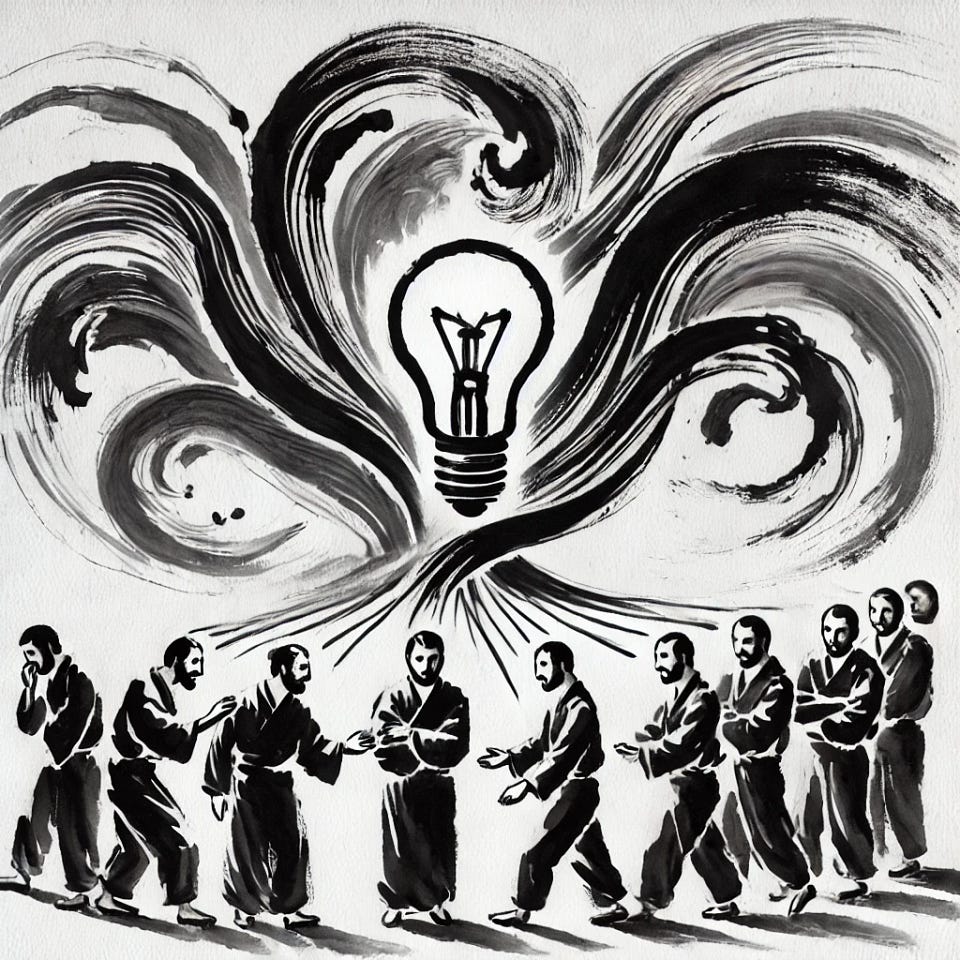
Where subversion is moored to movements seeking material gains (living wages, tenant power, community ownership), capital can’t so readily flip it into a novelty T-shirt or an ad campaign.
Capitalism as a Complex Adaptive System: Why These Misreadings Flourish
All four misreadings make the same move: they take Fisher’s diagnosis of complexity or adaptability as a reason to stop pushing.
None of these stances helps us face the mounting crises of climate disintegration, pandemics, and inequality.
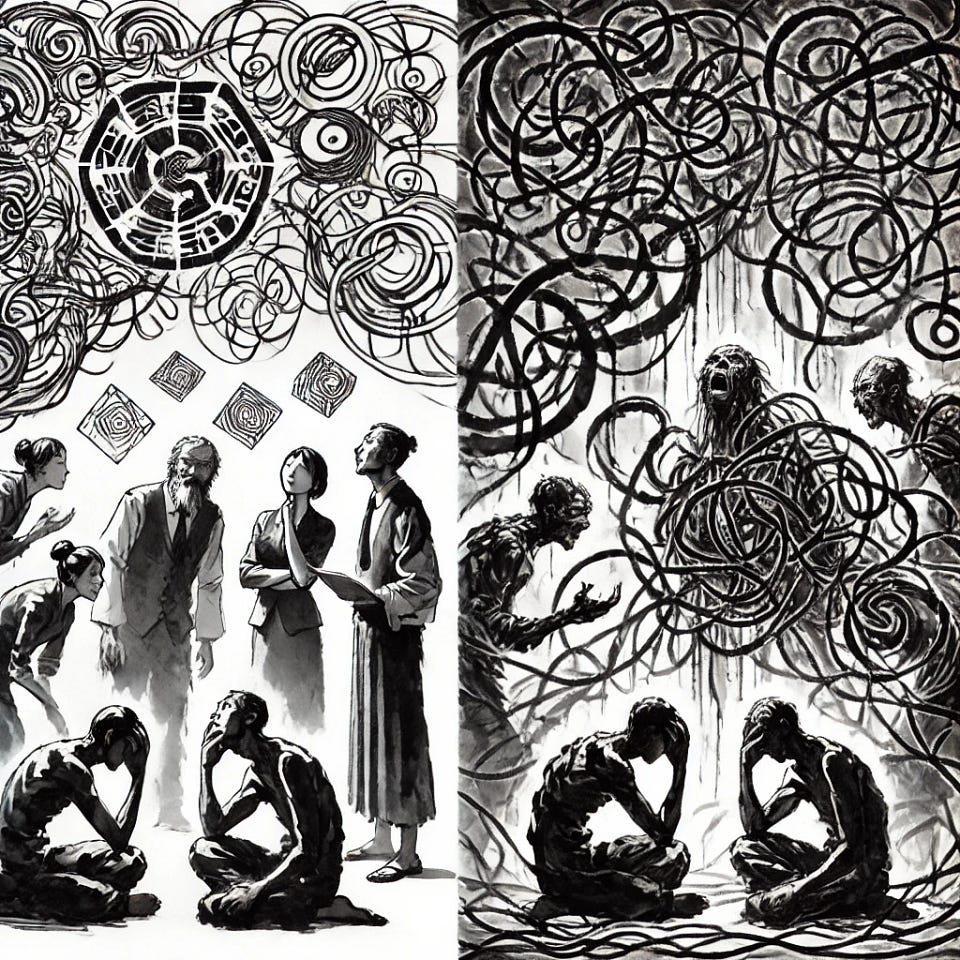
Countering the Labyrinth: Start With the Boards in the Middle
In these essays, I keep returning to mesopower. Its institutions often invoke “complexity” to stall or dilute radical initiatives, channeling frustration into narrow pilots or passing gestures. Overcoming them takes three things:
- Reconfigure Mesopower: Challenge philanthropic and accreditation frameworks that straitjacket reform, demanding large-scale redistribution rather than a mosaic of “safe” pilot programs.
- Practice Temporal Justice: As I argue in Time Is a Commons, meltdown fantasies and doomer gloom waste the collective time and imagination needed to build alternative institutions such as co-ops, municipal governance, or public ownership models.
- Anchor Cultural Dissent in Material Power: Cultural expression (memes, arts, subcultures) needs direct ties to labor, anti-colonial, or feminist struggles. Only then does it resist brand assimilation and keep pushing toward systemic change.
Historically, big shifts, from progressive labor legislation to major healthcare expansions, have altered capitalism’s direction when strong organizing stood behind them, not meltdown illusions or philanthropic tokenism.
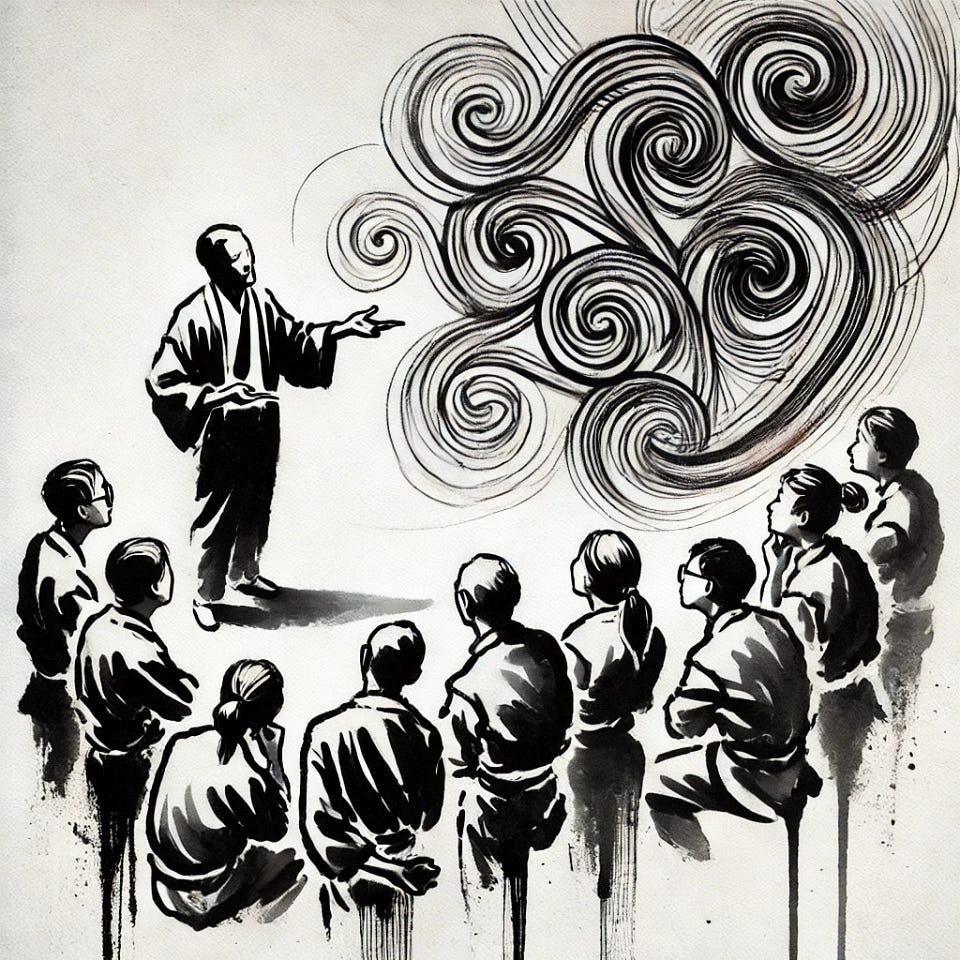
Philanthropic boards and disheartened radicals who read Fisher as saying “the system is unbeatable” end up guarding it from sabotage.
Naming the Labyrinth in Order to Demolish It
Fisher never claimed capitalism was a permanent monolith.
We can turn a complex adaptive system on itself if we build networks of counterpower that adapt just as well: mass movements, mutual aid networks, local governance experiments, and cultural interventions moored in real demands.
We do not name the labyrinth to worship its cunning. We name it so we can tear down its walls.
That’s Fisher’s deeper legacy, and it’s what syadvada insists on.
If we treat every challenge as doomed from the start, no one organizes, and the arrangements Fisher described carry on without anyone having to defend them.