Celebrated “solutions” to crises in climate, health, and infrastructure often come with a cost that the people promoting them leave out. Electric batteries depend on child labor in cobalt mines. “Resilient” telecom systems have gone dark during sieges, leaving ambulances unable to reach the wounded. Catastrophe bonds pay investors while victims are still buried under rubble. Each of these trade-offs is an optimization somebody chose on purpose.
Benjamin Bratton’s “planetary stack” (Earth, Cloud, City, Address, Interface, User) lays out this integrated, extractive logic clearly. His argument is that planetary-scale computation has grown into one accidental megastructure, modeled as those six stacked layers, which is taking over functions that used to belong to nation-states.
But Bratton conflates historical contingency with ontological inevitability, treating what happened to be built as what had to be built. His elegant diagrams render colonial extraction and racialized violence as passive, neutral infrastructure.
Jason W. Moore argues the opposite: capitalist modernity organizes humanity and nature into cheap, disposable resources by design, and that organization drives cycles of exploitation.
Infrastructure that keeps running without the consent of the people it extracts from was imposed on them. A map that leaves that history out makes it easier to forget.
His abstraction leaves out who pays, who benefits, and who stays trapped in a dispossession someone designed. Optimizing the stack then looks like a technical problem with no one harmed.
What in a previous essay I described as “Forensic ethics” starts where Bratton’s cartography ends. It rejects abstraction and reconstructs contracts, clauses, and algorithmic thresholds, demanding explicit accountability and real chances for communities to refuse.
The Cost of Bratton’s Abstraction
Bratton is right about planetary scale, but his abstraction hides the dispossession, coercion, and racial capitalism the planetary stack is built on, both the violent history and the current practice.
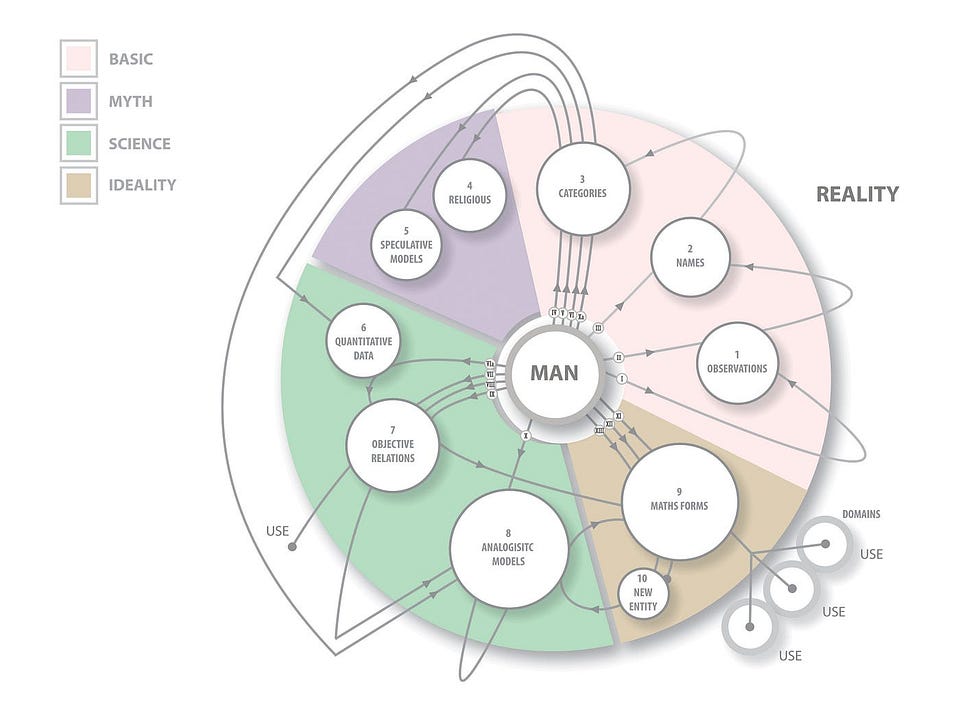
He catalogs cloud sovereignty but doesn’t name whose sovereignty was erased. He visualizes megastructures but leaves out shell companies, privatized relief algorithms, and automated gatekeepers that monetize suffering.
Moore makes the point plain: capitalist systems aren’t neutral. They actively reinforce a hierarchy of disposability and extraction.
When Bratton moves from critique to design, the erasures grow, because he puts infrastructural coherence ahead of reparative justice.
From Cartography to Accountability
Critique identifies injustice. Forensic ethics traces who’s responsible for it:
- Who set the threshold that allowed Chiapas relief but denied Puebla despite greater devastation?
- Which proxies (zip codes, risk scores, or wind speeds) stand in for actual human need?
- Who profits from systemic refusals and structured exclusions?
Forensic ethics treats infrastructure as evidence. It ties every harm to the choices that produced it, which opens the way to direct legal and technical intervention.
The Public Damage Ledger
Accountability takes documentation. Each layer of the stack, from Earth to Cloud to City, could be required to keep a public damage ledger recording extraction, environmental impacts, and human costs.
Moore insists that environmental exploitation and human dispossession are structurally inseparable, both driven by capital accumulation.
Cobalt mining would record extraction alongside land appropriation, pollution, and community dispossession. Cloud services would track ‘compute hours’ with associated emissions, water depletion, and e-waste. Urban optimization algorithms would document human costs: exclusions, wrongful arrests, reparations owed.
The ledger would do more than keep a record. Its entries would be the basis for calculating repair and deciding which communities hold veto rights.
Refusal as Core Design Principle
Refusal starts with interruption, before any utopian redesign: naming the responsible parties, documenting abuses, and keeping records of the harms that automated systems leave out. Extraction goes on more easily when the record of past violence has been erased.
The aim is enforced accountability and immediate intervention, and better models won’t supply either. Consent without a veto is empty. A community that can’t stop a project ends up carrying its costs.
Consider the Lummi Nation, whose community-led refusal halted a coal terminal project by invoking treaty rights. Extending that power into everyday infrastructure means:
- Explicit, legally binding community consent required before a project starts.
- Smart contracts that halt automatically when a community-defined threshold is breached.
- Local councils with the authority to pause or stop damaging projects immediately.
Each of these builds on precedent that already exists.
Bratton provides a compelling map, but a map absolves no one. That the stack fits together does not excuse ignoring who it harms. Facing the planetary crisis means insisting on refusal, accountability, and explicit, structural consent.