“Post-truth,” the hypothesis that our era is dominated by emotional manipulation, misinformation, and the rejection of objective facts, has shaped much of the discussion of modern influence. But post-truth misses a deeper change. Platforms and media now do more of their influencing through repetition and framing than through spectacle and overt manipulation. The attention economy makes its money by capturing people’s attention and selling it. I call what comes after it the post-attention economy: a shift in how value is created and influence exerted that’s harder to see than misinformation.
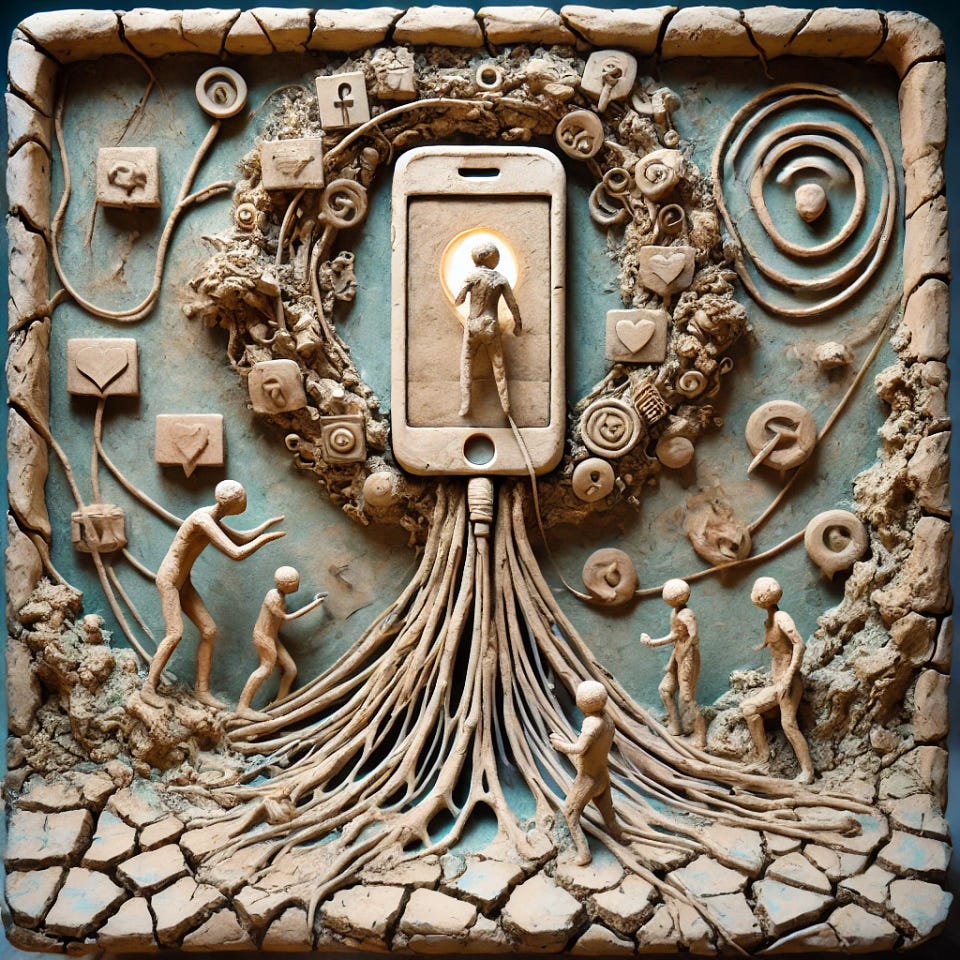
We absorb ideas passively through repetition, ambiguity, and social proof instead of debating or scrutinizing them. The shift relies on fragmented attention spans and cognitive shortcuts, so our beliefs can change without us noticing.
When feeds narrow choices, recast accountability as censorship, sell empowerment as a product, and leave little room to imagine alternatives, questioning dominant narratives starts to feel unnatural.
Resisting it means redefining autonomy, building collective agency, and challenging attempts to commodify thought.
Feeds persuade by repetition, not spectacle
The post-truth era ran on chaos and confrontation: fake news, conspiracy theories, and viral outrage fractured shared realities and exploited emotion to undermine trust in institutions. Movements like QAnon dominated discourse through provocation.
The post-attention economy trades chaos for calm. Platforms like Instagram, TikTok, and Facebook capture attention and then shape beliefs and preferences. “Quiet quitting” originally signaled worker power, and corporate media reframed it as laziness. The shift didn’t take coordinated misinformation; it grew out of countless narratives nudging public understanding toward employer interests.
“Cancel culture” went the same way, from grassroots accountability to a supposed existential threat to free speech. Figures like J.K. Rowling invoke the term to deflect critique while keeping their structural power. The reframing came through ambient repetition instead of direct confrontation.
syādvāda is a reader-supported publication. To receive new posts and support my work, consider becoming a free or paid subscriber.
Repeated exposure produces familiarity, and familiarity passes for truth. “The algorithm” is the clearest case: invoked to explain everything from curated playlists to radicalization, the phrase is so common that nobody remarks on its opacity and bias. Ambiguity protects a term, since vague words evade critique while serving several agendas at once. “Cancel culture” can mean justice or suppression depending on who uses it, which keeps the term alive and shuts down careful discussion. Virality often substitutes visibility for validity: the “Great Resignation” was celebrated as a labor awakening while systemic issues like wage stagnation and exploitation went ignored. And neutrality works as a smokescreen. Platforms like YouTube present themselves as neutral tools while running profit-driven algorithms. They amplify polarization and call it “engagement.”
The post-attention economy works like an extractive industry, with human focus as the resource. Platforms engineer endless engagement and use AI and behavioral data to monetize every interaction. This fragments attention and erodes critical thinking. As platforms compete for engagement, their investments in AI yield diminishing returns. A saturated digital environment exhausts users and crowds out real connection and creativity. Identity and belief become commodities. That commodification reduces users to curated personas and limits dissent.
Agency has to be collective
Platforms offer curated choices, present them as expansive freedom, and narrow what’s possible. Choosing among Spotify’s algorithmic recommendations is a small kind of autonomy. The larger kind is having a say in what the options are and who sets them.
Empowerment can’t come from individuals adapting to exploitative systems, either. As mutual aid networks showed during the pandemic, challenging systemic barriers takes collective care and solidarity.
Resisting the post-attention economy starts with transparency in how platforms rank and shape content, including disclosure of their influence on public discourse. It takes spaces designed to favor depth, dissent, and complexity over virality, where decentralized networks and investigative journalism can counter algorithmic homogenization. It takes organizing to amplify marginalized perspectives and challenge dominant narratives. And it takes refusing to accept the options on offer as the only ones. That refusal makes room to imagine different arrangements. Articles like “Aparigraha Is About Anti capitalism” call for confronting the capitalist structures that perpetuate harm.