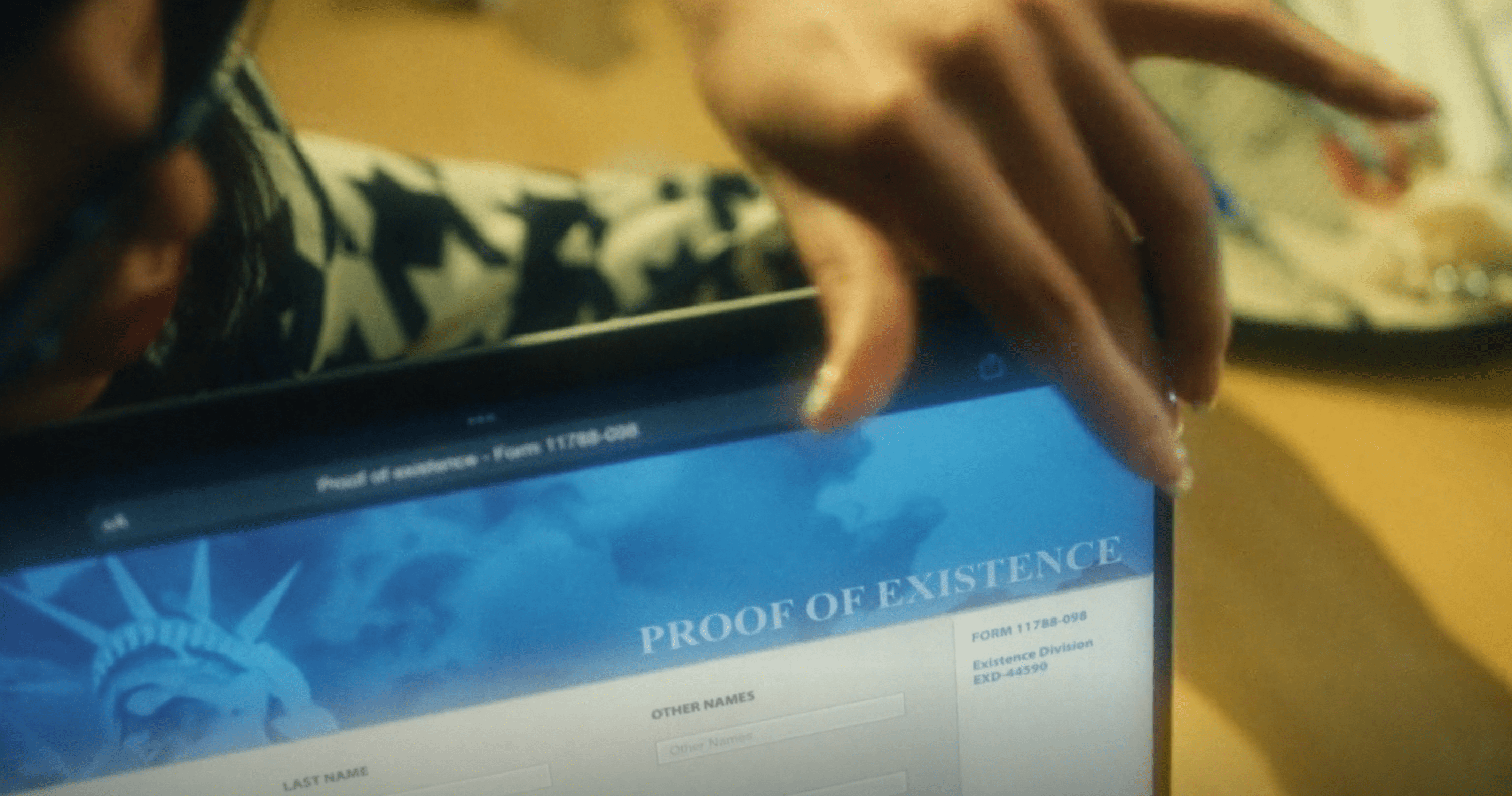
In Fantasmas, Julio Torres’s satirical “Proofof Existence” card captures a disturbing reality: today, human dignity itself is conditional, gated behind layers ofbureaucracy. From India’s Aadhaar program to U.S. voter ID laws to Israel’s permit regime over Palestinians, bureaucracyis more than a means of managing resources; it is a weapon wielded to regulate the very essence of humanity. These systems demandthat we prove our right to live, to move, to belong, and to survive. They turn basic rights into privileges, requiring us to earndignity through endless compliance and documentation. Bureaucracy is not simply an inconvenience—it is an ideological assault,a system built to affirm that some lives are inherently valued less than others.
Anthropologist and activist DavidGraeber called this “bureaucratic violence.” Graeber argued that bureaucracies, rather than creating fairness, enforcestructural cruelty. Bureaucracies don’t simply exist to maintain hierarchies—they exist to deepen them. In the capitaliststate, bureaucracy becomes a tool for trapping the poor, the marginalized, and the colonized in cycles of dependency andsubservience. Bureaucracies impose artificial scarcity and fragment our communities, turning survival itself into a state-sanctionedperformance and a constant struggle.
Bureaucracy as the New Border
In the United States, bureaucratic gatekeeping hasseeped into nearly every aspect of life. Tasks as routine as renewing a driver’s license or accessing healthcare have becomemazes of paperwork and approvals, disproportionately obstructing the poor, undocumented, disabled, and communities of color. Thesesystems reduce people to data points, transforming human beings into entries in a database designed to measure worthiness and discard
the rest.
Healthcare is especially precarious—accessed not as a right but as a privilege at the end of an exhaustingprocess of denials, referrals, and conditional approvals. In a neoliberal state, access to basic needs like housing, healthcare, andfood is no longer guaranteed; bureaucracy has become the final arbiter of survival.
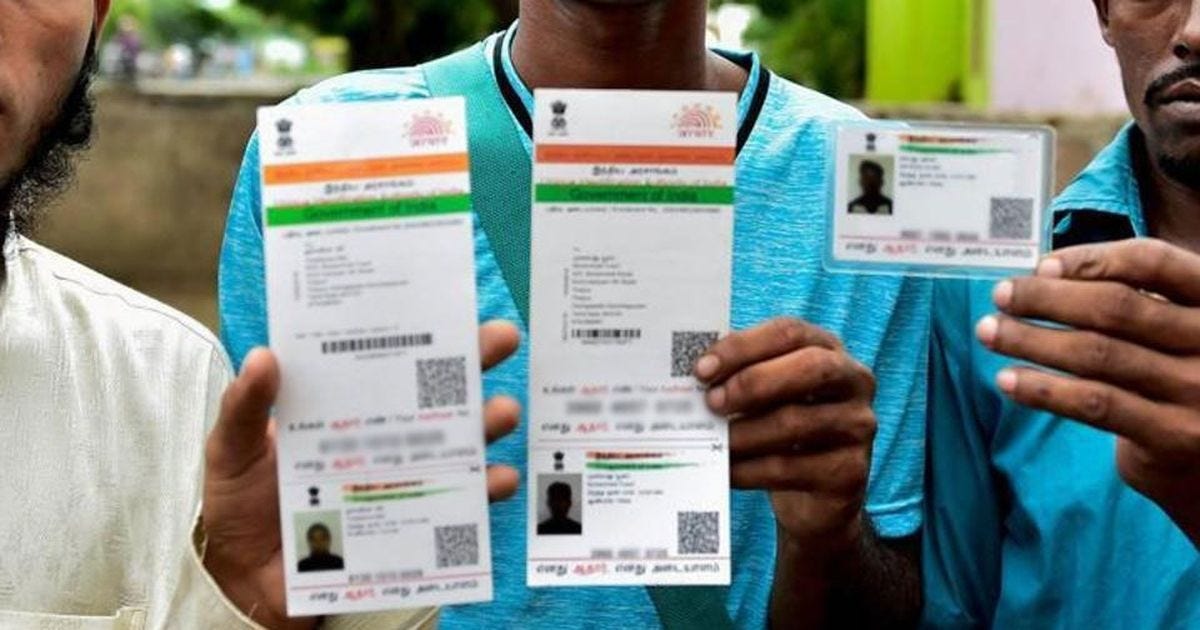
India’s Aadhaar biometric ID program presents a similar violence under the guiseof “efficiency.” Aadhaar has stripped millions of their right to food, housing, and welfare, trapping the most vulnerablein a system that cares more for tracking data than for preserving lives. In Palestine, Israel’s permit regime is even moresuffocating, governing nearly every aspect of daily life under occupation. Movement, employment, even family connections—thesebecome privileges determined by a hostile bureaucracy, leaving Palestinians confined within an apartheid infrastructure. Bureaucracy,in these cases, does not merely administer; it acts as a border, dividing lives and limiting futures.
The Ruse of“Fairness” and “Security”
Bureaucratic systems justify themselves with claims of“fairness” and “security.” Voter ID laws in the U.S. are ostensibly about election integrity; Aadhaar claimsto reduce welfare fraud; Israel’s permit system is labeled a security measure. These rationales obscure the truth: such systemsare designed to exclude and control, to protect the powerful and deny the vulnerable.
Voter ID laws in the U.S. systematicallydisenfranchise marginalized communities, depriving the poor, elderly, and minority groups of political representation. In India,Aadhaar’s bureaucratic web leaves millions to fall through the cracks, excluded from essential services. Israel’s permitsystem controls every aspect of Palestinian life, enforcing hierarchies that treat the occupied as perpetual outsiders. Bureaucracy,far from being neutral, is a mechanism that reinforces power structures, entrenching control in the hands of the few while forcingthe most marginalized to justify their existence at every turn.
Bureaucratic Gatekeeping and Psychological Violence
Thepsychological toll of living under these systems is profound. Imagine the quiet violence of constantly needing to prove that you areworthy—that your need for food, safety, and care is valid. This bureaucratic violence conditions people to feel mistrusted andisolated, reducing them to case numbers and data points.
In the U.S., those on Medicaid or SNAP must re-certify their povertyevery few months, forced to repeatedly justify their needs as though survival itself is conditional. In Palestine, daily movementsbecome acts of psychological endurance as Palestinians navigate checkpoints and permits simply to visit family or go to work.Bureaucratic gatekeeping does not only restrict access to resources; it isolates people from their sense of self and theircommunities, continually reminding them that their worth is negotiable, their humanity conditional.
Manufactured Scarcity and Capitalism’s Divide-and-Conquer Strategy
Systems like Aadhaar, U.S. voter ID laws, and Israel’s permit regime do not respond to scarcity; they create it. Artificialscarcity is a powerful tool wielded by capitalism and colonialism to turn basic needs into commodities, forcing communities tocompete for survival. By making access to essential resources contingent on compliance, these systems instill the belief thatscarcity is natural, that rights are finite, and that exclusion is unavoidable. This scarcity, however, is a manufactured tactic toensure control—keeping people so focused on survival that they cannot build solidarity to challenge the system.
Graeber’s work exposed this illusion: scarcity isnot inevitable; it is designed by systems that rely on our dependency and fear. Bureaucracy pits us against one another, transformingsurvival into a zero-sum game that protects entrenched hierarchies. By exhausting us with endless forms and qualifications,bureaucracies ensure we are too divided, too tired, and too isolated to envision collective liberation.
Imagining RightsWithout Conditions
Graeber’s radical critique offers a glimpse of a different world—one where dignity is notrationed by bureaucratic decree but affirmed by our inherent humanity. Instead of systems built on scarcity and exclusion, we couldcreate institutions based on universal access, communal care, and radical solidarity. Imagine a society where healthcare isn’ttied to corporate or bureaucratic approval, where voting is universally accessible, and where survival isn’t conditioned onmeeting arbitrary standards. A society built on such values would honor dignity, belonging, and freedom as birthrights, dismantlingthe barriers bureaucracy uses to divide us.
For Palestinians, this vision would mean dismantling Israel’s permit systemsand removing the apartheid walls that confine their lives. For those restricted by Aadhaar, it would mean abolishing the bureaucraticconditions that determine access to survival. In the U.S., it would mean rejecting bureaucratic tools that limit healthcare,education, housing, and political participation. True liberation demands a society where rights are unconditional, where access tohealth, housing, education, and freedom are not privileges but basic entitlements.
Toward a Society of Unconditional Belonging
The“Proof of Existence” card in Fantasmas symbolizes a world where rights are conditional, where dignity isrationed, and where humanity itself is a privilege. Bureaucracies like Aadhaar, U.S. voter ID laws, and Israel’s permit regimereveal the violence inherent in systems that reduce human worth to paperwork and compliance.
Graeber’s vision challengesus to recognize that these structures are not inevitable. We can reject artificial scarcity, refuse conditional rights, and work to
build a world where humanity is not bureaucratically mediated but affirmed unconditionally. We can dismantle these borders, rejectstate-sanctioned violence, and insist that dignity requires no proof.
What would it mean to live in a world that didn’tdemand “proof”? It would mean redefining our relationship to one another, creating spaces where solidarity isunconditional, and recognizing that our worth cannot be measured, limited, or sanctioned by any state. We would understand thathumanity is too vast, too complex, to be contained within the narrow confines of bureaucratic files and forms.
Imagine a world where survival is not conditional, where belonging is not rationed, and where no one has to prove their right toexist. That is the world we must demand.
Together, we can create a society that tears down every gate, dismantles every wall,and affirms that our humanity, our dignity, and our freedom are boundless.
Here's another great review of Fantasmas: