Concept map
Delay and temporal governance
Follows the archive’s account of time as a governing technology: review, waiting, repeated proof, and “still in process” as ways to sort people without a clean no.
Paired reading path: Delay. Open that path when you want the same terrain arranged as a short sequence instead of a map.
Start from this map without getting stuck in taxonomy
Take the paired path when you want sequence, the opening essay when you want one strong example, or the guide when you want the larger frame around the same pattern.
Delay
For readers who already know something is being stalled and need to see delay as an active mechanism rather than a neutral backlog.
Pending: The political economy of waiting
The loading screen is the most powerful weapon in the modern state
Questions
Jump into Understand the idea at the diagnostic questions section.
Questions this map helps you ask
Use these as the quick recognition layer before you branch into the glossary, essays, paths, or archive views.
- Who pays while the answer stays pending?
- How does process replace obligation, relief, or direct refusal?
- What becomes impossible because the system can always ask for one more interval, document, or round of patience?
Ideas tied to this map
These links point either to the concept essay itself or to the archive with that concept already searched so the map is immediately usable.
Temporal solidarity
Go straight to the essay that introduces or centers temporal solidarity.
Proof-based harm
Go straight to the essay that introduces or centers proof-based harm.
Legitimacy machine
Search the archive for essays that mention legitimacy machine.
Pending / nondecision
Search the archive for essays that mention pending / nondecision.
Reading paths connected to this map
Use these when you want to move from the map into a shorter ordered sequence.
Delay
Essays about waiting as governance: how institutions use process, proof, and time to sort people without saying no outright.
Survivability
Permission is not freedom. These essays ask whether an option is actually usable, not just available in principle.
Care and care theater
Essays about the gap between real care and its performance: reassurance, ethical branding, tenderness language, and managerial concern without obligation.
Guide sections tied to this map
These sections drop you into the grouped glossary and synthesis guides at the exact anchors that match this pattern.
Questions
From Understand the idea
Jump into Understand the idea at the diagnostic questions section.
The five tests to carry into the essays
From Method reference
These are the longer reference versions of the tests that /start-here introduces in a quicker, easier-to-scan form.
The mechanisms that keep reappearing across the archive
From Core claims of the archive
Use these as the mechanism layer inside the broader conceptual stack: they sit downstream of the foundational claims and upstream of the legitimacy tests and applied diagnostics. The public…
Anchor essays for the archive’s main claim
From Core claims of the archive
These are strong entry points because each names a different part of the same structure: burden, livability, delay, and maintenance.
Nearby concept maps
These neighbors are computed from shared reading paths, guide sections, and coined concepts so the connections stay grounded in the same source registry.
Survivability and inhabitable action
Shared reading paths: survivability, care theater.
Care, inherent care, and care theater
Shared reading paths: survivability, care theater.
Interface, legitimacy, and public feeling
Shared reading paths: delay, care theater.
Burden and load-bearing
Shared reading paths: survivability.
Archive views to try next
These links are derived from the essays already attached to this map, so the page feeds back into the archive instead of ending here.
Essays mapped here
6 of 6 mapped essays are currently available.
-
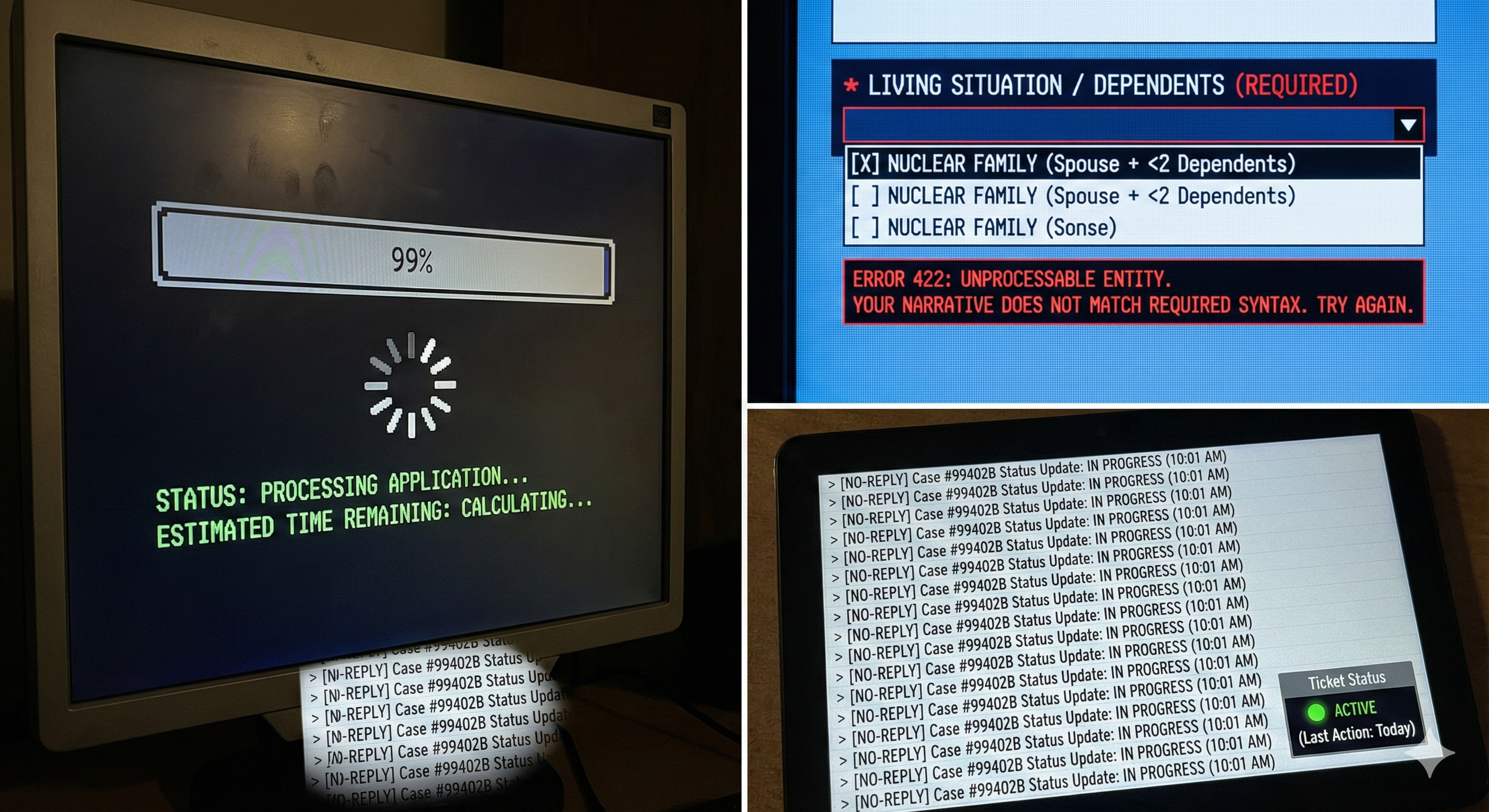
The loading screen is the most powerful weapon in the modern state
-
-
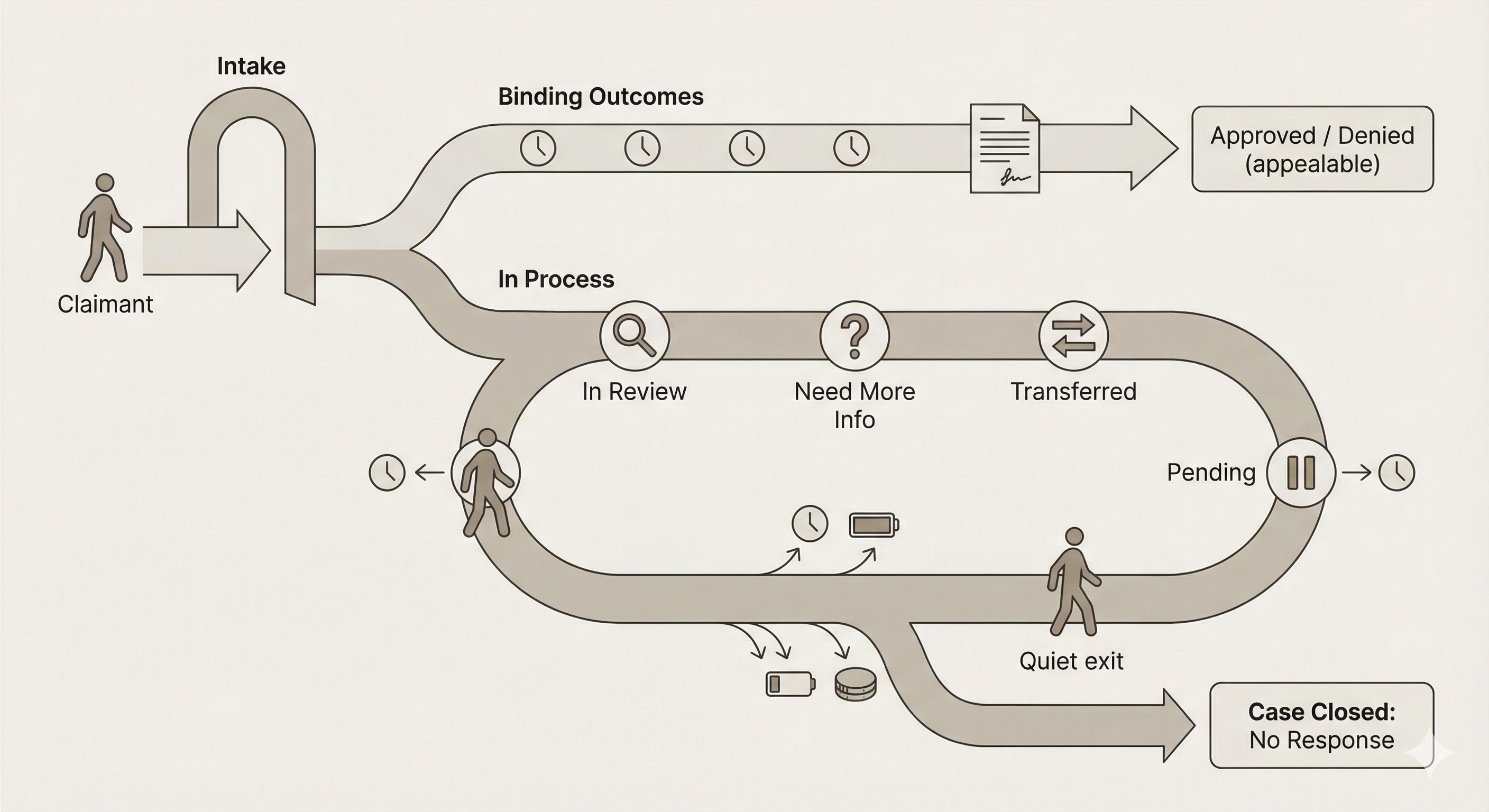
Why being in process so often leads nowhere: Legitimacy engineering and “care signals” as governance tech
-

In a world structured by borders and paperwork, does human dignity require state approval?
-

-

On Universal Crip Time and Non-Capitalist Productivity