In a 2017 interview, Grizzly Bear’s Ed Droste described the band’s creative process as “incredibly democratic,” a word he had used as early as 2012 to describe its M.O.
Albums took years to develop, decisions were collaborative, and no one rushed to meet arbitrary deadlines. Their ethos was a quiet defiance against a world obsessed with speed and measurable outcomes. Droste’s words raised a question: what if productivity centered depth, care, and shared purpose instead of efficiency or grind?
Three years later, Droste announced a departure from the band to become a therapist, and in 2023 opened an independent practice. He didn’t escape work; he changed its purpose, choosing to care for himself and others instead of chasing external validation.

Droste’s story shows the tension: even the most intentional, thoughtful practices exist within capitalism’s constraints. Reclaiming productivity starts there, with the struggle to carve out humane ways of working while resisting systems of extraction.
Productivity measured by profit
The harms of capitalist productivity come from it working normally, with nothing malfunctioning. When productivity is measured by profit, value gets extracted, time gets disciplined, workers get isolated and care goes uncounted, because none of those costs show up as lost profit.
Under capitalism, productivity means output, and fulfillment counts for nothing. Burnout is consistent with a system that extracts value regardless of human cost — it is evidence of how the load is allocated, not proof that the system’s designers intended it. Rest, care, and relationships are inefficiencies unless they can be commodified.
Grizzly Bear resisted this logic with their deliberate, layered music, created slowly and intentionally.
But even this ethos was vulnerable. Industry demands for constant touring eventually eroded their ability to maintain their process. Resistance is necessary but precarious in a system built on extraction.
Industrial capitalism transformed time into something you owe. E.P. Thompson’s Time, Work-Discipline, and Industrial Capitalism shows how the factory clock fractured life into measurable units of labor, subordinating existence to profit.
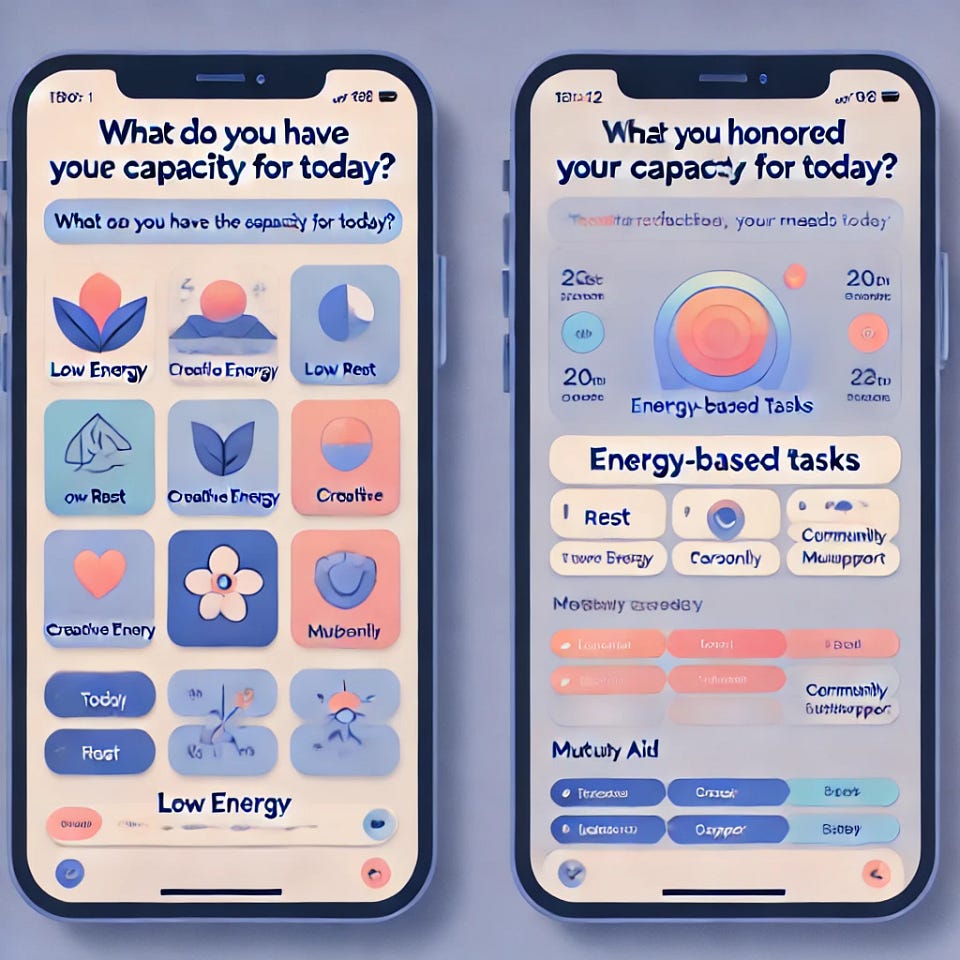
Today, productivity apps and optimization culture extend this logic to hours outside work, which get tracked and scored as if they were owed too. Autechre, known for their experimental music, reject this rigidity. Their process values exploration and failure, resisting the tyranny of the clock.
Capitalism isolates workers, framing productivity as an individual pursuit. If you fail, it’s your fault. This erodes solidarity and keeps you from imagining collective resistance.
Like Grizzly Bear’s, Animal Collective’s collaborative process disrupts this isolation. Their music depends on blending distinct voices into something greater than the sum of its parts. Connection is what makes the work richer.
Care (raising children, supporting loved ones, nurturing communities) is invisible unless it generates profit. Yet, without care, nothing functions.
700 Bliss treats care as the ground of creativity. Their music, rooted in connection and healing, insists that care sits at the center of any redefinition of productivity.
From each according to their care
The phrase “from each according to their ability, to each according to their needs” envisions equity. But under capitalism, “ability” turns into a mandate to produce until you collapse, and “needs” are met only when convenient. Reclaiming productivity requires rejecting extraction and measuring it by our capacity to care for ourselves and one another, not by output.
Mutual aid networks already work this way. They ask, “What can you offer?” instead of, “What can you produce?” Contributions of time, food, and emotional support are valued equally, building resilience without competition. Relational and emotional labor, long dismissed as unproductive, moves to center stage, and productivity includes tending to one another alongside producing goods.
“From each according to their ability” ties worth to capacity. A care-centered framework insists dignity is unconditional. Decoupling survival from labor through universal basic income creates space for rest, creativity, and care. Disability activists advocate for “crip time,” which honors life’s natural rhythms over rigid schedules; in a care-centered system, crip time is the norm.
Reclaimed productivity is collective creation, as Animal Collective’s mutual respect and fluid roles show. Reclaiming time collectively is temporal solidarity: shared rhythms that prioritize connection over isolation.
In practice that means rethinking how we structure work, time, and value. Teams can collaboratively design schedules that balance labor and care. Community time banks can value contributions of care, including childcare, elder care, and emotional labor, equally with traditional labor. Projects can move at a deliberate pace, leaving room for depth and intention.
Holding the contradictions
Even the most thoughtful practices, whether Grizzly Bear’s creative ethos or mutual aid networks, are shaped by systemic pressures. Animal Collective still sells albums. Mutual aid relies on corporate platforms. Resistance exists within, not outside, these systems.
But compromise doesn’t erase value. Reclaiming productivity means carving out room for care and connection within the mess, and incomplete resistance still counts as resistance even when purity is out of reach.
“From each according to their care, to each according to their dignity” locates value in how we sustain ourselves and one another, whatever we happen to produce. Under it, you don’t have to give more than you can, and you don’t have to prove your worth.
“Crip time is time travel. Disability and illness have the power to extract us from linear, progressive time with its normative life stages and cast us into a wormhole of backward and forward acceleration, jerky stops and starts, tedious intervals and abrupt endings” —Ellen Samuels, in “Six Ways of Looking at Crip Time” (2017)