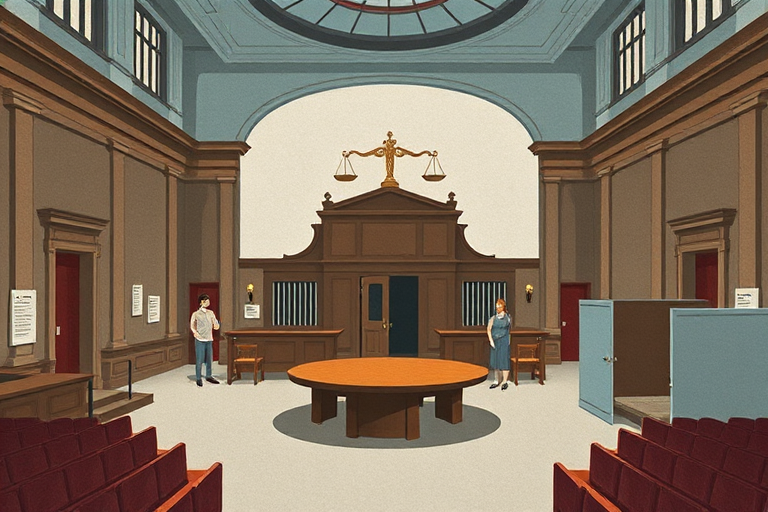
 Our legal system assumes neurotypicality as the default, so behavior that doesn’t fit that narrow standard gets pathologized and criminalized. For neurodivergent people, especially those masking conditions such as autism, the system is often a place of punishment rather than justice. Coping mechanisms, misread responses to trauma, and plain neurological difference are treated as deviance, which produces incarceration and systemic harm.
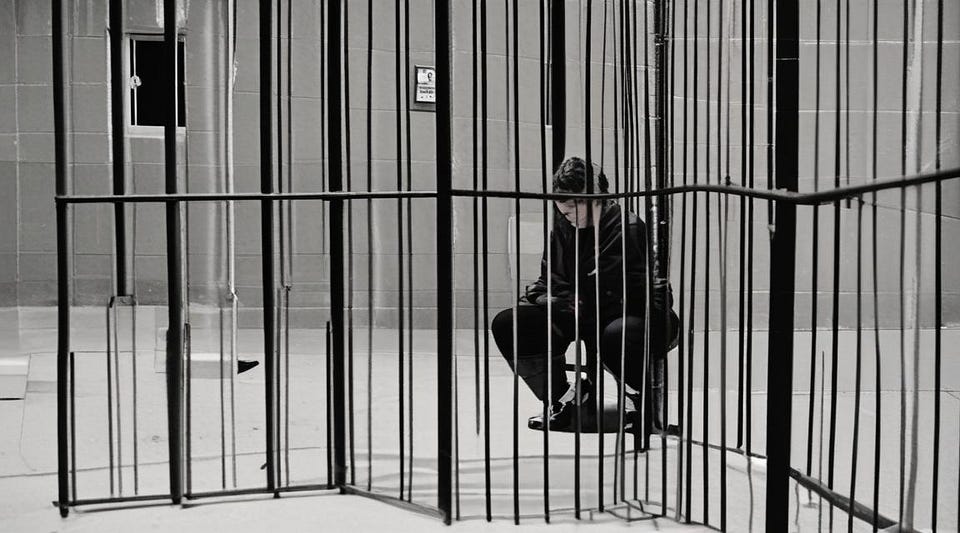
I want a justice system that assumes neurodiversity as the baseline and dismantles the punitive apparatus that targets neurodivergent people. That means changing how justice is conceived and administered for everyone; separate accommodations bolted onto the old system won’t do it. The idea comes from abolitionist thought, which aims to dismantle the carceral state.
Neurotypicality as the Dominant Legal Norm
The legal system mirrors a society that privileges neurotypical norms and criminalizes deviation from them. From courtroom procedure to sentencing guidelines, it expects people to behave in predictable, “rational” ways that often exclude neurodivergent people. Avoiding eye contact, missing social cues, or showing flat affect gets read as guilt, deception, or malice. That misreading turns neurological difference into a threat to social order.
The case of Matthew Rushin, a Black autistic man, shows what happens in a legal system with no room for neurodivergent behavior. His harsh sentence is an example of how neurodivergent people, particularly those masking their autism, are punished out of proportion for not meeting neurotypical expectations. High-masking autistic people often go undiagnosed.
The Criminalization of Autistic Individuals
Autistic people, especially those who mask, end up entangled with the carceral state because their behavior deviates from neurotypical norms, and they get harsher sentences for it.
In one international survey of autistic people, nearly half had had some interaction with police. The most common recent encounters began with nothing criminal at all—welfare checks, traffic incidents, wandering, behavior associated with autism. For Black autistic young people the risk of the encounter going badly is elevated. In police encounters, an autistic person who can’t follow verbal commands because of sensory overload or anxiety reads as resistant, defiant, or aggressive, and officers who can’t recognize neurological difference escalate.
After arrest, autistic people are also more vulnerable to false confessions and wrongful convictions. Many, particularly those with lower verbal communication skills or those who mask, may not fully understand legal processes or what their answers will cost them in an interrogation. Under duress, they may agree to statements or confessions they don’t fully understand, and go to prison for them.
Prisons as Sites of Harm for Autistic Individuals
Prisons are built to control, punish, and enforce conformity through rigid routines, social hierarchies, and discipline. Autistic people, with their sensory sensitivities, need for routine, and difficulty with social interaction, are especially exposed there.
Prisons are loud, chaotic, and overstimulating. Constant noise, bright lights, and no privacy can cause sensory overload, and with it severe anxiety, meltdowns, or shutdowns. Staff may respond by putting the autistic person in solitary confinement, which makes the distress worse and brings further mental deterioration, anxiety, and trauma.
Prison hierarchies reward assertiveness and physical dominance. Autistic people who struggle with social cues, conflict, and physical interaction tend to land at the bottom. There, other inmates and staff are more likely to target them for violence, bullying, and exploitation.
Many autistic people depend on routine and predictability to manage anxiety and sensory load. Prisons are unpredictable and chaotic, and the instability worsens the anxiety and mental health struggles many autistic people already carry.
Prison mental health care is notoriously under-resourced, and autistic prisoners often get inadequate or wrong treatment. Instead of autism-specific support, they may be misdiagnosed or medicated for conditions they don’t have. That failure feeds a cycle of behavioral escalation that brings more punishment and more isolation.
Restorative Justice Beyond Neurotypical Assumptions
Restorative justice is an alternative to punishment, but it often runs on neurotypical assumptions. It expects emotional expression, eye contact, and spoken remorse that many neurodivergent people find hard to produce.
Restorative processes should assume participants may express themselves in unconventional ways and make room for written statements or mediated dialogue. Sensory-friendly rooms, flexible timelines, and neurodiversity specialists would help. None of this needs a separate system, only a restorative process that’s accessible to everyone by default.
Law Is a Tool of Power, Not Justice
For much of my life, I regarded the law not with idealistic naiveté, but with a pragmatic belief that it was a flawed yet necessary mechanism for curbing abuses of power and delivering some semblance of justice. As I engaged more deeply with the world, my belief in the law’s efficacy began to erode, not abruptly but gradually, over years of observation,…
The same default runs through the wellness economy. Self-Help Wasn’t Written for Neurodivergent Minds shows how habit culture built for neurotypical executive function turns difference into personal failure.
Abolitionist Perspectives and Universal Care
Abolitionists like Angela Davis and Ruth Wilson Gilmore argue that prisons and punishment can’t address the root causes of harm and should be replaced by care, rehabilitation, and community support. For neurodivergent people, especially those who mask, punishment compounds trauma and marginalization.
Assuming neurodivergence in everyone means rejecting the idea that divergent behavior is deviance to be controlled. A justice system built on that assumption values people for who they are, whether or not they pass as neurotypical. Abolitionists want the same thing: systems that prevent harm instead of reproducing it.
Rejecting Needs Testing: Justice Without Proving Difference
The legal system decides who deserves accommodations through needs testing, which is dehumanizing and counterproductive. Neurodivergent people have to “perform” their condition to get justice, which treats support as a privilege rather than a right. If neurodiversity is the baseline, needs testing has no job to do.
Universal accommodations cut against the ableist and neoliberal ideas running the current system. Getting there will take advocacy, education, and coalitions willing to confront entrenched power and institutional inertia.