Medical residency is mythologized as a rigorous yet fair process that molds future physicians into competent, compassionate workers. Protected by duty-hour regulations, accreditation standards, and oversight mechanisms, it is presented as a system grounded in professionalism, equity, and skill development. Yet this narrative conceals a starkly different reality. Residency thrives on unrecognized labor, entrenched inequities, and a culture that enforces silence to maintain the status quo.
Far from an equitable system, residency is engineered to extract labor under the guise of education, systematically reinforcing privilege and perpetuating hierarchies. The costs of this exploitation extend beyond the individual trainee, compromising patient care and undermining the very principles residency claims to uphold.
Examining residency through the framework of temporal justice—which treats time as a finite, shared resource that systems of power manipulate—shows that its design is not flawed but intentionally exploitative. Reforming it requires more than superficial fixes. It demands a complete restructuring centered on care, equity, and accountability.
Residency’s dysfunctions surface most clearly in shadow logs: the informal records residents keep of what actually happened, as against what the official record says happened. Three patterns run through them.
Unpaid labor keeps the wards running
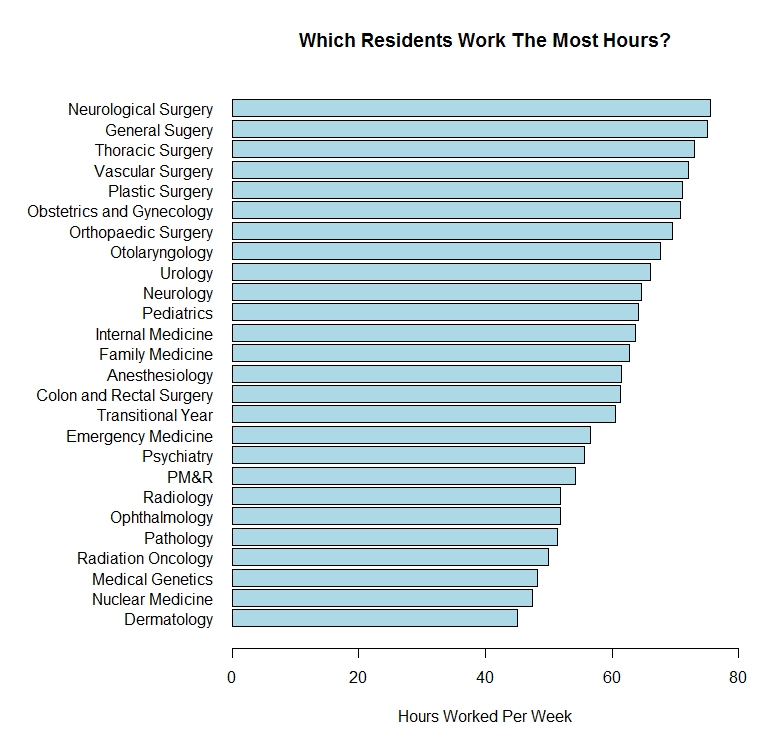
Residency is sustained by the erasure of unpaid and invisible labor. Duty-hour regulations cap the week at 80 hours, and those limits are routinely violated. Charting, patient follow-ups, care coordination—residents do all of it off the clock. That hidden labor props up hospital systems while staying out of the official record, which is exactly what lets institutions avoid hiring enough staff.
The numbers are not marginal. In a national survey of more than a thousand surgery residents, over 60% said they had logged their hours falsely so the record would show compliance, and almost 15% did so weekly or daily. Those unlogged hours never enter a staffing model, which is exactly what makes them free.
Residents describe the mechanism without much ceremony. “If I logged all my hours, it would trigger a violation, so I just stopped reporting them.” “I spend my ‘day off’ catching up on notes because there’s no time during the week.”
What follows from that is predictable and documented: chronic overwork drives burnout, and burnout is repeatedly associated with impaired decision-making and higher rates of self-reported medical error. Hospitals, meanwhile, are never forced to invest in sustainable staffing, because the shortfall is absorbed by people who are not allowed to say they are absorbing it.
This is not a bug. It is the cornerstone of the design, and it prioritizes cost savings over ethical training.
Who gets the career-defining case
Residency promises equitable training and does not deliver it. The experiences that define a career—complex procedures, leadership roles, prestigious rotations—are allocated unevenly, along the racial, gender, and socioeconomic lines that already structure medicine.
A multi-institutional review of ACGME case logs across twenty general surgery programs found that Black residents graduated with lower case volume than their non-minority peers, and had done so throughout the preceding decade. The gap does not close at the end of training: at one large academic center, cases performed by women surgeons carried a mean complexity 23% below those performed by men, a difference that survived controlling for subspecialty and availability. International medical graduates describe a parallel sorting into less prestigious rotations and away from leadership.
Residents notice, and they name the same two mechanisms: assignment and opacity. “While others were mentored into high-stakes surgeries, I was routinely assigned minor cases.” “There was no transparency in how leadership roles were distributed—it felt like favoritism.”
The compounding is the point. Marginalized residents finish training with thinner case logs, which makes them less competitive for fellowships, which delays career progression, which keeps leadership looking the way it already looks.
Diversity initiatives that leave case assignment untouched are working against a much stronger current.
What happens to residents who say something
Residency culture discourages trainees from naming unsafe practices, inequitable workloads, or systemic inefficiency. Those who do face poor evaluations, exclusion from key rotations, and career stagnation. In one study of US surgical residents, of those who took an experience to their program director or GME office, 30.8% felt they were retaliated against for having reported it. Fewer than a quarter of mistreated trainees file a formal report at all, and the reason they give most often is fear of exactly that—so the recorded number is the floor, not the size of the problem.
“When I raised concerns about unsafe staffing levels, my supervisor stopped assigning me to surgeries.” “I spoke up about inequities in case assignments, and suddenly my evaluations tanked.”
Retaliation does not merely silence individuals. It converts advocacy into a privilege, available only to residents insulated enough to survive the consequences—which is to say, residents already in dominant positions. The critiques most needed are the ones least likely to be voiced, and the institution is protected from reform by the fear it manufactures.
Time is the resource being taken
Every one of these patterns runs through time. Residents’ hours are treated as an infinite resource to be extracted, rationed, or withheld, and temporal justice is the framework that makes that visible.
Three commitments follow.
Residents’ time, spent on training and on care, has to be treated as inherently valuable rather than as slack in a staffing model. Career-defining experiences have to be distributed transparently, with the allocation itself open to scrutiny. And advocacy has to be protected by oversight bodies independent of the programs residents are criticizing, with real consequences for retaliation.
Together these shift the target from compliance to accountability, which is the difference between a program that reports 80-hour weeks and one that works them.
Reimagining residency
The first change is to decouple training from labor: residency programs should serve educational goals rather than hospitals’ staffing needs, so that residents stop functioning as a cost-saving measure.

The rest follow from it. Participatory governance can open the allocation of high-value cases, leadership roles, and mentorship to scrutiny instead of leaving it to informal discretion. Evaluation can measure holistic, patient-centered care rather than procedural tallies, which rewards the skill residency claims to teach. Community-based training can align residency with public health priorities and with relational care. And resident-led oversight bodies can monitor equity, investigate retaliation, and hold institutions to standards that are not self-administered.
Residents deserve a training system that respects their time, acknowledges their contributions, and prepares them to serve patients without sacrificing their own dignity and well-being. The future of medicine, and the integrity of healthcare, depends on it.
Thanks for reading syādvāda! This post is public so feel free to share it.