When someone collapses in public and the crowd hesitates, we’re told we’re living through an “empathy crisis,” a nation gone numb, atomized by screens, its moral fiber frayed. But the hesitation has concrete causes. Decades of policing, billing and data-sharing rules have made helping a stranger a gamble with your own future.

Much of the hesitation at the scene comes from law, protocol, and profit. Dialing 911 in most cities now means inviting armed police before medics, so a plea for help is a bet that might escalate into violence—especially if you’re Black, brown, undocumented, disabled, or simply “out of place.” Ambulance rides come with price tags that can crush a family’s finances overnight. Unpaid bills are swiftly flipped to collection agencies that extract what they can, compounding the harm. And at the margins, hospital forms and vendor contracts funnel personal data to law enforcement and ICE, making a moment of crisis a potential pipeline to deportation or arrest.
Even the bureaucratic hold music and scripted questions that delay help signal that care is rationed, risky, and always provisional.
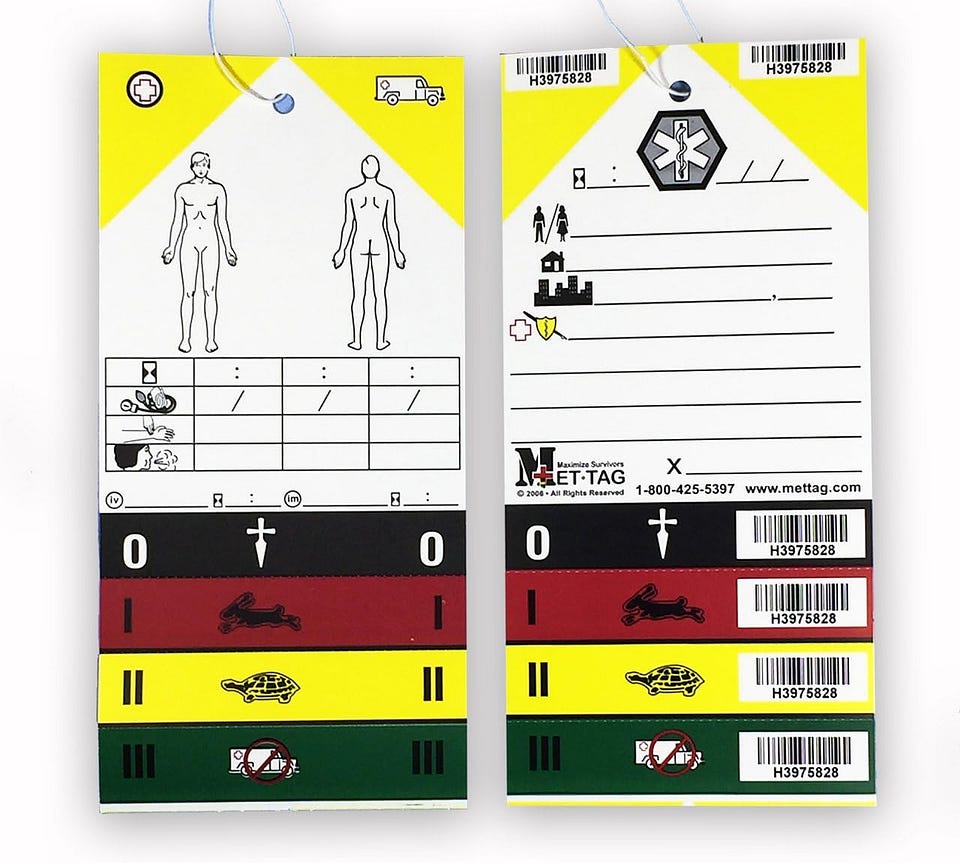
This is no accident. Every friction point and tollbooth offloads institutional risk onto ordinary people, while revenue flows upward to private-equity ambulance conglomerates, debt buyers, police unions, and surveillance vendors.
Bystanders have learned—sometimes through bitter experience—that stepping forward can trigger financial ruin, carceral escalation, or data-driven persecution as easily as social awkwardness.
Hesitation is not heartlessness, but self-preservation.
The same profit logic that puts a meter on emergency aid runs through a long American record of exclusion. In redlining, convict leasing, algorithmic eviction and means-tested benefits, people in trouble were treated as a source of revenue. The systems that marginalize are continuously retooled by law, contract, and software—because exclusion, far from being an accidental relic, is a lucrative business model.
Our obsession with “deservingness” is just another face of this same design. Means-testing, eligibility audits, and recertification routines are sold as protection against waste. They divert public money to consultants, software vendors, and gatekeepers who specialize in denial. The loudest defenders of eligibility policing are rarely those who need the help, but those who profit from keeping help scarce.
Even surveillance, often described as a shadowy side effect, is a core lever of control. Seeking or giving aid generates data that is routinely sold, cross-matched, or weaponized—whether in hospitals, welfare offices, or employment screenings. The result: every act of care becomes a potential risk exposure, governed by data-driven gatekeeping rather than solidarity.
The cumulative effect is engineered hesitation. Together, these bills, police calls and data trails have taxed, penalized, and policed compassion so thoroughly that the risk is now felt in the body—a tightening in the chest, a catch in the breath, a calculation about what comes next.
None of this will be solved by “awareness campaigns,” new outcome metrics, or better dispatch scripts. Officials moralize about values and urge us to “be better,” but leave untouched the protocols, billing codes, and data contracts that make helping dangerous in the first place. Managed grief is easier to market than structural change.
Where barriers fall, solidarity can return quickly. Cities that send unarmed crisis teams instead of police to some calls, as Eugene, Oregon, has done through CAHOOTS since 1989, take one of those risks off the table for whoever picks up the phone. Eliminating or capping ambulance fees takes away another, and legal firewalls around patient data a third. Disaster mutual aid and lost-wallet studies also show care and cooperation where people have room to act. Compassion was never missing; it was simply blocked.
Every price tag, penalty, and protocol that stands between a bystander and the impulse to help must be abolished—not tweaked, not “reformed,” but uprooted.
If we truly want a society where care is reflexive and unhesitating, stop scrutinizing the crowd and start unbolting the structures that punish solidarity. Give everyone the benefit and there’s no one to investigate; the real solution is to bulldoze the tollbooths.
If the willingness to help was there all along, removing these penalties should bring more bystanders forward, and a city that removes them can check whether it does. Any city can ask which of those penalties its own dispatch rules, ambulance bills and data contracts still impose.
For those wanting to go deeper: