The Thermodynamics of Power, Meaning, and Masks

Burnout as a Non-Metaphor and Unmasking as a Revolutionary Act in Neurodivergent Experience

Reading settings
TL;DR / Summary: Burnout as a Non-Metaphor and Unmasking as a Revolutionary Act in Neurodivergent Experience

Let's explore the concept of masking in neurodivergent individuals, particularly autistic people,through the lens of thermodynamics. Masking, the act of suppressing or altering one’s natural behavior toconform to societal expectations, is examined here using thermodynamic concepts such as enthalpy (imposed meaning)and entropy (emergent meaning).

By framing masking and unmasking in thermodynamic terms, we offer a deeperunderstanding of both the personal and societal dynamics involved. Unmasking is positioned as a revolutionary actthat challenges societal norms and structures, disrupting the existing low-entropy system of neurotypical conformity and introducingthe potential for a high-entropy, emergent system where neurodiverse individuals can thrive authentically.


1. Introduction: Masking as a Thermodynamic System

Masking—the suppression ormodification of natural behaviors to fit societal expectations—can be viewed through the lens of thermodynamic control. Forneurodivergent individuals, particularly autistic people, masking serves as an adaptation to navigate a world that prioritizesneurotypical norms. However, like any closed thermodynamic system, maintaining this low-entropy state comes at asignificant cost, draining energy, leading to burnout, and suppressing the potential forauthentic personal meaning.

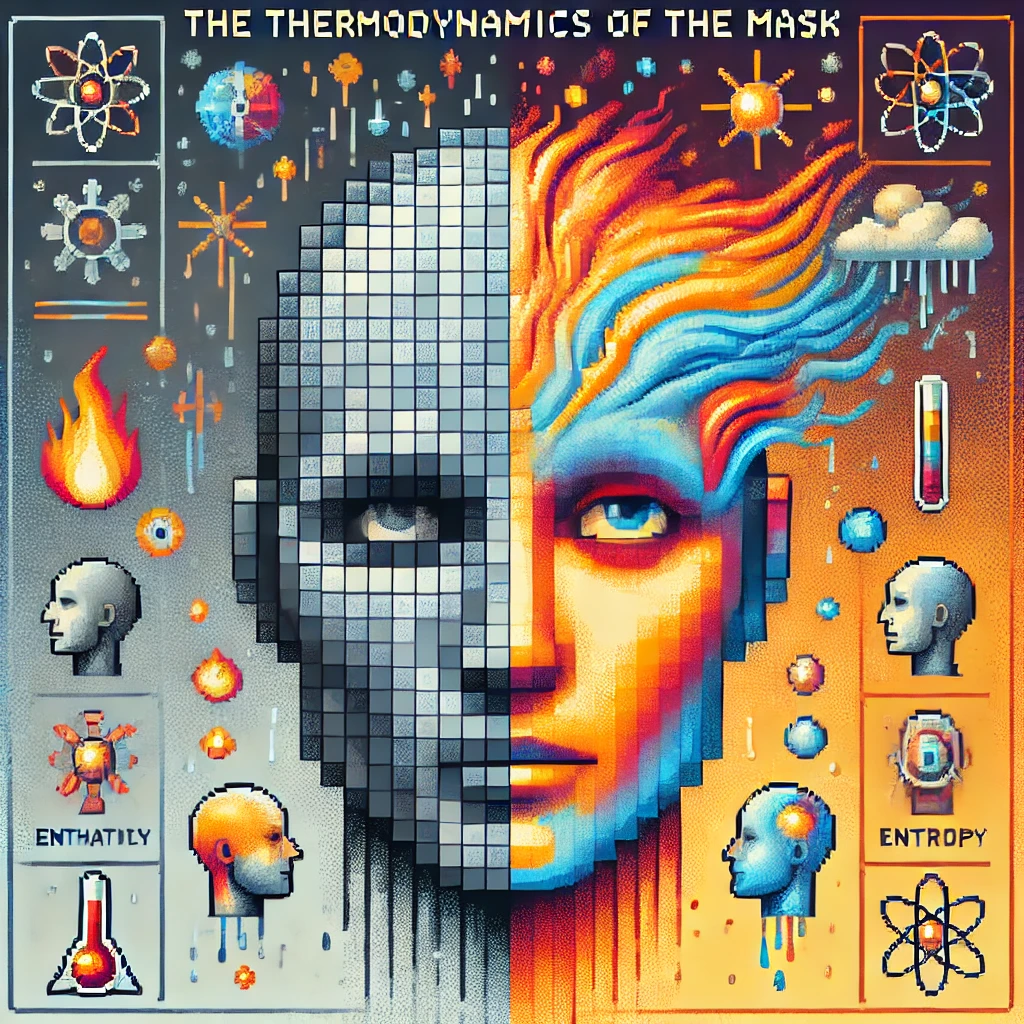
The Thermodynamics of Power, Meaning, and Masks illustration

This paper draws onthermodynamic principles, such as enthalpy (order) and entropy (disorder), to analyze the dynamicsof masking and unmasking. Societal expectations function as low-entropy forces, maintaining order and predictabilityat the expense of individuality and personal freedom. In contrast, unmasking introduces entropyinto this controlled system, disrupting imposed order and allowing for emergent, authentic ways of being. The balance between theseforces provides a new framework for understanding both personal liberation and the broader implications for societal change.


2. Thermodynamics in Meaning-Making: Enthalpy and Entropy

Before delving into masking andunmasking, it’s essential to define the thermodynamic concepts that underpin our analysis:

Enthalpy (ImposedMeaning)

In thermodynamics, enthalpy refers to the total energy required to maintain a system'sstructure and order. In social terms, this relates to the imposed meaning that is enforced through societal norms,expectations, and roles. Society expends energy to maintain this state of conformity, ensuring that individuals act according to pre-established frameworks of behavior.

  • Imposed meaning in this context comes from cultural,institutional, and interpersonal pressures, which demand conformity to neurotypical standards.Neurodivergent individuals are often expected to behave, communicate, and work in ways that align with these norms.

Entropy (Emergent Meaning)

Entropy measures disorder or randomness in a system andrepresents a force of disruption and potential for change. In terms of meaning-making,emergent meaning arises when individuals break free from societal constraints, allowing forauthentic and creative expressions of identity and purpose.

  • Emergentmeaning represents the individualized, flexible meanings that arise when people are free to live according to their trueselves rather than conforming to societal expectations.

3. The Masking Process as Low-EntropyConformity

From a thermodynamic perspective, masking can be understood as a form of low-entropy conformity. Like a system kept in a low-entropy state through controlled inputs, masking allows individuals to fitinto the structured, predictable frameworks of neurotypical society.

  • Masking asEnthalpy: Neurodivergent individuals expend a constant supply of energy to suppress their natural tendencies and mimicneurotypical behavior, much like the energy required to maintain order in a low-entropy system. This process can be likened tohigh-enthalpy systems where external energy is needed to uphold stability and prevent disorder.
  • Structural Insulation: Society is often insulated against change by reinforcing neurotypical normsin education, employment, and social settings. This insulation serves to maintain societal order, ensuring that neurodivergentindividuals must continue masking to navigate their environments successfully, much like a thermodynamic system insulated fromentropy.

Imported embed

The Personal Costs of Masking

Sustaining this low-entropy state comes with significant personal costs. The ongoing effort to maintain maskingcan lead to burnout, anxiety, depression, and a diminished sense of identity. Inthermodynamic terms, the individual becomes an overheated system, expending excessive energy to maintain a rigid,stable state. Without the possibility of unmasking—a release of stored energy—this system riskscatastrophic collapse through personal crises such as mental health breakdowns.


4.Unmasking as a High-Entropy Revolution

Unmasking, the act of rejecting societal expectations andembracing one’s authentic self, introduces entropy into a previously low-entropy system. By unmasking,neurodivergent individuals disrupt the order that masking maintains, allowing their true nature to emerge.

Entropy asPersonal Liberation

When individuals unmask, they release the energy previously trapped in maintaining conformity.This release introduces disorder into their personal systems, creating room for authentic behaviorsand more dynamic ways of interacting with the world. In thermodynamic terms, unmasking increases entropy, leading toa more fluid, flexible state where new possibilities for meaning and interaction can develop.

  • Viktor Frankl’s Concept of Dignity: Unmasking is not merely the release of energy—it is adignified act of rebellion against societal structures that demand conformity. Frankl’s belief that meaningarises from one’s capacity to respond authentically to challenges aligns with unmasking as a personal revolution. By unmasking,neurodivergent individuals reclaim their dignity and assert their true identities, rejecting the imposed meaningsthat sought to suppress them.

Unmasking and Social Entropy

On a societal scale, unmaskingintroduces entropy into the broader social system. When more neurodivergent individuals resist the need to mask,they challenge the structural insulation that upholds neurotypical norms. This collective disruption fosters theemergence of new, diverse ways of being and redefines societal expectations.

  • SidneyTarrow’s Political Opportunity Structures: Tarrow’s work on social movements highlights how moments ofdisruption can create opportunities for systemic change. Unmasking, when done collectively, acts as a form of socialmovement, breaking down the low-entropy stability of neurotypical norms and making space for a more inclusive society toemerge.

5. The Thermodynamic Model of Unmasking

To better visualize thedynamics of masking and unmasking, we propose a thermodynamic model that captures the tension between enthalpy (imposedmeaning) and entropy (emergent meaning) in the lives of neurodivergent individuals:

Where:

  • ( M(t) ) = Potential for meaning-making over time.
  • ( S_e(t) ) = Entropy-driven emergentmeaning, arising when individuals reject imposed norms and embrace authentic behaviors.
  • ( E_p(t) ) = Empathy, whichfosters emergent meaning and connection with others.
  • ( N_d(t) ) = Neurodiversity, contributing to creative, non-linearthinking and behavior.
  • ( H_m(t) ) = Enthalpy-driven masking, requiring energy to maintain conformity.
  • (C_n(t) ) = Cultural norms reinforcing neurotypical expectations.
  • ( F_s(t) ) = External forces (family, workplace,societal pressures) that sustain the need for masking.

This equation demonstrates how unmasking increasesentropy in an individual's life, breaking down imposed meanings and allowing for the rise of new, moreauthentic forms of meaning.


6. The Revolutionary Potential of Unmasking

Unmasking not only facilitates personal liberation but also holds revolutionary potential at the societal level.By challenging the low-entropy structures that demand conformity, unmasking can catalyze systemic change.

Disrupting the Social Order

Unmasking challenges the dominant neurotypical standards that dictate behavior,communication, and success. When done collectively, unmasking disrupts the structural insulation that upholds thesenorms, much like entropy disrupts a closed thermodynamic system.

Fostering Emergent Meaning in Society

As more neurodivergent individuals unmask, they create space for emergent meaning to thrive. Society can shifttoward a high-entropy state where multiple ways of being, communicating, and contributing are recognized. This shiftmirrors the process of entropy in thermodynamic systems, where disorder drives evolution and adaptation toward new, more inclusivestates of equilibrium.

Imported embed

7. The Role of Unaware High-Masking Autistics in theThermodynamics of Meaning-Making

One of the most complex dynamics in the thermodynamics of the maskinvolves unaware high-masking autistics—individuals who, without knowing they are autistic, have developedsophisticated strategies to mask their neurodivergent traits. These individuals represent a unique case within theframework of imposed meaning and personal entropy. Their experiences illustrate both the extreme costs of masking and therevolutionary potential of unmasking, should they come to understand and embrace their neurodivergent identity.

7.1 High-Masking as an Extreme Low-Entropy State

For unaware high-masking autistics, the act of maskingis often so ingrained that it becomes almost second nature. These individuals might have developed exceptionalabilities to mimic neurotypical behavior, perform social expectations, and suppress their natural tendencies withoutconsciously realizing they are masking. In thermodynamic terms, they maintain a hyper-controlled, low-entropy statethat requires significant energy to uphold.

  • Enthalpy of High Masking: The enthalpy here is extremelyhigh, as these individuals are constantly channeling energy into maintaining societal expectations. This is particularly taxingbecause they are often unaware of their autism, meaning they might attribute their exhaustion and struggles to personal failurerather than the unsustainable demands of conforming to neurotypical standards.
  • Cognitive Dissonance andBurnout: Over time, this extended effort to maintain a low-entropy state can result in cognitive dissonanceand burnout. The individual’s internal sense of identity remains suppressed, while their external behaviorsare shaped entirely by societal expectations. This can lead to profound mental health challenges such as anxiety,depression, and a sense of alienation, all of which stem from the vast amount of energy being funneled into masking.

7.2 The Thermodynamic Costs of Unawareness

For high-masking autistics who are unaware of theirneurodivergence, the costs of maintaining this low-entropy, high-enthalpy state are immense. They are not onlypouring significant amounts of energy into suppressing their true selves, but they are also cut off from the possibility ofemergent meaning—the personal growth and fulfillment that come from embracing one’s authentic self.

  • Chronic Energy Depletion: Without understanding that they are autistic, these individuals may pushthemselves to meet neurotypical standards at the expense of their well-being. The constant energy expenditure required to maintainthis state is akin to a thermodynamic system that is over-regulated, with no release valve for entropy or disorder.As a result, these individuals often experience extreme burnout, potentially leading to long-term physical andmental health issues.
  • Masking as a Closed System: High-masking autistics live within a closedsystem where the introduction of entropy (authentic behavior, creative expression) is virtually nonexistent. This closedsystem creates an insulated environment where neurotypical norms are constantly reinforced, with no opportunities for deviation orpersonal freedom.

7.3 The Potential for Catastrophic Collapse

In thermodynamics, systemsthat are maintained in a rigid, low-entropy state for too long without releasing energy tend to collapsecatastrophically. The same can be said for high-masking autistics who are unaware of their neurodivergence. Because they arecontinuously forced to exert energy to maintain their masking behaviors, they are at risk of reaching a tippingpoint where the entire system collapses.

  • Mental Health Crises: For many unaware high-maskers,this collapse can manifest as a mental health crisis—a sudden realization that their energy reserves arecompletely depleted. This often leads to a breakdown in their ability to continue masking, and in some cases, it may also coincidewith the discovery of their autism. The transition from a low-entropy, rigidly controlled state to a more disordered, high-entropystate can be jarring, leading to feelings of confusion, loss, and emotional upheaval.
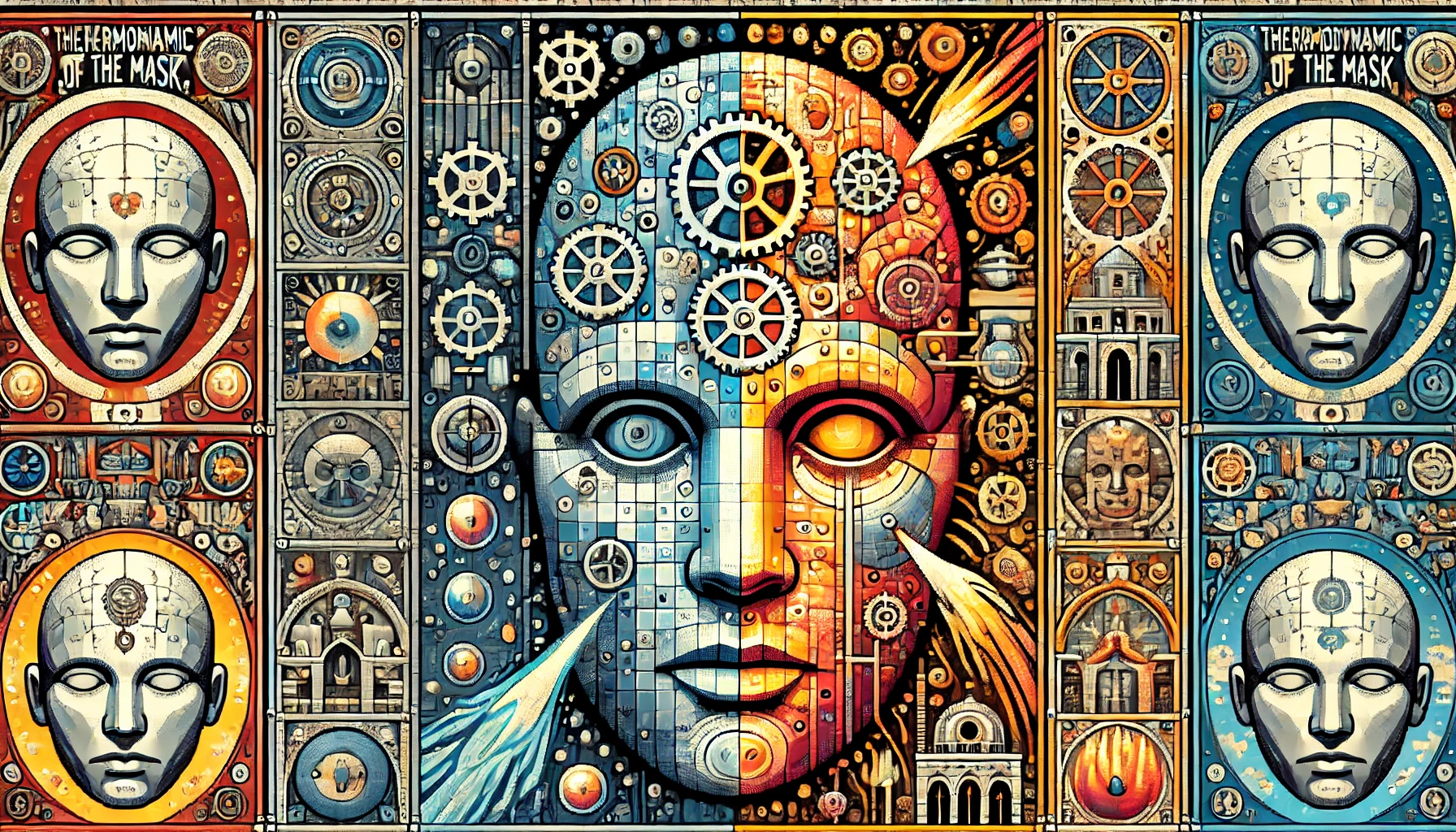
The Thermodynamics of Power, Meaning, and Masks illustration

7.4 The Unmasking Process: MovingToward High-Entropy Freedom

For high-masking autistics who become aware of their neurodivergence, the process ofunmasking can be incredibly liberating, but also deeply challenging. Once they recognize that their efforts toconform to neurotypical standards were unnecessary—and even harmful—they begin to release the pent-upenergy that had been trapped in maintaining a low-entropy state.

  • Transition from Enthalpy toEntropy: The process of unmasking allows these individuals to introduce entropy into their lives byrejecting the rigid structures of imposed meaning that have dictated their behavior for so long. They begin to engage inauthentic behaviors, express their natural tendencies, and redefine their sense of self based on emergentmeaning rather than societal expectations.
  • Personal Revolution: Unmasking represents apersonal revolution for high-maskers, as they shift from a state of stability and control to one ofauthenticity and flexibility. This revolution not only liberates the individual from the constraints of neurotypicalconformity, but it also opens up new possibilities for personal growth, creativity, and well-being.

7.5 TheRole of High-Maskers in Collective Change

On a societal level, high-masking autistics who becomeaware of their neurodivergence can play a pivotal role in the collective revolution of unmasking. These individuals often have a deepunderstanding of how neurotypical norms are constructed and enforced, as they have spent much of their livesnavigating these systems through masking. Their experiences make them uniquely positioned to challenge the structuralinsulation that reinforces neurotypical standards.

  • Challenging the Low-Entropy Social Order:As high-maskers unmask and share their experiences, they help disrupt the low-entropy social order that demandsconformity to neurotypical norms. Their stories reveal the hidden costs of masking and provide a powerful counter-narrative to the idea that success and fulfillment can only be achieved by adhering to neurotypical standards.
  • Fostering Emergent Meaning in Society: By unmasking and advocating for neurodiversity, high-maskers contribute tothe collective rise of entropy in society. Their willingness to reject imposed meanings and embrace their authenticselves creates space for emergent meaning to flourish, not only for neurodivergent individuals but for society as awhole. They pave the way for a more inclusive, flexible, and adaptive social structure, where multiple ways of beingare celebrated rather than suppressed.

7.6 The Double-Edged Nature of Unmasking for High-Maskers

While unmasking offers the possibility of personal liberation, it also comes with significant challenges for high-maskers.The transition from a low-entropy, high-masking state to a high-entropy, unmasked state can bedisorienting and emotionally turbulent. High-maskers may struggle to reconcile their past identity with theirnewfound authenticity, leading to feelings of grief, anger, or confusion.

  • NegotiatingIdentity: High-maskers must navigate the complex process of redefining their identity in the wake ofunmasking. This often involves confronting the many years they spent masking and coming to terms with the ways in which societalexpectations shaped their sense of self. However, through this process, they gain the freedom to define their own emergentmeaning, based on their true experiences and values.

8. Conclusion: TheThermodynamics of High-Masking Autistics

High-masking autistics play a critical role in the thermodynamics ofmeaning-making. Their experiences demonstrate the extreme costs of maintaining a low-entropy, high-entropicsystem—where masking drains energy and stifles authenticity—and the potential for personal andcollective revolution through unmasking.

As more high-maskers become aware of their neurodivergence and begin theprocess of unmasking, they introduce entropy into both their personal lives and the broader social system,disrupting the structural insulation that upholds neurotypical norms. This process creates space for the rise ofemergent meaning, where neurodivergent individuals can live authentically and contribute to a moreinclusive, adaptive, and dynamic society.

In thermodynamic terms, unmasking represents the release ofpent-up energy that allows both individuals and society to shift from a rigid, controlled state to one offlexibility, creativity, and freedom. The revolutionary potential of unmasking lies in its ability tochallenge the power structures that enforce conformity, paving the way for a more equitable worldwhere all forms of human experience are valued.

Continue reading

Related essays

Next routes

Return to the archive, the guide, or a related route to keep the thread moving.

Version history

No prior versions in this archive snapshot.

    Get essays like this by email.

    Get new essays by email

    An occasional note when a new essay goes live.

    Get new essays by email

    An occasional note when a new essay goes live.