Sensory regulation is usually treated as a pediatric concern. Occupational therapy clinics supply weighted blankets, chewable silicone pendants, and mechanical fidget spinners. When neurodivergent people enter adult institutions (open-plan corporate offices, lecture halls, transit terminals), the physical infrastructure for sensory regulation disappears.
Carrying physical toys into an adult workplace invites professional scrutiny. More fundamentally, mechanical fidgets offer static resistance. A plastic gear or silicone popper provides a fixed sensory input, but human autonomic arousal fluctuates continuously throughout the day. An overwhelmed nervous system needs dynamic modulation: sometimes a slow, predictable rhythm to dampen panic; sometimes high-frequency, complex visual input to break through cognitive paralysis.
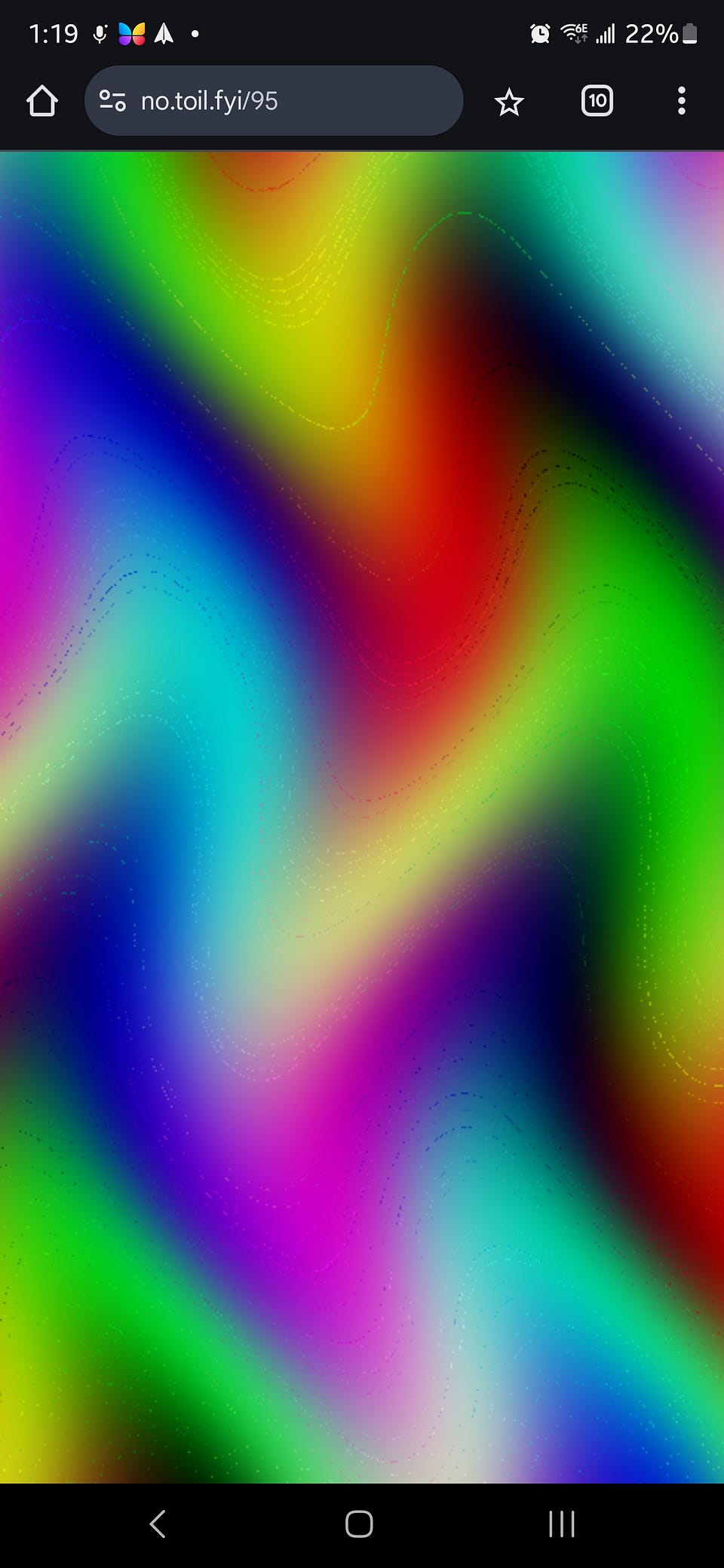
To explore what dynamic sensory regulation looks like on standard hardware, I built Stims, an open collection of interactive, browser-based tools designed around neurodivergent regulation.
The early inspiration came from audio visualizers like MilkDrop and Butterchurn, which used mathematical algorithms to turn sound into fluid, unpredictable visual geometry. Those engines were built for musical performance. Viewed as regulatory instruments, they’re non-interactive and leave the viewer passive, and their visual intensity can’t be calibrated to match individual sensory thresholds.
Effective sensory modulation requires a closed feedback loop between the body and the interface.
In responsive digital toys like Seary, visual shaders react simultaneously to audio frequencies and physical touch. Tapping, dragging, or tilting a phone creates an immediate, mathematically smooth visual wave. The motor action produces a predictable sensory consequence. That predictability lets an agitated nervous system anchor attention and discharge motor tension without making noise or drawing eyes across the room.
Sensory processing differences rarely look like a simple intolerance for noise. In hyper-reactivity, sensory overload makes ordinary lighting, background speech, and visual motion physically painful, and regulatory tools must provide predictable, low-contrast, rhythmic motion. A tool like Symph generates audio-responsive waves with muted color palettes. The waves give the eyes a focal point to rest upon while blocking chaotic environmental peripheral motion.
Hypo-reactivity runs the other way: in sensory under-arousal the brain feels sluggish, dissociated, or unable to initiate tasks, and the nervous system requires high-contrast, fast-moving, complex tactile feedback to restore alertness. Experiments like Evolutionary Weirdcore supply dense, chaotic visuals that supply the sensory intensity required to break out of brain fog.
Because these states shift across hours, a regulatory interface can’t be fixed. It must grant the user granular control over frame rates, color saturation, physics dampening, and interaction sensitivity.
Software that isn’t selling attention
Building sensory ergonomics into consumer software requires treating human variance as a design constraint rather than a bug. Most consumer software is designed to monopolize attention for advertising yield, using jarring notifications, infinite scrolls, and unpredictable page updates that deliberately keep the nervous system in a state of mild alarm.
Sensory toys reverse that incentive. Every tool in the library runs as a standalone HTML and WebGL script without tracking or advertising, hosted openly on GitHub. The goal is to make sensory regulation as ordinary and accessible as opening a browser tab.
When an environment refuses to accommodate neurodivergent needs, having accessible, low-friction digital tools to regulate autonomic arousal operates as basic cognitive infrastructure rather than an indulgence.