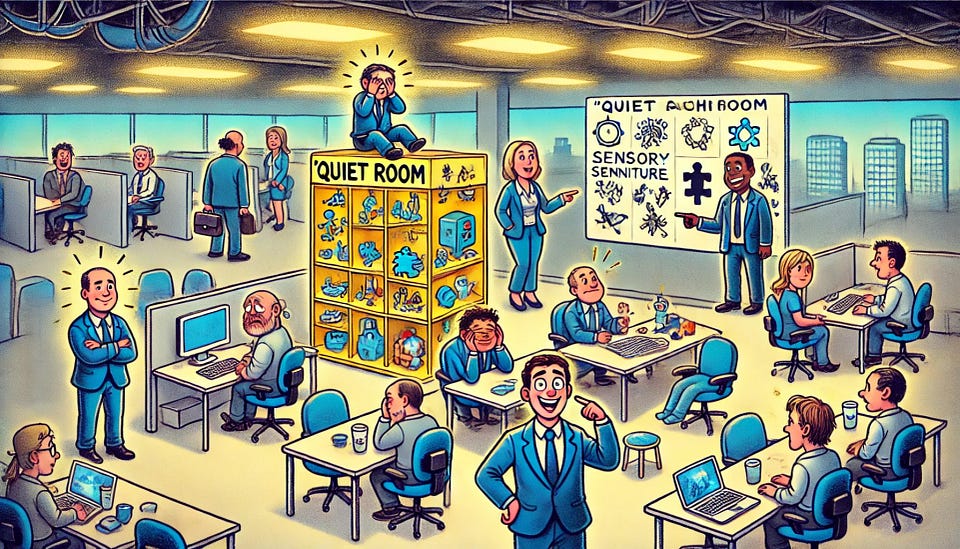
Neurodiversity is the idea that human cognitive variation is something to value, and it’s become far more visible in recent years. Corporations and institutions have noticed, and increasingly use it as a front for inclusivity. Call it neurodiversity washing: hollow gestures in place of action, systemic barriers left standing, and a progressive image the institution profits from.
Corporations are some of the worst offenders. Plenty of companies call diversity a core value, and the reality falls short. Microsoft’s Autism Hiring Program, for example, is often praised as a model of corporate inclusion, yet performance evaluation across industries still needs systemic change. Traditional reviews tend to measure against neurotypical standards, which can sideline neurodivergent employees and limit their opportunities.
Employment for autistic adults in the US remains dismal. Drexel’s autism-outcomes research finds that only 58% of autistic young adults had ever worked for pay in their early 20s, against 74% of those with intellectual disability, over 90% of those with learning disabilities, speech impairment or emotional disturbance, and nearly 99% of young adults overall. The work autistic young adults do find is mostly part-time and low-paid. Meanwhile, corporate lobbying groups like the U.S. Chamber of Commerce have fought reforms that would require more inclusive workplaces, citing economic burdens, though accommodations typically cost less than $500 per person.
The pharmaceutical and medical industries keep neurodiversity washing going by pathologizing neurodivergence for profit. The ADHD medication market keeps growing, driven by aggressive marketing and a habit of treating medication as the default answer for neurodivergent conditions. The focus on deficits feeds the harmful story that neurodivergent traits need to be “fixed.” Research supports strengths-based approaches built on environmental accommodations and interventions, which lead to better long-term outcomes for neurodivergent people, but insurance companies often won’t cover these alternatives, nudging patients toward pharmaceutical solutions instead.
Behavioral therapy, and Applied Behavior Analysis (ABA) in particular, contributes too. ABA is often called the “gold standard” of autism treatment, but it rests on compliance-based methods meant to make autistic people conform to neurotypical norms. It still dominates autism therapy despite growing opposition from the autistic community.
Critics argue that ABA puts behavior modification ahead of autonomy, teaching autistic people to suppress their natural behaviors in favor of socially acceptable ones. Many who went through ABA report long-term psychological harm, including increased anxiety and depression. Influential organizations keep lobbying for wider insurance coverage of it anyway.
Schools and universities are full of neurodiversity washing, advertising their commitment to inclusion while keeping the barriers in place. The law requires accommodations, yet many resist implementing Individualized Education Programs (IEPs), citing cost or administrative burden.
Standardized testing favors neurotypical cognitive styles and puts neurodivergent learners at a disadvantage. Neurodivergent students are more likely to drop out, and many cite inadequate accommodations. Universal design approaches lift neurodivergent students’ motivation and engagement where they are implemented properly, and falter mainly where staff do not understand neurodivergence—the binding constraint is institutional.
In politics, the pressure runs toward rolling back disability rights protections. Some conservative groups cast neurodiversity inclusion as part of a leftist agenda and use that rhetoric to justify the rollback in the name of deregulation.
Several U.S. states have introduced bills to limit lawsuits under the Americans with Disabilities Act (ADA). Weaker enforcement would fall hardest on people who depend on accommodations, neurodivergent people among them.
Change takes collective action. Corporations have to make systemic reforms that give neurodivergent workers real power. Healthcare has to adopt strengths-based approaches, schools have to adopt flexible learning models, and political efforts have to keep inclusion non-partisan. Autistic People Are Owed Reparations sets out what repair would look like, from direct compensation to the end of compliance-based therapies.
Neurodivergent people must lead in shaping the policies that affect their lives. Inclusion means recognizing the right to be different and dismantling the systems that silence neurodivergent voices. Accommodations are the start of it. The rest is dignity, autonomy, and the freedom to live as ourselves in a world that keeps demanding conformity.