In the Israel-Palestine conflict, women’s voices—Israeli, Palestinian, and Jewish in the diaspora—are often manipulated, silenced, or co-opted to serve state and nationalist agendas. Their suffering is appropriated to justify militarism, and their efforts for peace are turned into “peace-washing” campaigns that obscure systemic violence.
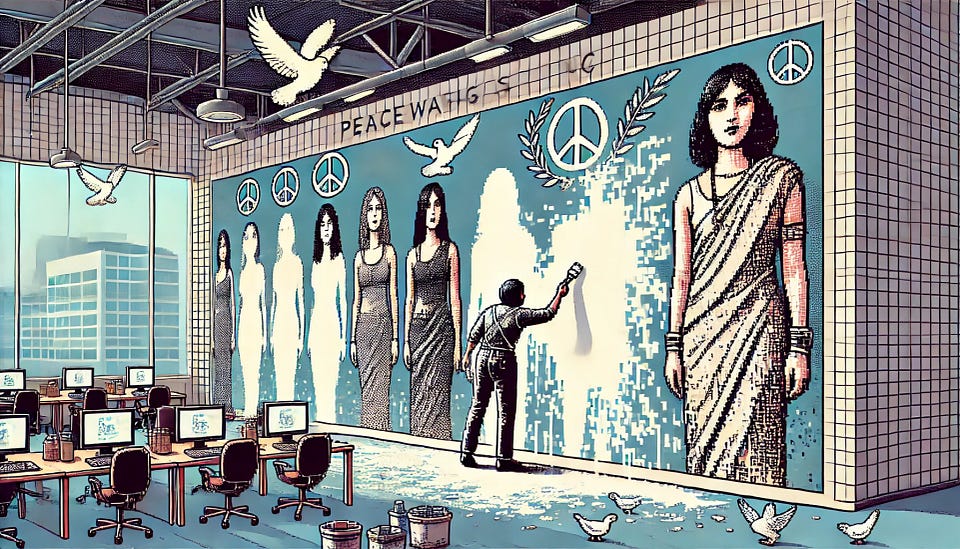
Used this way, women’s stories help keep the conflict going while the injustices at its root go unaddressed.
Instrumentalizing Women’s Suffering
Women’s suffering has long been a political tool in this conflict. One example is Noa Argamani, an Israeli woman Hamas abducted during the 2023 attack at the Re’im music festival. Her story became a symbol of Palestinian violence in Israeli media, fueling support for military retaliation. In August 2024 Argamani said the injuries came from a wall collapsing in an Israeli airstrike, not from beatings by Hamas, as some Israeli media had reported.
Similarly, Ahed Tamimi, a Palestinian teenager, gained international attention in 2017 after slapping an Israeli soldier and became a symbol for both sides of the conflict. While some in the Palestinian community embraced her as an icon of resistance, Israeli right-wing media demonized her. Tamimi described her position in her own terms: “The resistance will continue until the end of the occupation.” Her story was politicized and simplified until the person behind the symbol dropped out of it.
Shireen Abu Akleh, a renowned Palestinian-American journalist for Al Jazeera, was shot and killed while reporting in the West Bank in 2022. Her death became an international incident, with conflicting reports about who was responsible. Israel at first attributed the shots to Palestinian gunfire. Investigations by the UN human rights office and several news organizations concluded the fire came from Israeli forces and found no armed Palestinians nearby. The Israeli military later acknowledged a high possibility that its own soldiers had hit her. Her killing drew attention to the dangers journalists face in conflict zones and to the broader risks Palestinian women face under occupation.
What runs through all three is that a woman’s suffering gets told in whichever version serves the side telling it.
The co-option has a structure, and it isn’t unique to this conflict. Every grievance ideology runs the same machinery — an injury at the center, a dehumanized other at the edge, a sealed room to keep dissent out, and reformers absorbed rather than answered — and they differ only in whether a state has handed them an army.
Silencing Jewish Women’s Dissent in Israel
Jewish women in Israel who criticize the occupation or challenge militarism often face swift retaliation. For instance, Women in Black, an anti-occupation movement formed during the First Intifada, faced intense opposition. The women, who held weekly vigils to protest the occupation, were often met with verbal abuse and physical attacks. Gila Svirsky, one of the founders of Women in Black, has spoken about how they were branded as traitors for their stance on peace.
Orly Noy, a Mizrahi Jewish journalist and political activist, frequently critiques both the occupation and internal discrimination against Mizrahi Jews. Her intersectional activism has made her a target for right-wing figures who see her as undermining national unity.
Anat Matar, an Israeli academic and activist, has faced backlash for advocating on behalf of Palestinian prisoners. Her outspoken opposition to the occupation has pushed her to the margins of Israeli academia, where dissent on such issues can be seen as a threat to the state’s security narrative.
Naomi Chazan, a former Israeli parliamentarian and president of the New Israel Fund (NIF), was also targeted by right-wing campaigns for her progressive advocacy for peace and civil rights. In one campaign she was demonized in a high-profile ad. That’s a measure of how far nationalist forces will go to silence Jewish women who advocate for peace.
Silencing Jewish Women in the Diaspora
Jewish women in the diaspora who express solidarity with Palestinians or critique Israeli policies are often ostracized by their communities. Rebecca Vilkomerson, the former executive director of Jewish Voice for Peace (JVP), was accused of being a “self-hating Jew” for her organization’s support of Palestinian rights and the Boycott, Divestment, and Sanctions (BDS) movement. Vilkomerson has written extensively about the personal and political costs of advocating for Palestinian rights within Jewish communities in the United States. There, dissent against Israel is often seen as a betrayal.
In August 2018, IfNotNow co-founder Simone Zimmerman and Abby Kirschbaum were held for about four hours at the Taba crossing and questioned by border agents. Zimmerman said the questions centered on their connections to Palestinians; Israel’s security service said it had not sought to clarify their political positions. J Street called it part of an anti-democratic pattern.
The State Borrows the Language of Peace
The state can co-opt even peace efforts led by women. The Women Wage Peace movement, which began in 2014 after the Gaza war, united Israeli and Palestinian women in calls for nonviolence. As the movement gained attention, the Israeli state increasingly appropriated its message. It used the language of peace to deflect criticism without addressing the root causes of the conflict, such as the occupation and settlement expansion.
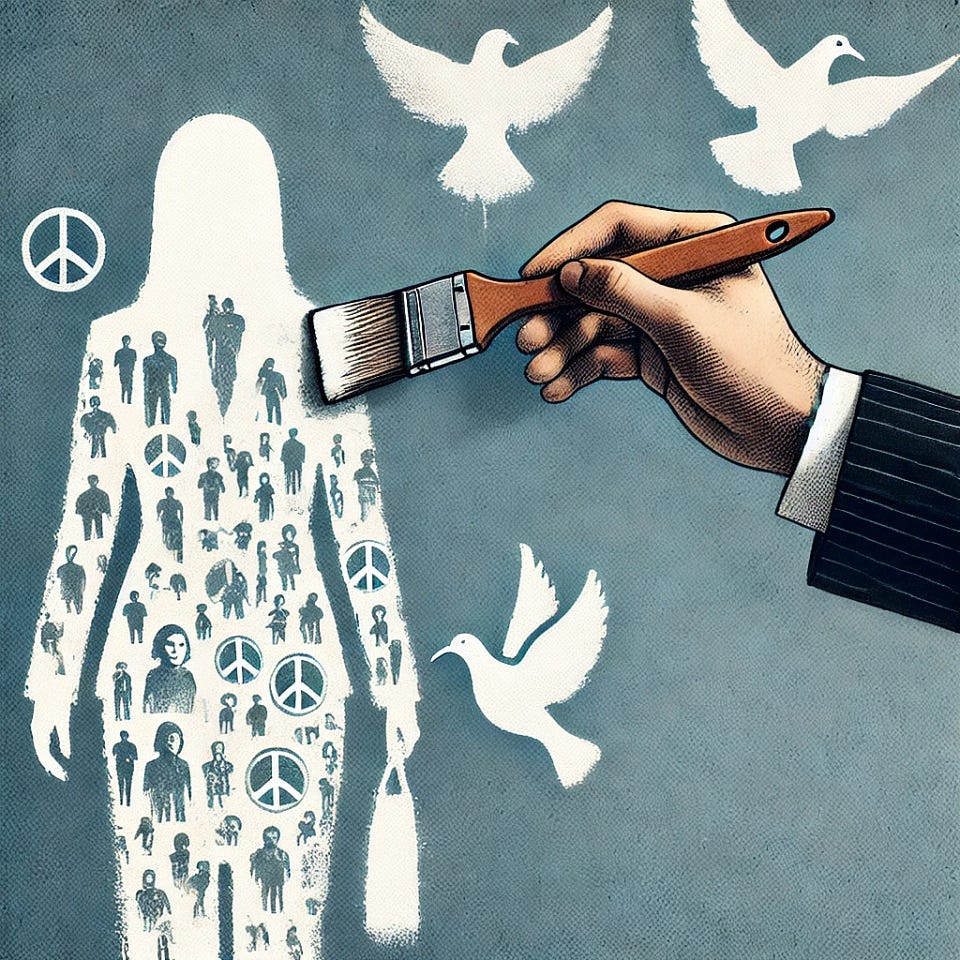
Israel’s adoption of the United Nations’ Women, Peace, and Security (WPS) agenda is peace-washing of the same kind. Israel touts its inclusion of women in peace processes while continuing policies that violate Palestinian women’s rights.
Feminist Resistance
Despite all this, feminist movements in both Israel and Palestine continue to resist the intertwined forces of militarism and patriarchy. In Israel, the feminist organization New Profile advocates for demilitarizing society and challenges the central role militarism plays in shaping Israeli identity and gender norms. New Profile argues that peace isn’t possible until the militarization that dominates Israeli life is dismantled.
In Palestine, the Union of Palestinian Women’s Committees (UPWC) fights for national liberation and gender justice together. Palestinian women activists have consistently refused to be cast only as symbols of victimhood or martyrdom. They have positioned themselves as leaders in the struggle for political and social liberation.
Feminist activists in the region have made the case in practice that peace is the presence of justice and equality, not just the absence of fighting.
Further Reading
On gender, conflict, and the state’s use of women’s voices:
- Cynthia Enloe, Bananas, Beaches and Bases: Making Feminist Sense of International Politics. Enloe’s foundational work on how international politics, war, and militarism shape women’s lives, and how gender is manipulated in conflict zones.
- Lila Abu-Lughod, Do Muslim Women Need Saving? A critique of using women’s suffering in Middle Eastern conflicts to justify Western intervention, with clear parallels to how women’s experiences are instrumentalized in Israel-Palestine.
- Nadera Shalhoub-Kevorkian, Security Theology, Surveillance and the Politics of Fear. How Palestinian women’s bodies and lives are weaponized and controlled through surveillance and militarized security regimes, where gender, power, and occupation meet.
- Simona Sharoni, Gender and the Israeli-Palestinian Conflict: The Politics of Women’s Resistance. A detailed analysis of feminist resistance movements in Israeli and Palestinian contexts, and how women’s activism challenges occupation and patriarchy at once.
- Adi Kuntsman and Rebecca L. Stein, Digital Militarism: Israel’s Occupation in the Social Media Age. How social media has become a theater in which Israeli soldiers, civilians and the military support and sustain the occupation.
- Angela Davis, Freedom is a Constant Struggle: Ferguson, Palestine, and the Foundations of a Movement. Davis connects liberation struggles across contexts, the Palestinian one included, and argues for intersectionality and solidarity in movements against oppression.