How systems survive by making suffering feel necessary.
Kanav Jain · Founding PM, Doximity Dialer (300K clinicians); co-founder, Andwise · Clinical AI safety evaluation →
The Crumple Zone
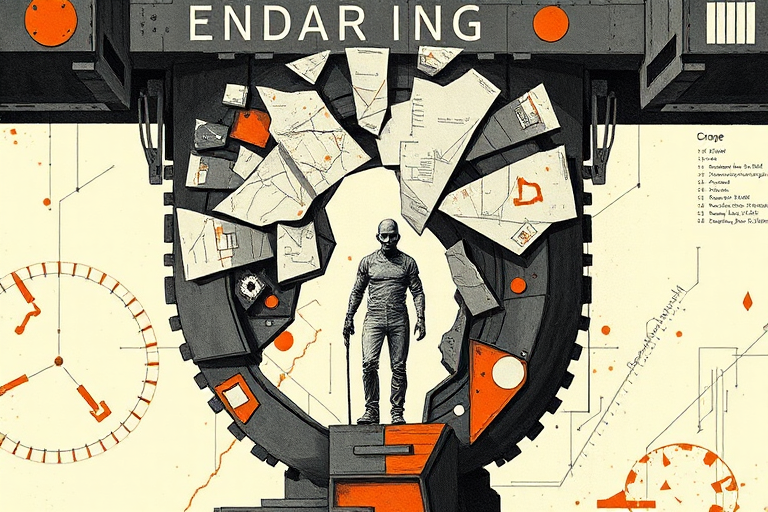
A system is not working just because it looks calm from the center.
-
-

On false dignity, comic truth, and seeing at the right scale
-
Entry points
The archive
Start with the guide, follow a reading path, or read one representative essay.
Starting points
-
How systems survive by making suffering feel necessary.
-
On false dignity, comic truth, and seeing at the right scale
-
-

-
-

-

-
Why “we care” substitutes for obligation—and how delay gets disguised as kindness.
-
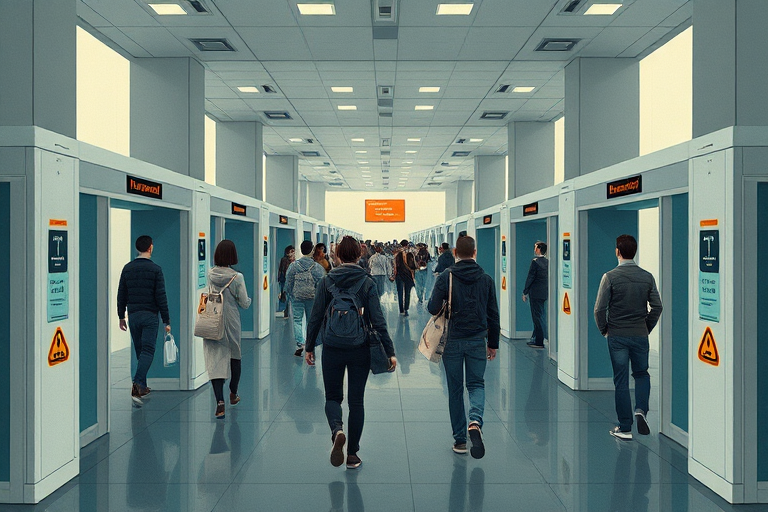
People are not becoming inherently dishonest, lazy, or cynical. They are becoming game-theoretically optimal for the environment they have been placed in.
-

In this Age of Appeals, you have the paper right. And a stamina test.
-

Stop designing for the idealized "Hero User." Learn how to build resilient interfaces that work when your user is stressed, tired, and operating on 15% battery.
-
Resilience is a subsidy we pay to cover the cost of structural failure
-

The interface is dying because the “User” is obsolete. On the post-user web, AI agents, friction economics, and the rise of adversarial infrastructure.
-
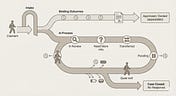
Why being in process so often leads nowhere: Legitimacy engineering and “care signals” as governance tech
-
The loading screen is the most powerful weapon in the modern state
-
-
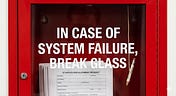
A guide to the difference between moral language and structural constraint
-
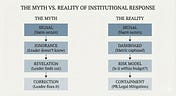
-

No single ontology—vendor or otherwise—should monopolize state violence.
-
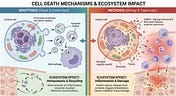
Designing systems that know when to end
-
We must reclaim the maintenance that keeps people alive rather than the one that keeps systems standing.
-

-

It appears we have successfully eliminated the margin for error. That's terrifying.
-

-

-

How to design systems that protect human limits and reject harm as the path of least resistance
-

Predictive modeling is always an exercise of political power.
-

How to not lose it when your tools never say no
-
Why freedom will depend on what we build together next.
-
-

Machines once bent to save people. Now people bend to save machines.
-
Sterile reason makes systems fragile. Here's how intelligence can learn to breathe again.
-
Power as the Allocation of Persistence
-
In our burnout culture, "clearance culture" turns care into compliance. When are you truly ready to return to work? This essay unpacks the ethics of healing on…
-
Why embracing human limits can make our relationships, ethics, and systems more resilient
-

From algorithmic empathy to moral branding: the hidden politics of charisma in AI.
-

The real danger isn't that AI is cold and inhuman; it's that it's becoming perfectly, fluently "kind." "Counterfeit tenderness" is a new form of moral arbitrag…
-
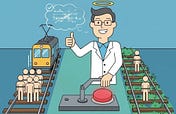
Before an institution can do immense harm, it must first learn to feel good about itself. It must learn to translate its contradictions into virtues and its ri…
-

Hospitals, platforms, universities, and economies all improve the metrics that define success while quietly eroding the conditions that make those metrics mean…
-
The moral geometry of measurement, and how to read the metrics that lie without lying.


Routes and patterns
Reading paths
Burden
Essays about how systems shift labor, fallout, maintenance, and proof onto the people least able to refuse it.
Guided route · 7 essays currently available in sequence.
Paired concept map: Burden and load-bearing.
Response
Essays that move from naming a pressure to identifying where leverage exists, what would need to shift, and who has power to shift it.
Guided route · 4 essays currently available in sequence.
Paired concept map: Burden and load-bearing.
Survivability
Permission is not freedom. These essays ask whether an option is actually usable, not just available in principle.
Guided route · 6 essays currently available in sequence.
Paired concept map: Survivability and inhabitable action.
Concept maps
Burden and load-bearing
Tracks where a system puts the weight: who absorbs fallout, upkeep, translation, and repair so the center can keep calling itself orderly.
Concept map · 7 of 7 mapped essays currently available.
Paired guided route: Burden.
Survivability and inhabitable action
Names the gap between formal permission and livable use: whether someone can act, refuse, stay intact, and still belong after taking the option.
Concept map · 7 of 7 mapped essays currently available.
Paired guided route: Survivability.
Delay and temporal governance
Follows the archive’s account of time as a governing technology: review, waiting, repeated proof, and “still in process” as ways to sort people without a clean no.
Concept map · 6 of 6 mapped essays currently available.
Paired guided route: Delay.
Where the same pressure keeps reappearing
Healthcare and care systems
Proof loops, waiting as policy, and care that appears only when someone can perform deservingness.
Administrative quiet can hide clinical abandonment.
Who has to keep proving urgency before treatment is allowed to happen?
Workplaces and professional culture
Flexibility that punishes anyone who uses it, resilience redefined as self-management, and belonging tied to emotional legibility.
“Culture fit” often means emotional conformity under pressure.
What risks does someone absorb when they ask for the policy they are formally promised?
Platforms, apps, and interfaces
Frictionless surfaces built on hidden moderation labor, user adaptation, and AI supervision work where users and frontline workers absorb model failure.
Seamless UX can depend on outsourced correction labor.
Who is doing cleanup, appeals, or harm triage so the interface still looks effortless?
More entry points
Question-led archive pages
Focused pages that stay close to specific recurring pressures.
How to recognize delay in healthcare
A recognition page for identifying waiting as governance in care, insurance, and administrative pathways.
Theme: healthcare.
Related path: /start-here.
Reading path for redesign recommendations
A sequence focused on institutional redesign, reversibility, and burden removal.
Theme: systems.
Related path: /paths/reversibility.
What is proof harm?
Definition-first page with related essays about when evidence demands become part of the injury.
Theme: healthcare.
Related path: /concepts/delay.
Recourse friction in bureaucracy
Essays on administrative systems where procedures absorb requests without delivering timely relief.
Theme: bureaucracy.
Related path: /paths/delay.
Continue reading
Archive context
Archive history
No prior versions in this archive snapshot.
Expand a version to view revision details.
Get essays like this by email.
Get new essays by email
An occasional note when a new essay goes live.
No spam, no shared list, unsubscribe any time.
Get new essays by email
An occasional note when a new essay goes live.
No spam, no shared list, unsubscribe any time.